Ask HN2023
Math books that made you significantly better at math?
317 comments named 124 books. The one named most: How to solve it, by 11 people.
The 12 named most
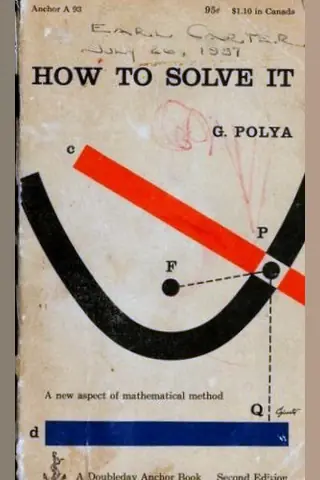
1How to solve it
George Pólya
named by 11
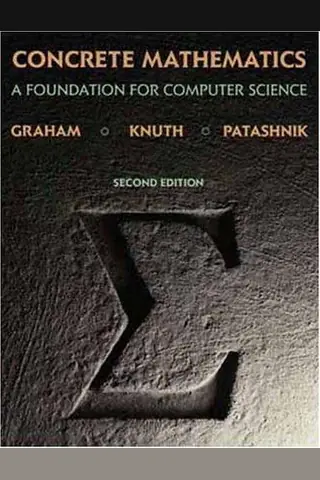
2Concrete mathematics
Ronald L. Graham, Donald Knuth
named by 4
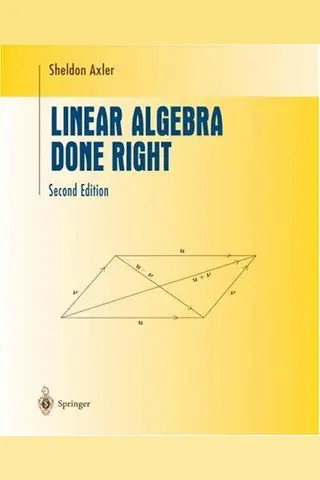
3Linear Algebra Done Right
Sheldon Jay Axler
named by 4
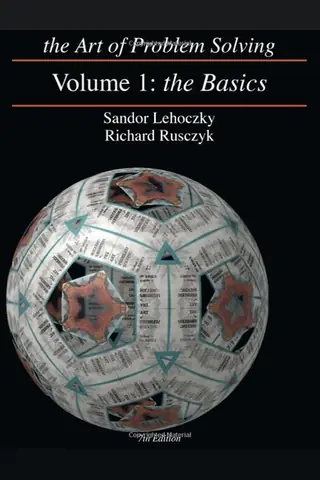
4The Art of Problem Solving
Richard Rusczyk, Sandor Lehoczky
named by 4
5Elements
Euclid
named by 3
6Calculus Made Easy
Silvanus Phillips Thompson
named by 3
7Principles of Mathematical Analysis
Walter Rudin
named by 3
8Calculus on manifolds
Michael Spivak
named by 3

9Geometric Algebra for Physicists
Anthony Lasenby
named by 2
10How to prove it
Daniel J. Velleman
named by 2
11The Road to Reality
Roger Penrose
named by 2
12Introduction to the theory of computation
Michael Sipser
named by 2
What people said
One comment from the thread for each, cut to the part that says why. Amazon links are affiliate links. As an Amazon Associate I earn from qualifying purchases.
How to solve it George Pólya, 1945 · named by 11
“The classic, How to Solve It by Polya. A lot of the advice seems obvious in retrospect but being systematic about a problem solving framework is enormously helpful.”
Linear Algebra Done Right Sheldon Jay Axler, 1996 · named by 4
“Linear Algebra Done Right by Sheldon Axler is indeed a good book if you are looking for a rigorous proof based book to learn linear algebra.”
Elements Euclid, 1482 · named by 3
“Reading Euclid's Elements and Newton's Principia really helped me get an intuitive feel for geometry and calculus.”
Calculus Made Easy Silvanus Phillips Thompson, 1910 · named by 3
“Super unique approach to teaching calculus… It may be particularly good for people who believe they're bad at math. His style may convince people otherwise.”
Principles of Mathematical Analysis Walter Rudin, 1953 · named by 3
“Principles of Mathematical Analysis by Walter Rudin (baby Rudin) - I'd studied real analysis in the past, but this book is direct and rigorous and provided a good framework to move forward into things like functional…”
Geometric Algebra for Physicists Anthony Lasenby, 2003 · named by 2
“"Geometric Algebra for Physicists" (whose first two chapters I'd recommend to get a nice overview)”
Book of Proof Richard Hammack, 2009 · named by 2
“Book of Proof by Richard Hammack. A great introduction to proofs in mathematics. The book is available free online [0], but also I bought the physical version because I really enjoyed it.”
Also named by more than one person
13 more books, in the same order.
Book of Proof
Richard Hammack
named by 2
Find on Amazon
A Book of Abstract Algebra
Charles C. Pinter
named by 2
Find on Amazon
A Programmer's Introduction to Mathematics
Jeremy Kun
named by 2
Find on Amazon
Measurement
Paul Lockhart
named by 2
Find on Amazon
Mathematics for the Million
Lancelot Thomas Hogben
named by 2
Find on Amazon
Discrete Mathematics with Applications
Susanna S. Epp, Susanna Epp
named by 2
Find on Amazon
Vector Calculus, Linear Algebra, and Differential Forms
Hubbard, John H., John H. Hubbard
named by 2
Find on Amazon
Introduction to Mathematical Thinking
Keith J. Devlin
named by 2
Find on Amazon
Advanced Engineering Mathematics
Erwin Kreyszig
named by 2
Find on Amazon
Geometry and the Imagination
David Hilbert
named by 2
Find on Amazon
Foundations and Fundamental Concepts of Mathematics
Howard Eves
named by 2
Find on Amazon- Thinking MathematicallyJ. Mason, L. Burton, K. Stacey
Thinking Mathematically
J. Mason, L. Burton
named by 2
Find on Amazon 
Problems from the Book
Titu Andreescu
named by 2
Find on Amazon
99 books named once
- Gödel, Escher, Bach Douglas R. Hofstadter
- The Elements of Statistical Learning Trevor Hastie, Robert Tibshirani
- Calculus Michael Spivak
- Information Theory, Inference & Learning Algorithms David J.C. MacKay
- Algorithms to Live By Brian Christian, Tom Griffiths
- How to Lie with Statistics Darrell Huff
- The Princeton Companion to Mathematics Timothy Gowers
- All of Statistics Larry Wasserman
- Visual complex analysis Tristan Needham
- The Man Who Loved Only Numbers Paul Hoffman
- Proofs and refutations Imre Lakatos
- How Not to Be Wrong Jordan Ellenberg
- Understanding Analysis Stephen Abbott
- Naive Set Theory Paul R. Halmos
- What If? Randall Munroe
- Real and complex analysis Walter Rudin
- Street-fighting mathematics Sanjoy Mahajan
- Numerical linear algebra Lloyd N. Trefethen
- Nonlinear dynamics and Chaos Steven H. Strogatz, Steven Strogatz
- Linear algebra and its applications David C. Lay, Lay
- Basic Mathematics Serge Lang
- The Mathematical Experience Philip J. Davis, Reuben Hersh
- Lost in math Sabine Hossenfelder
- Matrix computations Gene H. Golub
- Probabilistic Graphical Models Daphne Koller, Nir Friedman
- Div, grad, curl, and all that H. M. Schey
- Visual group theory Nathan C. Carter
- The Joy of X Steven H. Strogatz
- Mathematics and its history John C. Stillwell
- From Mathematics to Generic Programming Alexander A. Stepanov, Daniel E. Rose
- The Art and Craft of Problem Solving Paul Zeitz
- Abstract algebra David S. Dummit
- Topology James R. Munkres
- Statistics David Freedman, Robert Pisani
- Algebra Paolo Aluffi
- Mathematics and plausible reasoning George Pólya
- Precalculus mathematics in a nutshell George Finlay Simmons
- Quantum Mechanics Leonard Susskind, Art Friedman
- The Number Devil Hans Magnus Enzenberger
- All the Math You Missed Thomas A. Garrity
- Physics for mathematicians Michael Spivak
- Elementary number theory Underwood Dudley
- How to think like a mathematician Kevin Houston
- Principia mathematica Alfred North Whitehead, Bertrand Russell
- Real Mathematical Analysis Charles Chapman Pugh
- Matrix Analysis Roger A. Horn, Charles R. Johnson
- The Art of Probability Richard Hamming
- The shape of space Jeffrey R. Weeks
- Mathematical Analysis Tom M. Apostol
- Unknown Quantity John Derbyshire
- Gauge fields, knots, and gravity John C. Baez
- Mathematics for 3D game programming and computer graphics Eric Lengyel
- A logical approach to discrete math Gries, David.
- New foundations for classical mechanics David Hestenes
- Introduction to Smooth Manifolds John M. Lee
- Program = Proof Samuel Mimram
- Number theory George E. Andrews
- A history of mathematical notations Florian Cajori
- A concise history of mathematics Dirk Jan Struik
- Aha! Insight Martin Gardner
- Introduction to stochastic processes E. Çınlar
- Visual Complex Functions Elias Wegert
- Chaos and fractals Heinz-Otto Peitgen, Hartmut Jürgens
- Arithmetic Paul Lockhart
- Introduction to Stochastic Processes Erhan Cinlar
- Functions and graphs Israel M. Gel'fand, E. G. Glagoleva
- A Course in Modern Mathematical Physics Peter Szekeres
- Thinking mathematically Mason, John
- The way of analysis Robert S. Strichartz
- Ordinary Differential Equations Vladimir I. Arnold
- Problems in Mathematical Analysis Boris Demidovich
- Differential and integral calculus N. Piskunov
- Solving Mathematical Problems Terence Tao
- STROUD:ENGINEERING MATHEMATICS K. A. Stroud
- Modern graph theory Béla Bollobás
- All the Mathematics You Missed Thomas A. Garrity
- Measure and category John C. Oxtoby, Oxtoby
- How Mathematicians Think William Byers
- The Cauchy-Schwarz Master Class J. Michael Steele
- Math magic Scott Flansburg
- Comprehensive Introduction to Differential Geometry Michael Spivak
- Proof and the Art of Mathematics Joel David Hamkins
- Basic Training in Mathematics Ramamurti Shankar
- College algebra James Stewart
- Math, Better Explained Kalid Azad
- Linear algebra through geometry Thomas Banchoff, John Wermer
- The Gödelian puzzle book Raymond M. Smullyan
- Differential Equations and Dynamical Systems Lawrence Perko
- Introduction to analysis Maxwell Rosenlicht
- Introduction to geometry H. S. M. Coxeter
- The language of mathematics Robert Laurence Baber
- Common Sense Mathematics Ethan D. Bolker, Maura B. Mast
- Elementary differential equations and boundary value problems William E. Boyce
- An introduction to category theory Harold Simmons
- Elementary differential equations William E. Boyce, Richard C. Diprima
- Methods of mathematical physics Richard Courant
- Geometry for Programmers Oleksandr Kaleniuk
- The elements of integration and Lebesgue measure Robert Gardner Bartle
- Fourier analysis Thomas William Körner
How this was made
From the site’s data, as of the last data refresh: a book’s count is the number of different people in the thread who named it as an answer, or recommended it in a reply. Books without a page on this site are not counted.
Each quote is a short excerpt of one comment that names the book, picked by a fixed rule: among the 16 books named most, comments that recommend the book, are mostly about it and say why it matters come first. The quotes were then read by hand; where the rule’s pick missed the point, a better excerpt from the same thread replaced it (“…” marks a cut), or the book is shown without one. Follow the date to read the whole comment on Hacker News. All mentions are in the open dataset, mentions.csv.gz.