Ask HN2022
Which book can attract anyone towards your field of study?
273 comments named 130 books. The one named most: Gödel, Escher, Bach, by 6 people.
The 12 named most
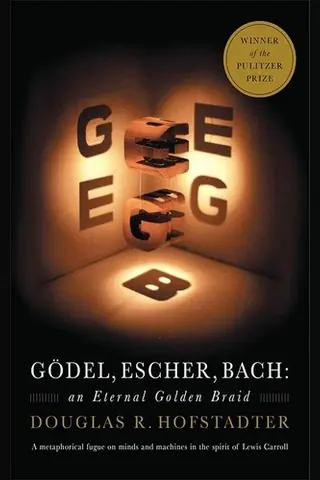
1Gödel, Escher, Bach
Douglas R. Hofstadter
named by 6
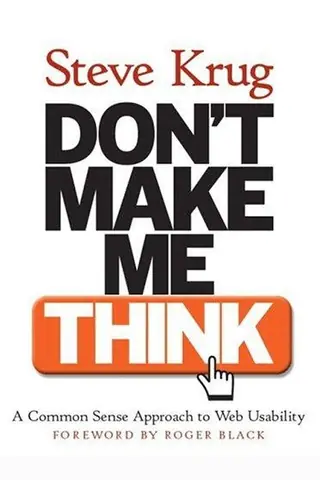
2Don't Make Me Think
Steve Krug
named by 4
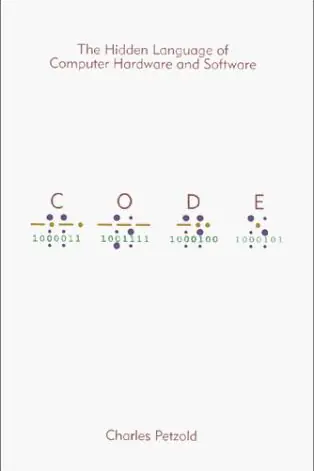
3Code
Charles Petzold
named by 4
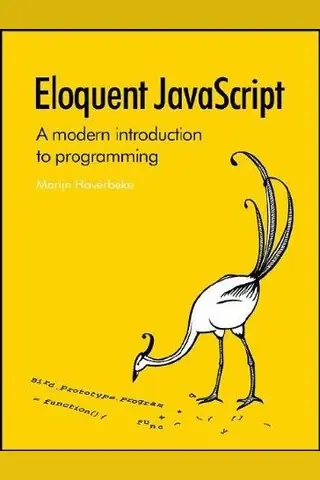
4Eloquent Javascript
Marijn Haverbeke
named by 3
5The Code Book
Simon Singh
named by 3
6Algorithms to Live By
Brian Christian, Tom Griffiths
named by 2
7The Soul of a New Machine
Tracy Kidder
named by 2
8Masters of Doom
David Kushner
named by 2
9The Cuckoo’s Egg
Clifford Stoll
named by 2
10The Feynman Lectures on Physics
Richard Phillips Feynman
named by 2
11Seeing Like a State
James C. Scott
named by 2
12On food and cooking
Harold McGee
named by 2
What people said
One comment from the thread for each, cut to the part that says why. Amazon links are affiliate links. As an Amazon Associate I earn from qualifying purchases.
Gödel, Escher, Bach Douglas R. Hofstadter, 1979 · named by 6
“Godel Escher Bach influenced me to major in Cognitive Science. I don't imagine that book as impactful today as it was then, because many of the ideas it discusses have become popular topics.”
Don't Make Me Think Steve Krug, 2000 · named by 4
“Don’t Make Me Think, by Steve Krug. I used it for years as a required text in pretty much every UX related class I taught.”
Eloquent Javascript Marijn Haverbeke, 2011 · named by 3
“Eloquent JS changed my life. It made me realize that it would be hard, but I really could do this.”
Algorithms to Live By Brian Christian, Tom Griffiths, 2016 · named by 2
“That book is both accessible and practical for any layman.”
Masters of Doom David Kushner, 2003 · named by 2
“I think Masters of Doom is a great book for getting people interested in either software development in general, or game development… every time I read it, I get excited about writing code again.”
Seeing Like a State James C. Scott, 1998 · named by 2
““Seeing like a state” taught me what high modernism is and it’s pitfalls (since I - and I imagine many readers of HN - are already familiar with its strengths and achievements e.g. modern medicine).”
Proofs and refutations Imre Lakatos, 1976 · named by 2
“I would go with "Proofs and Refutations: The Logic of Mathematical" by Lakatos, its a dialog-form history of defining Euler's formula and it shows the human side of mathematics as a science.”
Also named by more than one person
4 more books, in the same order.

The Name of the Wind
Patrick Rothfuss
named by 2
Find on Amazon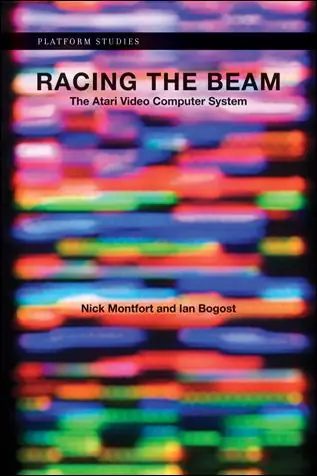
Racing the Beam
Nick Montfort, Ian Bogost
named by 2
Find on Amazon
Proofs and Refutations
Imre Lakatos
named by 2
Find on Amazon
PiHKAL
Alexander T. Shulgin, Ann Shulgin
named by 2
Find on Amazon
114 books named once
- Lingua Latina per se Illustrata Hans H. Ørberg
- How to Win Friends and Influence People Dale Carnegie
- Structure and Interpretation of Computer Programs Harold Abelson, Gerald Jay Sussman
- The Black Swan Nassim Nicholas Taleb
- The Selfish Gene Richard Dawkins
- Influence Robert B. Cialdini
- "Surely You're Joking, Mr. Feynman" Richard Phillips Feynman, Ralph Leighton
- Fooled by randomness Nassim Nicholas Taleb
- The algorithm design manual Steven S. Skiena
- The Phoenix Project Gene Kim, Kevin Behr
- Hackers Steven Levy
- Skunk Works Ben R. Rich, Leo Janos
- The Idea Factory Jon Gernter
- The goal Eliyahu M. Goldratt, Jeff Cox
- Statistical Rethinking Richard McElreath
- Information Theory, Inference & Learning Algorithms David J.C. MacKay
- Computer systems Randal E. Bryant, David R. O'Hallaron
- Introduction to the theory of computation Michael Sipser
- The vital question Nick Lane
- Republic Plato
- The dictator's handbook Bruce Bueno de Mesquita, Alastair Smith
- The Death and Life of Great American Cities Jane Jacobs
- The Man Who Mistook His Wife for a Hat Oliver Sacks
- Finite and infinite games James P. Carse
- Metaphors We Live By George Lakoff, Mark Johnson
- Being Mortal Atul Gawande
- The Innovators Walter Isaacson
- Molecular Biology of the Cell Bruce Alberts, Alexander Johnson
- The mathematical theory of communication Claude Elwood Shannon
- Ray Tracing in One Weekend Peter Shirley, Trevor D. Black
- Chaos James Gleick
- Inspired Marty Cagan
- Discipline and Punish Michel Foucault
- Programming in Scala Martin Odersky, Lex Spoon
- Programming in Haskell Graham Hutton
- Our Mathematical Universe Max Tegmark
- How to Invent Everything Ryan North
- An introduction to general systems thinking Gerald M. Weinberg
- Threaded interpretive languages R. G. Loeliger
- About Face Alan Cooper, Robert Reimann
- Foundations of mechanical accuracy Wayne R. Moore
- The origins of political order Francis Fukuyama
- Measurement Paul Lockhart
- Against the Grain James C. Scott
- The DevOps handbook Gene Kim
- Through the language glass Guy Deutscher
- Poor Economics Abhijit Banerjee, Esther Duflo
- Flour Water Salt Yeast Ken Forkish
- Modernist cuisine Nathan Myhrvold
- Lifespan David Sinclair, Matthew D. LaPlante
- Phantoms in the brain V. S. Ramachandran (neurology), Sandra Blakeslee
- Thinking with Type Ellen Lupton
- The algorithmic beauty of plants Przemyslaw Prusinkiewicz, Aristid Lindenmayer
- An enquiry concerning human understanding David Hume
- Don't sleep, there are snakes Daniel Leonard Everett
- Anatomy of an Epidemic Robert Whitaker
- Kicking away the ladder Ha-Joon Chang
- Introduction to Mathematical Thinking Keith J. Devlin
- Structures, or, Why things don't fall down James Edward Gordon
- Innumeracy John Allen Paulos
- Complications Atul Gawande
- Philosophy in the flesh George Lakoff
- The embodied mind Francisco J. Varela
- Better Atul Gawande
- On Photography Susan Sontag
- Overcoming Gravity Steven Low
- Uncle Tungsten Oliver Sacks
- Economics : the user's guide Ha-Joon Chang
- Algorithmics David Harel
- No one would listen Harry Markopolos
- Super Crunchers Ian Ayres
- The Unfolding of Language Guy Deutscher
- Power Jeffrey Pfeffer
- Financial Shenanigans Howard M. Schilit
- Fooling some of the people all of the time David Einhorn
- Real Mathematical Analysis Charles Chapman Pugh
- Stuff Matters Mark Miodownik
- The Copernican revolution Thomas S. Kuhn
- Accounting Game Darrell Mullis
- The Universe in a Nutshell Stephen Hawking
- Proofs and types Jean-Yves Girard
- Understanding the Digital World Brian W. Kernighan
- Principles of Neural Design Peter Sterling, Simon Laughlin
- Rebel Without a Crew Robert Rodriguez
- Systems of survival Jane Jacobs
- Language, truth and logic A. J. Ayer
- Armchair Economist Steven E. Landsburg
- In pursuit of the traveling salesman William Cook
- How to draw Scott Robertson
- How to Lie with Maps Mark S. Monmonier
- The Future of the Mind Michio Kaku
- Docs for Developers Jared Bhatti, Heidi Waterhouse
- Journey to the ants Bert Hölldobler
- Building A StoryBrand Donald Miller
- What does it all mean? Thomas Nagel
- Physics of the Future Michio Kaku
- The Case for Space Robert Zubrin
- A genetic switch Mark Ptashne, Klaus Dartmann
- Art as Experience John Dewey
- The Trivium Sister Miriam Joseph
- The I hate mathematics book Marilyn Burns
- Software Engineering Roger S. Pressman, Bruce Maxim
- Radical abundance K. Eric Drexler
- The story of English Robert McCrum
- Le città invisibili Italo Calvino, William Weaver 1923
- In Search of Respect Philippe I. Bourgois
- The trivium Miriam Joseph Sister
- Lean logic David Fleming
- The chemistry book Derek B. Lowe
- Stalking the wild asparagus Euell Gibbons
- The Story of English Robert MacNeil
- After Babel George Steiner
- Introduction to logic Irving Marmer Copi, Carl Cohen
- Understanding poetry Cleanth Brooks, Robert Penn Warren
How this was made
From the site’s data, as of the last data refresh: a book’s count is the number of different people in the thread who named it as an answer, or recommended it in a reply. Books without a page on this site are not counted.
Each quote is a short excerpt of one comment that names the book, picked by a fixed rule: among the 16 books named most, comments that recommend the book, are mostly about it and say why it matters come first. The quotes were then read by hand; where the rule’s pick missed the point, a better excerpt from the same thread replaced it (“…” marks a cut), or the book is shown without one. Follow the date to read the whole comment on Hacker News. All mentions are in the open dataset, mentions.csv.gz.