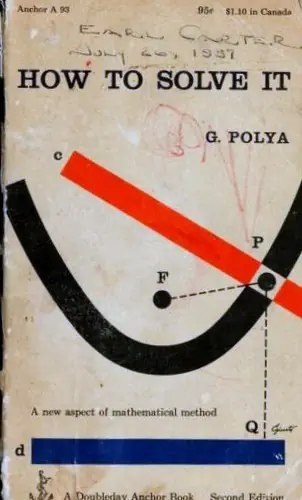
How to solve it
by George Pólya · first published 1945
78% recommend20% neutral1% critical
Why HN recommends it
Teaches a general process of heuristics and rules of thumb for attacking unfamiliar math problems, including reviewing your work afterward. Suits students, self-learners, and programmers.
Summarised by Claude from recommending comments
A perennial bestseller by eminent mathematician G. Polya, How to Solve It will show anyone in any field how to think straight. In lucid and appealing prose, Polya reveals how the mathematical method of demonstrating a proof or finding an unknown can be of help in attacking any problem that can be “reasoned” out—from building a bridge to winning a game of anagrams. Generations of readers have relished Polya’s deft—indeed, brilliant—instructions on stripping away irrelevancies and going straight to the heart of the problem.
Affiliate links. As an Amazon Associate I earn from qualifying purchases.
Mentions per year
What Hacker News says
Related books
 2007–2026
How to prove it
Daniel J. Velleman
Recommended by 78 · mentioned by 10478 recommend · 104 mention78 recommend · 10478 recommend
 2008–2024
Mathematics and plausible reasoning
George Pólya
Recommended by 10 · mentioned by 1310 recommend · 13 mention10 recommend · 1310 recommend
 2013–2026
How to think like a mathematician
Kevin Houston
Recommended by 8 · mentioned by 108 recommend · 10 mention8 recommend · 108 recommend
 2008–2025
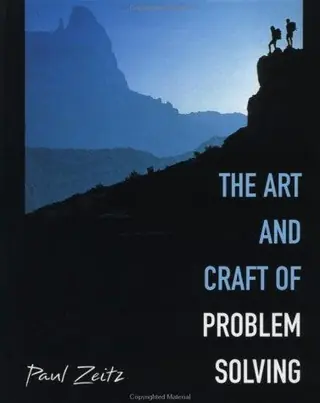
The Art and Craft of Problem Solving
Paul Zeitz
Recommended by 12 · mentioned by 1512 recommend · 15 mention12 recommend · 1512 recommend
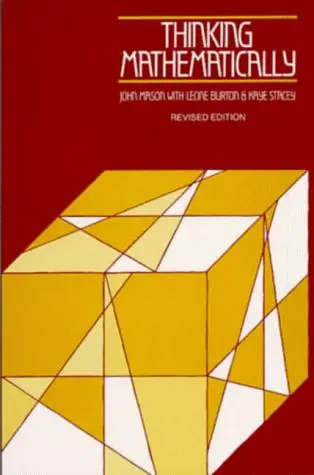
Thinking Mathematically
J. Mason, L. Burton, K. Stacey
Recommended by 5 · mentioned by 55 recommend · 5 mention5 recommend · 55 recommend
 2010–2023
Thinking mathematically
Mason, John
Recommended by 4 · mentioned by 44 recommend · 4 mention4 recommend · 44 recommend
 2012–2025
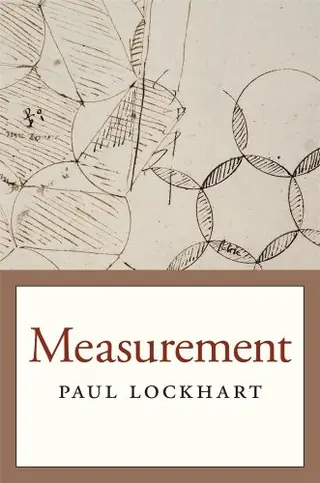
Measurement
Paul Lockhart
Recommended by 23 · mentioned by 3023 recommend · 30 mention23 recommend · 3023 recommend
Book of Proof
Richard Hammack
Recommended by 54 · mentioned by 6654 recommend · 66 mention54 recommend · 6654 recommend
…ideas within CS (Brooks' No Silver Bullet, The 10x cost incurred when moving from stage to stage in waterfall, how to treat and manage failure, etc.), it'd teach students how to think about problems (How To Solve It by Polya, The Design Of Everyday Things), and it'd provide history/culture (Coders At Work, Soul of A New Machine). One should, of course, learn how to program in a CS major. But there's diminishing returns…
on “Books I recommend to my software engineering students” ↗…Learning - Bishop The Java Language Specification - Gosling, Joy, Steele Learning Python - Lutz & Ascher Programming Erlang - Armstrong Programming Ruby - Thomas, Fowler, Hunt Calculus - Spivak How to Solve It - Polya The Design and Implementation of the 4.4 FreeBSD Operating System - McKusick, Bostic, Karels, Quarterman The Design of the Unix Operating System - Bach The Unix Programming Environment - Kernighan,…
on “ASK HN: Hacker Bibles” ↗…analyze the problem solving process from a general point of view (outside of some problem solving domain). Does anyone have any non-orthodox suggestions for books/essays on problem solving? Polya's "How to Solve It" and Paul Zeitz's "Art and Craft of Problem Solving" are both great. Are there other resources on this topic that are worth reading?
on “Problem Solving Techniques” ↗…looking for documentation. A lot of big problems start as false assumptions. Having the instinct to think to test them and knowing how to will prevent a lot of wasted effort, regardless of your role. How to Solve It by Polya also gets an honorable mention for similar reasons.
on “Ask HN: What are the books you wish your colleagues had read?” ↗…up, carefully, cleanly, put a date and title on the first page, put a staple in the UL corner of the sheets, and toss it on a stack, continue on, maybe building on what you have. There is also Polya, How to Solve It. From A. Wiles, the guy who solved Fermat's last theorem and just won the Abel Prize, is "Perhaps I could best describe my experience of doing mathematics in terms of entering a dark mansion. You go…
on “How to do a PhD” ↗…thinking and even be able to debug our work. If your class also applies thinking routines, it’ll get even easier for everyone to learn and understand each other. I recommend the following books: - Polya, How to Solve It - Velleman, How to Prove It: A Structured Approach - Ritchhart: Make Thinking Visible Mathematical work is basically a series of equivalent transformations and logical reasonings, starting from the…
on “Ask HN: How do I improve my command of mathematical language?” ↗…Introduction to Mathematical Reasoning" by Peter J Eccels. Teaches the vocabulary of mathematics, just the basics you need to think like a mathematician, not a mathematics user like most science texts. "How To Solve It" George Polya. Heurists and problem solving skills, by a great mathematician. Do a google search, specially in the sci.math newsgroup. Again, read books by mathematicians for mathematicians; they're…
on “Ask HN: Best Mathematics book for complete noobie?” ↗I'm going to second Arun2009's recommendation for How to Solve It by Polya. And then I'm going to recommend Haskell. I recently realized how much my understand of set theory improved and was solidified purely by programming Haskell a lot.
on “Ask HN: Learn Math the Hard Way” ↗Very good. Reminds me of the book "How to solve it" by Polya. I also like the Feynman problem solving algorithm: 1) Write down the problem. 2) Think very hard. 3) Write down the solution.
on “Claude Shannon’s method for formulating and solving problems” ↗…my head. I really think these will help you build a good foundation for mathematical thinking. Concrete Mathematics by Graham, Knuth, Patashnik Spivak’s Calculus How to Prove It by Velleman Polya’s How to Solve It E.T. Jaynes’ Probability Theory Conceptual Mathematics by Lawvere and Schanuel
on “Book: Mathematics for Machine Learning” ↗…math book I would recommend The Man Who Loved Only Numbers (by Paul Hoffman) about the life Paul Erdős. Is a great intro to the life of a working mathematician and a bit about proof. The classic text is How To Solve It (by Georg Pólya). A bit antiquated but still good. Beyond that: find an introductory text book to a subject and start trying the worked examples!
on “Matt Parker – Standup Mathematician” ↗…they be? Do them if it seems valuable. What's a story that would illustrate this example? Skim the book to make it shorter. Start a reading group to make it longer. The best authors help you with this. How To Solve It has a two-page summary of the whole book. That summary can be reduced down to just four steps. You get three levels to match. * On the other hand, younger people seem better at learning things without…
on “Summary of Atomic Habits” ↗…There are couple of usenet groups that you will find helpful while finding for hints for the solutions(notice that I didn't say ask for solutions on those usenets). Please also read the following - "How to solve it" by George Polya. - "How to prove it" --hmmm, cannot recall the author name. As others suggested, learn Algebra, Trigonometry, Calculus, Discrete Mathematics and etc. After that, try to settle on a…
on “Learning Math” ↗…and Robbins, What is Mathematics? Hogben, Mathematics for the Million Steinhaus, Mathematical Snapshots Ivars Peterson, The Mathematical Tourist Davis and Hersh, The Mathematical Experience Polya, How to Solve It Huff, How to Lie With Statistics McGervey, Probabilities in Everyday Life Raymond Smullyan: The Lady or the Tiger, Alice in Puzzle-Land, others Anything by Martin Gardner. I happen to have picked…
on “Ask HN: Good books on mathematics for somebody who's only taken high school math?” ↗…problem solver's education. So the first thing to do would be do start understanding how problem solvers approach Mathematics. I suggest two books: - The Art and Craft of Problem Solving by Paul Zeitz - How to Solve It by George Polya There are also others, e.g., http://www.amazon.com/Math-Olympiad-Resources/lm/1SWDJ5NA047... Keep in mind that most proofs you see are highly polished for the sake of clear presentation.…
on “Ask HN: How Do I Get Math?” ↗