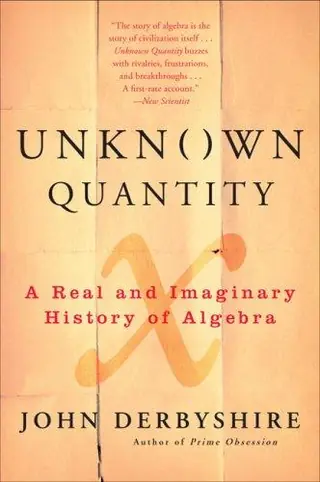
Unknown Quantity
A Real and Imaginary History of Algebra
by John Derbyshire · first published 2006
67% recommend33% neutral
Why HN recommends it
Popular history of algebra tracing the subject's development and placing ideas in their human and historical context; an accessible companion to Derbyshire's other math history for readers curious how the field grew.
Summarised by Claude from recommending comments
Affiliate links. As an Amazon Associate I earn from qualifying purchases.
Mentions per year
What Hacker News says
Related books
 2011–2026
Prime Obsession
John Derbyshire
Recommended by 22 · mentioned by 2622 recommend · 26 mention22 recommend · 2622 recommend
E, The Story of a Number
Eli Maor
Recommended by 8 · mentioned by 88 recommend · 8 mention8 recommend · 88 recommend
 2018–2025
The way of analysis
Robert S. Strichartz
Recommended by 3 · mentioned by 63 recommend · 6 mention3 recommend · 63 recommend
 2012–2024
Mathematical Analysis
Tom M. Apostol
Recommended by 6 · mentioned by 96 recommend · 9 mention6 recommend · 96 recommend
 2009–2024
Statistics
David Freedman, Robert Pisani, Roger Purves
Recommended by 11 · mentioned by 1511 recommend · 15 mention11 recommend · 1511 recommend
 2007–2024
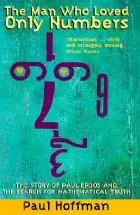
The Man Who Loved Only Numbers
Paul Hoffman
Recommended by 35 · mentioned by 5235 recommend · 52 mention35 recommend · 5235 recommend
 2014–2025
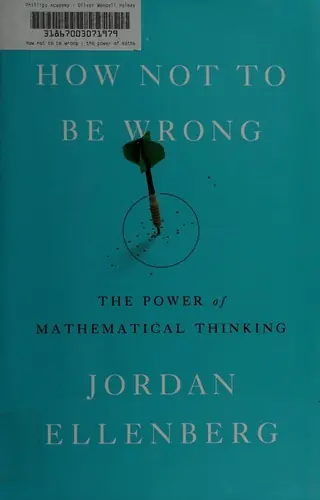
How Not to Be Wrong
Jordan Ellenberg
Recommended by 20 · mentioned by 2420 recommend · 24 mention20 recommend · 2420 recommend
 2007–2025
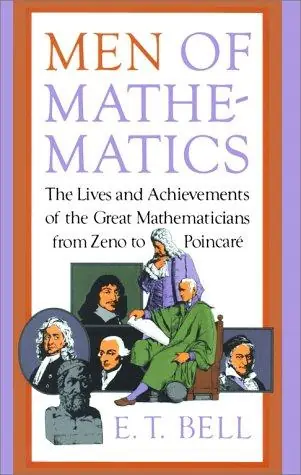
Men of mathematics
Eric Temple Bell
Recommended by 12 · mentioned by 2012 recommend · 20 mention12 recommend · 2012 recommend
Excellent read. I also liked his history of algebra: Unknown Quantity (https://www.amazon.com/Quantity-Real-Imaginary-History-Algeb...).
on “The Riemann Hypothesis (Part 2)” ↗I got a lot out of "Unknown Quantity" by John Derbyshire. Subtitle a real and imaginary history of algebra. I particularly enjoyed the lead up to the Chapter "Assault on the Quintic". Also, I hold "The Dictionary of Curious and Interesting…
on “Ask HN: Math books that made you significantly better at math?” ↗…are in my home library and I try to flip through some of them once a year. For maths, books like Prime Obsession by John Derbyshire, e The story of a Number by Eli Moar, Number by Tobias Dantzig, The Unknown Quantity by John Derbyshire provide good orientation for number theory, analysis & calculus and algebra. The second book might be tough to finish as its really really deep for a thin book. You might also look…
on “Ask HN: How do I learn math/physics in my thirties?” ↗"Prime Obsession" and "Unknown Quantity", both by John Derbyshire, contain significant sections on her (more so in "Unknown Quantity", as it is a popular history of algebra). Both are excellent books, though I'd have to give "Prime Obsession"…
on “The Mighty Mathematician You’ve Never Heard Of” ↗…Hypothesis: A Resource for the Afficionado and Virtuoso Alike (Peter Borwein et.al, 2007) 3. Prime Obsession: Bernhard Riemann and the Greatest Unsolved Problem in Mathematics (John Derbyshire, 2004) 4. Unknown Quantity: A Real and Imaginary History of Algebra (John Derbyshire, 2007) 5. Journey through Genius: The Great Theorems of Mathematics (William Dunham, 1991) 6. Riemann’s Zeta Function (H. M. Edwards, 1971)…
on “The Riemann Hypothesis, explained” ↗I can second this recommendation. These books are excellent popular primers on the history of mathematics; "Prime Obsession" is the story of the Riemann hypothesis, "Unknown Quantity" is the story of modern algebra. Also, if anyone has concerns because they don't agree with Derbyshire on his political views, rest assured that both books are entirely apolitical.
on “The Mighty Mathematician You’ve Never Heard Of” ↗I can recommend the following: John Derbyshire's Unknown Quantity - A real and imaginary history of algebra David Well's The Penguin Dictionary of Curious and Interesting Numbers William Dunham's The Mathematical Universe - An Alphabetical Journey Through the Great…
on “Ask HN: Books that made you fascinated to learn more mathematics?” ↗…al-Khwarizmi. Name of work: al-Kitab al-mukhtasar fi hisab al-jabr wa'l-muqabala ("A Handbook of Calculation by Completion and Reduction"). John Derbyshire examines al-Khwarizmi's work in chapter 3 of Unknown Quantity: A Real and Imaginary History of Algebra [ISBN 978-0-452-28853-9], which I just finished reading a few days ago. The first part of al-Khwarizmi's book concerns finding the roots of first- and second-order…
on “Send Me Your Nominations for Algorithms That Changed The World” ↗…of simplification does violence to the historical reality. Having read a lot of economic history, to read this essay's simplifications, I feel a bit like John Derbyshire, when he asked, at the end of "Unknown Quantity: A Real and Imaginary History of Algebra," was it possible to get useful work done with Category Theory? Is there any level of abstraction that goes too far? Likewise, here I would ask, if you have to…
on “The Rise of the Decentralized Startup” ↗I just bought the John Derbyshire book "Unknown Quantity."
on “Ask HN: Can you explain Calabi-Yau spaces to me?” ↗