Real and complex analysis
by Walter Rudin · first published 1966
63% recommend35% neutral3% critical
Why HN recommends it
Rigorous graduate-level text whose first, real half is a standard route into measure theory, Lebesgue integration, Hilbert and Banach spaces; suits readers who have done baby Rudin and want theory.
Summarised by Claude from recommending comments
This is an advanced text for the one- or two-semester course in analysis taught primarily to math, science, computer science, and electrical engineering majors at the junior, senior or graduate level.
Affiliate links. As an Amazon Associate I earn from qualifying purchases.
Mentions per year
What Hacker News says
Related books
 2011–2024
Real Analysis
H. L. Royden, Patrick Fitzpatrick, Halsey Royden, Royden
Recommended by 4 · mentioned by 64 recommend · 6 mention4 recommend · 64 recommend
 2008–2026
Principles of Mathematical Analysis
Walter Rudin
Recommended by 52 · mentioned by 8852 recommend · 88 mention52 recommend · 8852 recommend
 2015–2025
Functional Analysis
Walter Rudin
Recommended by 3 · mentioned by 33 recommend · 3 mention3 recommend · 33 recommend
 2009–2026
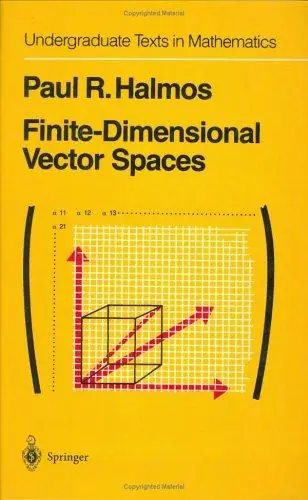
Finite-dimensional vector spaces
Paul R. Halmos
Recommended by 24 · mentioned by 3824 recommend · 38 mention24 recommend · 3824 recommend
 2009–2025
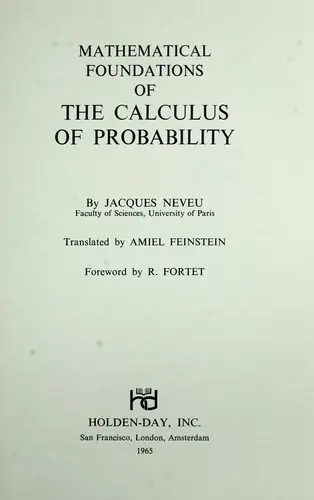
Mathematical foundations of the calculus of probability
J. Neveu
Recommended by 3 · mentioned by 63 recommend · 6 mention3 recommend · 63 recommend
 2009–2024
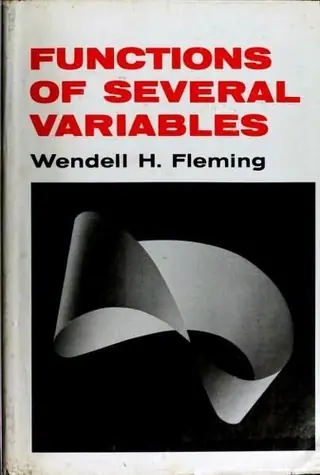
Functions of Several Variables
Wendell Fleming, W. H. Fleming
Recommended by 4 · mentioned by 54 recommend · 5 mention4 recommend · 54 recommend
 2010–2018
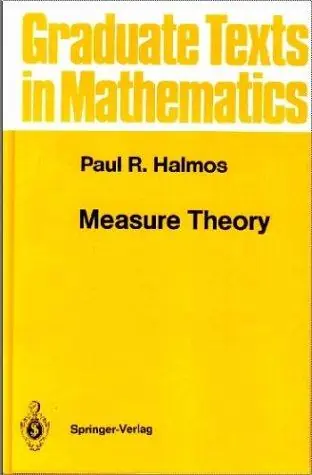
Measure theory
Paul R. Halmos
Recommended by 2 · mentioned by 42 recommend · 4 mention2 recommend · 42 recommend
 2009–2023
A Course in Probability Theory
Kai Lai Chung
Recommended by 3 · mentioned by 73 recommend · 7 mention3 recommend · 73 recommend
…makes a clean foundation for probability, stochastic processes, and statistics. Likely the nicest first text in measure theory is Royden's 'Real Analysis'. Also good is the first, real, half of Rudin's 'Real and Complex Analysis' where he also gives nice introductions to both Hilbert and Banach spaces and a nice treatment of the Fourier transform. My favorite authors in probability based on measure theory are J. Neveu (long…
on “Ask HN: Learn Math the Hard Way” ↗Physics: Feynman's lectures on physics. Maths: Rudin's Real and Complex analysis. Software engineering: The Mythical Man-Month. Computer science: Knuth's TAOCP.
on “Ask HN: Which books do you consider real gems in your field of work/study?” ↗…theorem, and Hilbert and Banach spaces. Long popular, from Stanford and sometimes aimed at statistics students, is Royden, 'Real Analysis'. It's gorgeous. Should also read the real half of Rudin, 'Real and Complex Analysis'; it's a few steps up in difficulty from baby Rudin. Again, hint: Get a good course from a good teacher who can get you over the material without getting stuck. Then go back and study the material…
on “Ask HN: I want to learn statistics and data mining” ↗…Then the Riemann integral of f over [0,1] does not exist, but the measure theory integral does and gives 0 for the result. There are at least two now classic books, Royden, Real Analysis and Rudin, Real and Complex Analysis. But there are more, and likely more can be written. For Rudin, can f'get about the last half on functions of a complex variable. Royden is easier to read. Rudin has the math more succinctly presented.…
on “Why squared error? (2014)” ↗…students. :) For a foundational understanding of Calculus, and just becoming a better mathematician, a good start would be -> Baby Rudin (Principles of Mathematical Analysis, Walter Rudin) Papa Rudin (Real and Complex Analysis, Walter Rudin) Grandpa Rudin (Functional Analysis, Walter Rudin)
on “Ask HN: Serious mathematics books that can replace a good teacher?” ↗…the fundamental contribution to sufficient statistics. IIRC, it was at Chicago that Halmos wrote Measure Theory. Great details on measure theory and much more are in, say, H. Royden, Real Analysis and W. Rudin, Real and Complex Analysis. To narrow measure theory to probability theory, use the famous texts by the authors I listed, Loeve, .... Royden and Rudin are terrific prerequisites to Loeve, etc. Commonly the sigma algebra of events…
on “Foundations of probability theory” ↗…installation of SQL Server. Again, once again, over again, yet again, one more time, far and away the worst problem in my startup is making sense out of Microsoft's documentation. I found W. Rudin, Real and Complex Analysis fast, fun, and easy reading; Microsoft's documentation was an unanesthetized root canal procedure -- OUCH! So, again, once again, over again, yet again, one more time, please, Please, PLEASE, for the…
on “The largest Git repo” ↗While I love Rudin's Real and Complex Analysis and Functional Analysis, I've always thought Loomis and Sternberg's Advanced Calculus could serve as an interesting alternative to more conventional texts like Baby Rudin for introductory analysis. It…
on “Ask HN: Learn Math the Hard Way” ↗…subscription to a library. Renegotiate your lowly Bachelor of Sciences' contract to work fewer hours, that'll get you physical freedom. Seriously. IMO someone reading through, say, the TAOCP, Rudin's Real and Complex Analysis, Horowitz & Hill's TAOE, or any selection of good, difficult books like these, will have acquired undoubtedly more intellectual freedom afterwards than any PhD graduate. For starters, it's self-directed…
on “The Ph.D Bust: America's Awful Market for Young Scientists” ↗…for analysis. Walter Rudin's "Principle's of Mathematical Analysis" is an amazing book but it's difficult to start with. For a quick intro to Lebesgue integration you can read the beginning of Rudin's "Real and Complex Analysis" or Halsey Royden's "Real Analysis". I haven't read Axler's book. I liked Hoffman and Kunze's "Linear Algebra"
on “A Software Engineer’s Adventures in Learning Mathematics” ↗…principles. Bernard R. Gelbaum and John M. H. Olmsted, Counterexamples in Analysis John C. Oxtoby, Measure and Category: A Survey of the Analogies between Topological and Measure Spaces Walter Rudin, Real and Complex Analysis Walter Rudin, Functional Analysis Leo Breiman, Probability Kai Lai Chung, A Course in Probability Theory, Second Edition Jacques Neveu, Mathematical Foundations of the Calculus of Probability Erhan…
on “Ask HN: Older textbooks/papers you consider classics still worth studying today?” ↗…essentially separate. That's the main stuff. Don't take the Riemann integral very seriously: The good stuff is Lebesgue's integral (partitions the range instead of the domain) as in the first half of Rudin's Real and Complex Analysis. There also get to see Banach space, Hilbert space, von Neumann's novel proof of the Radon-Nikodym theorem (grown up version of the fundamental theorem of calculus and with astounding power) and the…
on “Algebra, Topology, Differential Calculus, and Optimization Theory for CS and ML [pdf]” ↗Professional mathematician (but in business, not academia). I hold a PhD in mathematical physics. Below the list of books that taught me the most. However, these books are often not directly related to my current work. Also, I don't think they will be useful for everyone, as some of them are strong specialized books. These books mostly taught me to think like a mathematician. One of the strongest
on “Ask HN: Which mathematics books taught you the most in your career?” ↗> Maths: Rudin's Real and Complex analysis. Yes!! Rudin kills it, but you need a year or two to get through this gem. A course in university will go too fast for sure.
on “Ask HN: Which books do you consider real gems in your field of work/study?” ↗…can be a good start in a lot in applied math and on deterministic optimal control theory. At one of the first chances, take a careful pass through Royden, 'Real Analysis' and the real half of Rudin, 'Real and Complex Analysis' -- a good course would help weight the more and less important ideas there. Then a long dessert buffet is Luenberger, 'Optimization by Vector Space Techniques'. With that background, you can do probability…
on “Thinking of Doing a PhD? Take this simple test” ↗