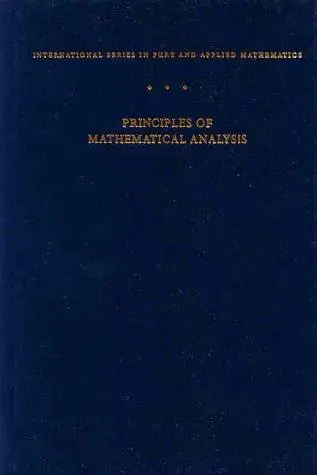
Principles of Mathematical Analysis
by Walter Rudin · first published 1953
59% recommend35% neutral6% critical
Why HN recommends it
Rigorous, dense treatment of single- and multivariable real analysis in a spare definition-theorem-proof style; rewards patient readers who work the proofs, and suits math students building a foundation in analysis.
Common criticism: Too terse and difficult for self-study or for readers new to rigorous math
Summarised by Claude from recommending comments
The third edition of this well known text continues to provide a solid foundation in mathematical analysis for undergraduate and first-year graduate students. The text begins with a discussion of the real number system as a complete ordered field. (Dedekind's construction is now treated in an appendix to Chapter I.) The topological background needed for the development of convergence, continuity, differentiation and integration is provided in Chapter 2. There is a new section on the gamma function, and many new and interesting exercises are included. -- Publisher description.
Affiliate links. As an Amazon Associate I earn from qualifying purchases.
Mentions per year
What Hacker News says
Related books
 2009–2025
Real and complex analysis
Walter Rudin
Recommended by 25 · mentioned by 4025 recommend · 40 mention25 recommend · 4025 recommend
 2009–2026
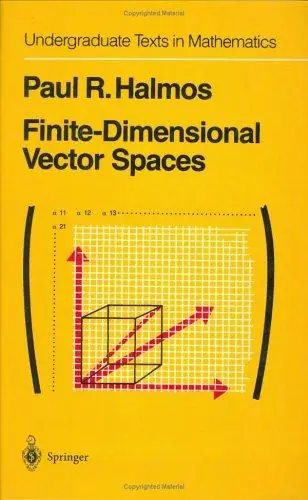
Finite-dimensional vector spaces
Paul R. Halmos
Recommended by 24 · mentioned by 3824 recommend · 38 mention24 recommend · 3824 recommend
 2011–2024
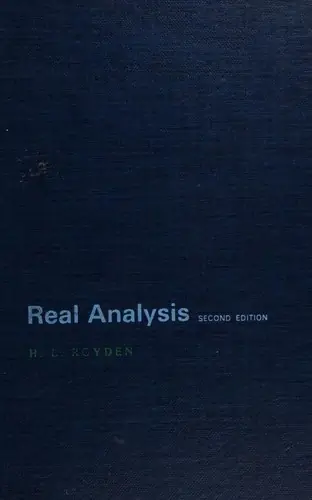
Real Analysis
H. L. Royden, Patrick Fitzpatrick, Halsey Royden, Royden
Recommended by 4 · mentioned by 64 recommend · 6 mention4 recommend · 64 recommend
 2009–2024
Functions of Several Variables
Wendell Fleming, W. H. Fleming
Recommended by 4 · mentioned by 54 recommend · 5 mention4 recommend · 54 recommend
 2010–2026
Understanding Analysis
Stephen Abbott
Recommended by 31 · mentioned by 3831 recommend · 38 mention31 recommend · 3831 recommend
 2012–2024
Mathematical Analysis
Tom M. Apostol
Recommended by 6 · mentioned by 96 recommend · 9 mention6 recommend · 96 recommend
 2007–2026
Calculus on manifolds
Michael Spivak
Recommended by 22 · mentioned by 4822 recommend · 48 mention22 recommend · 4822 recommend
 2015–2025
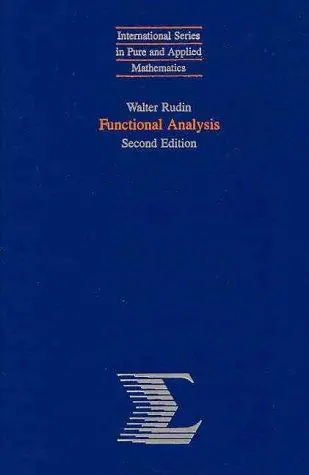
Functional Analysis
Walter Rudin
Recommended by 3 · mentioned by 33 recommend · 3 mention3 recommend · 33 recommend
…available on the Internet in PDF for free). For numerical linear algebra, see Forsythe and Moler. The standard advanced calculus text to teach the theorems and proofs of calculus is Walter Rudin's 'Principles of Mathematical Analysis'. After that book, notation such as O( n ln(n) ) as in Knuth's TACP will be child's play. Note: At one time the Halmos 'Finite Dimensional Vector Spaces' and Rudin's 'Principles' were used in Harvard's…
on “Ask HN: Learn Math the Hard Way” ↗…is profound and won't go away even in practice although is less important in practice than long assumed in, say, educational statistics. Then take a good pass through at least the first parts of Rudin, Principles of Mathematical Analysis, AKA Baby Rudin. For the exterior algebra in the back of the more recent editions, well, likely get that elsewhere, say, now in English, directly from Cartan. The first parts of Baby Rudin cover metric…
on “Why squared error? (2014)” ↗You may be having trouble finding things because calculus done with full rigor is called "analysis". The classic introductory-but-extremely-dense text is Rudin's _Principles of Mathematical Analysis_. If you're reading on your own, though, I expect you'll get a lot more out of a friendlier book; my first analysis course was taught out of Strichartz's _The Way of Analysis_. N.B.: Most everything…
on “Ask HN: A good book on Calculus?” ↗It's not nearly as easy to work through as SICP is but Principles of Mathematical Analysis by Walter Rudin (sometimes referred to as little Rudin) is a great place to start if you're interested in analysis. It's a hard book, but it's pretty much the standard for undergrad analysis.
on “Ask HN: Math books like SICP?” ↗…the people who take the time and effort to go through it. I'd recommend the following three books to similarly cover the three main areas of higher mathematics (analysis, algebra, and topology): 1. Principles of Mathematical Analysis by Rudin (http://www.amazon.com/Principles-Mathematical-Analysis-Inter...) 2. Algebra by Artin (http://www.amazon.com/Algebra-2nd-Featured-Titles-Abstract/d...) 3. Topology by Munkres (http://www.amazon.com/Topology-2nd-James-Munkres/dp/01318162...)…
on “Ask HN: Math books like SICP?” ↗…calculus. A great high school level one is: * Basic Mathematics by Lang * Calculus Made Easy by Thompson If that is too simplistic, try a Math 55 like approach: * Linear Algebra Done Right by Axler * Principles of Mathematical Analysis by Rudin You can replace Axler by Finite-Dimensional Vector Spaces by Halmos. But it's harder. Sadly the latest edition of Axler has distracting pictures and boxes that have done away with some of it's…
on “Any recommended crash course on Maths?” ↗For analysis you absolutely MUST read Principles of Mathematical Analysis by Walter Rudin. Covers everything and is literally a gold standard text in modern analysis. "Baby Rudin" is essentially the analysis bible that all subsequent texts worked off of.
on “Ask HN: Recommend a maths book for a teenager?” ↗Baby Rudin, Principles of Mathematical Analysis, was that book for me. It was that book for a lot of people, which I guess means it felt "perfect" for people with a broad range of backgrounds. I never found a book like that for algebra. Algebra felt…
on “Ask HN: The book that did it for you in math and/or CS?” ↗Books that are given nicknames by grad students. :) For a foundational understanding of Calculus, and just becoming a better mathematician, a good start would be -> Baby Rudin (Principles of Mathematical Analysis, Walter Rudin) Papa Rudin (Real and Complex Analysis, Walter Rudin) Grandpa Rudin (Functional Analysis, Walter Rudin)
on “Ask HN: Serious mathematics books that can replace a good teacher?” ↗If you really want a challenge, and to learn math deeply, work slowly through: Principles of mathematical analysis by Rudin. It might be above your pay grade, but all those lower level concepts/classes you listed will come with working through this book. Even if a chapter takes a month, you will learn real math and…
on “Ask HN: Text Book Recommendation for Math?” ↗Brent Yorgey's Introduction to Haskell: https://www.cis.upenn.edu/~cis1940/spring13/ Rudin's "Principles of Mathematical Analysis" is a brilliantly lucid introduction to the topic that takes a completely unconventional approach.
on “Ask HN: Do you recall any book or course that made a topic finally click?” ↗…rationals, and integers from the naturals, etc. I find that a really rigorous (albeit...spartan) first pass for understanding complex numbers can be developed by reading through Chapter 1 of Rudin’s Principles of Mathematical Analysis. He doesn’t go quite as far as developing Peano arithmetic from first principles, but he does build up the number systems successively, beginning with the natural numbers if I recall correctly. That was…
on “What are the complex numbers, really?” ↗…sampling and generate a continuous waveform for the audio system and speakers, that is, to analog. There is a good start on Fourier series (for periodic waveforms) with the math done carefully in W. Rudin, Principles of Mathematical Analysis. If a waveform is not periodic but defined for all time, then we can do the closely related Fourier transform, and there is a nice treatment of the math in W. Rudin, Real and Complex Analysis. Suppose…
on “Let's Learn About Waveforms” ↗…year of a doctoral program, I could study from after lunch until next morning and I concentrated on getting the fundamentals right. The greatest book, the one where things began to click, was Rudin's "principles of mathematical analysis". Before I came to this book, I had wasted a lot of time finding my style of learning or, if you will, discovering my preferences. But if you already have the basics and are not going to waste as much…
on “Self-Discipline Outdoes IQ in Predicting Academic Performance in Adolescents” ↗…wrote about his early life, turbulent war years and math career in an autobiography titled 'As I Remember It.'" Rudin's autobiography is quite a good read--certainly much easier going than "baby Rudin" (Principles of Mathematical Analysis), which is a masterpiece but not for recreational reading.
on “Noted mathematician Rudin dies at 89” ↗