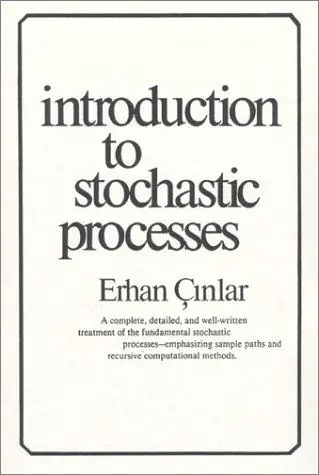
Introduction to stochastic processes
by E. Çınlar · first published 1974
80% recommend20% neutral
Affiliate links. As an Amazon Associate I earn from qualifying purchases.
Mentions per year
What Hacker News says
Related books
 2010–2023
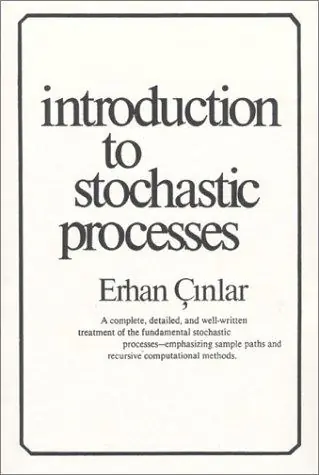
Introduction to Stochastic Processes
Erhan Cinlar
Recommended by 4 · mentioned by 44 recommend · 4 mention4 recommend · 44 recommend
 2010–2018
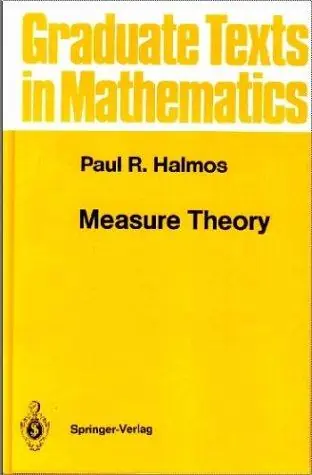
Measure theory
Paul R. Halmos
Recommended by 2 · mentioned by 42 recommend · 4 mention2 recommend · 42 recommend
 2009–2023
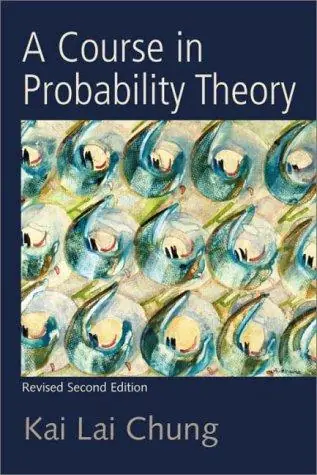
A Course in Probability Theory
Kai Lai Chung
Recommended by 3 · mentioned by 73 recommend · 7 mention3 recommend · 73 recommend
 2013–2023
Measure and category
John C. Oxtoby, Oxtoby
Recommended by 3 · mentioned by 33 recommend · 3 mention3 recommend · 33 recommend
 2008–2021
Brownian motion and stochastic calculus
Ioannis Karatzas, Steven E. Shreve
Recommended by 3 · mentioned by 63 recommend · 6 mention3 recommend · 63 recommend
 2008–2024
An introduction to probability theory and its applications
William Feller
Recommended by 8 · mentioned by 98 recommend · 9 mention8 recommend · 98 recommend
 2009–2025
Real and complex analysis
Walter Rudin
Recommended by 25 · mentioned by 4025 recommend · 40 mention25 recommend · 4025 recommend
…undefined terminology sometimes about peripheral issues. Clean, logical, all terms well defined and explained, with plenty of advanced content, is in (with some markup using TeX) Erhan \c Cinlar, {\it Introduction to Stochastic Processes,\/} ISBN 0-13-498089-1, Prentice-Hall, Englewood Cliffs, NJ, 1975.\ \ The author was long at Princeton. He is a high quality guy. As I was working my way through grad school in a company working on…
on “Markov chain Monte Carlo without the bullshit (2015)” ↗…the Red-Blue inventory declines like a multi-dimensional, continuous time, discrete state space (huge state space) Markov process subordinated to a Poisson process (for a good start, see the E. Cinlar Introduction to Stochastic Processes). So, given the speeds, radii, and what happens -- one dies, other dies, both die, neither die -- one on one, Red-Blue encounters, have all the data needed. Now with that data, we can make some predictions.…
on “Foundations Machine Learning” ↗…the action is.". Keilson was offended by "gnat's ass" but liked the math and approved my work for the US Navy. That question and answer are good to keep in mind. There is more in, say, Erhan Çinlar, Introduction to Stochastic Processes, ISBN 0-13-498089-1, Prentice-Hall, Englewood Cliffs, NJ, 1975. For why the arrival times have exponential distribution and why we get a Poisson process, Çinlar has a nice simple, intuitive, useful axiomatic…
on “Forecasting s-curves is hard” ↗…standard work in such Markov processes to say how fast the concentrations reach the 'absorbing' states of 0% or 100%. The literature on Markov processes is enormous. For a start, consider: Erhan Çinlar, 'Introduction to Stochastic Processes', ISBN 0-13-498089-1, Prentice-Hall, Englewood Cliffs, NJ, 1975.
on “New Statistical Law Discovered” ↗E. Cinlar, Introduction to Stochastic Processes Covers limit theorems and continuous time.
on “Ask HN: Best place to start learning about Markov Chains?” ↗…independent is from probability theory based on measure theory and the Radon-Nikodym theorem (with von Neumann's novel proof in Rudin, Real and Complex Analysis), but an easier introduction is in Erhan Çınlar, Introduction to Stochastic Processes. In a Poisson process the time until the next event has the Poisson distribution and, thus, from a simple calculus manipulation, is a Markov process. E.g., time from now until a molecule of hydrogen…
on “Markov Chain Monte Carlo Without All the Bullshit (2015)” ↗…are stationary and independent, then the inter-arrival times are independent and have the same exponential distribution. Good details are early in the chapter on Poisson processes in Erhan Cinlar, 'Introduction to Stochastic Processes', ISBN 0-13-498089-1, Prentice-Hall. Downey's book places a lot of emphasis on distributions, e.g., Weibull, and descriptions, e.g., skewness. So an implication is, given some data, we should try to…
on “Think Stats, using python to learn stats ” ↗…a few more meager assumptions, presto, bingo, the renewal theorem says that the arrivals at your site form a Poisson arrival process. There's a terrific chapter on the Poisson process in E. Cinlar's introduction to stochastic processes. Terrific. Some of what you can say, knowing that you have a Poisson process, is amazing. All with no or meager attention to the data and, instead, from knowing you have a Poisson process, e.g., from…
on “Common Probability Distributions: The Data Scientist’s Crib Sheet” ↗It's all much easier than that: It's just the Poisson process, e.g., with a nice chapter in E. Cinlar, Introduction to Stochastic Processes. Buses come as arrivals. So bus arrivals are a stochastic arrival process where stochastic just means varying randomly over time where, really, the randomly doesn't mean anything, includes deterministic…
on “The Waiting Time Paradox, Or, Why Is My Bus Always Late?” ↗Hmm .... He neglected classification of states and asymptotic behavior. His "statistical probabilities" is not good. He omitted the role of conditional independence. Instead read, say, Cinlar, 'Introduction to Stochastic Processes'.
on “Introduction to Markov Processes” ↗The one I'm enjoying right now is Introduction to Stochastic Processes by Erhan Cinlar.
on “Ask HN: Math books that made you significantly better at math?” ↗…or acoustical signals and noise. There are commonly interested in power spectral estimation, digital filtering, maybe Wiener filtering, the fast Fourier transform, etc. or (2) what is in, say, Cinlar, Introduction to Stochastic Processes. In Cinlar, for the continuous time case, get a good introduction to the Poisson process (the vanilla arrival process, e.g., like clicks at a Geiger counter, new sessions at a Web site, and much more).…
on “Foundations of probability theory” ↗…it's nice because it starts with 'qualitative' assumptions and ends up with the full algebra of the process and its distribution and independence of times between arrivals. Details are in E. Cinlar, 'Introduction to Stochastic Processes' in his chapter on the Poisson process. There he also touches on the non-stationary case, and what he has may (I'm in hurry this morning) be equivalent to your "average out over ... the cycle". Since…
on “Near Miss: The Solar Superstorm of July 2012” ↗…is the Poisson stochastic arrival (get arrivals at discrete points in time) process. There are two amazing, powerful, useful, non-obvious biggie points: (1)Axiomatic Derivation As in Erhan Çinlar, 'Introduction to Stochastic Processes', ISBN 0-13-498089-1. an arrival process with stationary (distribution not changing over time) independent (of all past history of the process) increments (arrivals) is necessarily a Poisson process.…
on “Some Useful Probability Facts for Systems Programming” ↗…distribution with parameter the arrival rate. The number of arrivals in an interval is random with Poisson distribution (compare with the terms of the Taylor series for exp(x)). See early in E. Cinlar, 'Introduction to Stochastic Processes'. There for the Poisson process there is a 'qualitative, axiomatic' definition -- an arrival process with stationary, independent increments. A cute derivation from this just qualitative description…
on “Practical and robust anomaly detection in time series” ↗