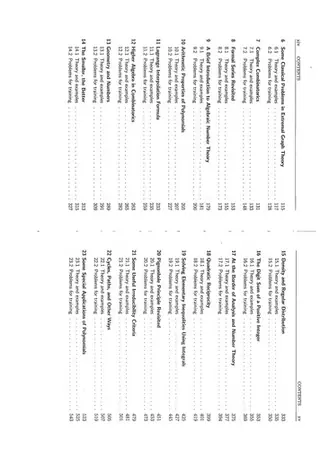
Problems from the book
by Titu Andreescu · first published 2008
29% recommend71% neutral
Affiliate links. As an Amazon Associate I earn from qualifying purchases.
Mentions per year
What Hacker News says
Related books
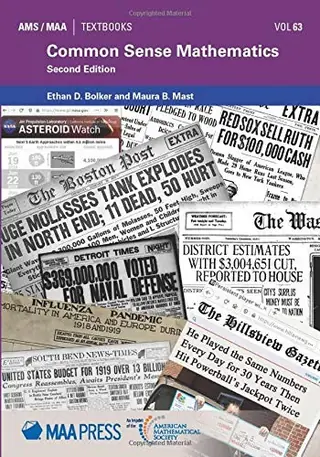 2020–2023
Common Sense Mathematics
Ethan D. Bolker, Maura B. Mast
Recommended by 2 · mentioned by 22 recommend · 2 mention2 recommend · 22 recommend
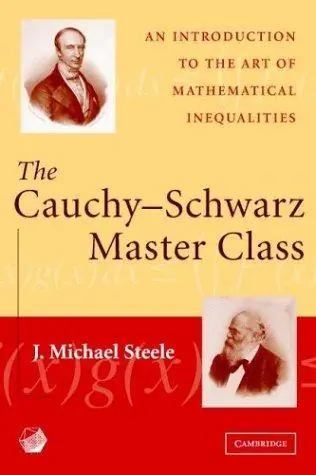 2011–2023
The Cauchy-Schwarz Master Class
J. Michael Steele
Recommended by 3 · mentioned by 33 recommend · 3 mention3 recommend · 33 recommend
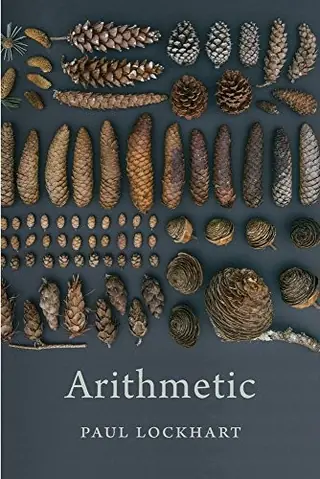 2018–2023
Arithmetic
Paul Lockhart
Recommended by 4 · mentioned by 54 recommend · 5 mention4 recommend · 54 recommend
 2008–2023
Number theory
George E. Andrews
Recommended by 5 · mentioned by 65 recommend · 6 mention5 recommend · 65 recommend
 2020–2024
Methods of mathematical physics
Richard Courant
Recommended by 1 · mentioned by 51 recommend · 5 mention1 recommend · 51 recommend
 2019–2023
Functions and graphs
Israel M. Gel'fand, E. G. Glagoleva, E. E. Shnol
Recommended by 4 · mentioned by 44 recommend · 4 mention4 recommend · 44 recommend
Geometry and the imagination
David Hilbert
Recommended by 7 · mentioned by 107 recommend · 10 mention7 recommend · 107 recommend
 2012–2024
Mathematical Analysis
Tom M. Apostol
Recommended by 6 · mentioned by 96 recommend · 9 mention6 recommend · 96 recommend
…cross-section of some of the nicest proofs in reasonably elementary (read: undergrad-comprehensible) maths. Might be a bit too advanced, though (the writing is terse and a lot of ground is covered). Problems from the BOOK by Andreescu and Dospinescu (a play on the previous title, which itself is a play on an Erdös quote) is an olympiad problem book; it might be one of the best in its genre. Oystein Ore has some nice introductory…
on “Ask HN: Recommend a maths book for a teenager?” ↗…on?) Economy/finance === - Basic economics (Thomas Sowell) - How an economy grows and why it crashes - Know the city Math === - Coffee time in Memphis - Real analysis (mathematics textbook) - Problems from the book (Halfway through this one, and I found it really enjoyable, even with only a CS bachelors) If anyone has read any and has feedback/notes, I'm looking forward to hearing them!
on “Ask HN: Books you plan to read in 2020?” ↗…dollars during my undergrad years to pay for textbooks. It was always a crapshoot because you never knew if the professor would not use the textbook at all or would heavily rely on it and assign reading/problems from the book. There are definitely ways around purchasing expensive textbooks, but most are illegal, and none are convenient or guaranteed.
on “New Requests for Startups” ↗…repetition software, but were excellent at their studies because they consistently solved textbook problems. For them, they got the "repetitions" (aka exposure to facts and problems) via solving more new problems from the book nearly every day. Later problems in the textbooks would provide review of previous problems. This method can be far more effective than spending too much studying with spaced repetition software (which…
on “Anki-Fy Your Life” ↗In my experience, the best way to get better at math is to do a lot of it. Find some book that's "good enough" for some topic you're interested, and work many many problems from the book. You'll learn about the topic, but more importantly you'll learn problem solving skills. I recommend working the problem until you're sure the answer is right -- in grad school problem sets didn't have…
on “Ask HN: Math books that made you significantly better at math?” ↗…also included a bunch of mathematics involving "neighborhoods", meaning the set of all points within a distance of an arbitrarily small epsilon from some point X. Although I never did any of the math problems from the book, that early exposure to epsilon made calculus vastly easier to understand, and for that, it's close to my heart.
on “Ask HN: Math books that made you significantly better at math?” ↗…even put it into flashcards. I've been using Anki. The trick is to recognize what is actually worth doing this for. 3) If something is especially worth knowing, (see point 2), see if you can either do problems from the book or try out the concept in some way if there are no problems available. If you're reading something just because you feel like you should, you won't get anything out of it (or a least I don't).
on “Eloquent JavaScript 4th edition (2024)” ↗