Ask HN2022
Do you recall any book or course that made a topic finally click?
502 comments named 124 books. Named most: The Selfish Gene and Statistical Rethinking, by 3 people each.
The 12 named most
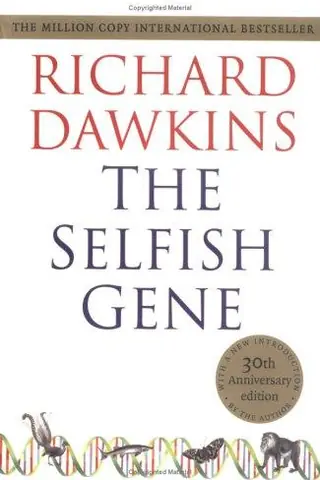
1The Selfish Gene
Richard Dawkins
named by 3
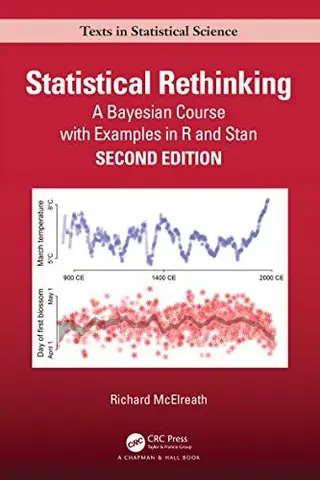
2Statistical Rethinking
Richard McElreath
named by 3
3Deep Work
Cal Newport
named by 2

4The Little Schemer
Daniel P. Friedman, Matthias Felleisen
named by 2
5How to Design Programs
Matthias Felleisen
named by 2
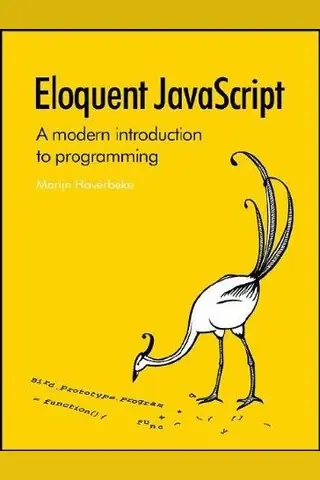
6Eloquent Javascript
Marijn Haverbeke
named by 2
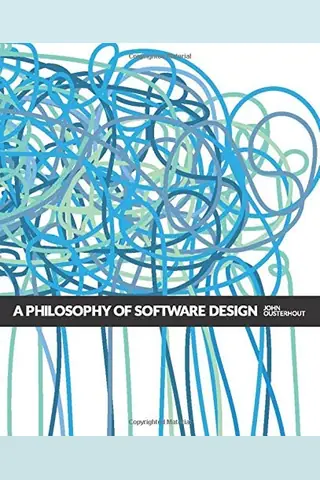
7A Philosophy of Software Design
John K. Ousterhout
named by 2

8The art of electronics
Paul Horowitz, Winfield Hill
named by 2
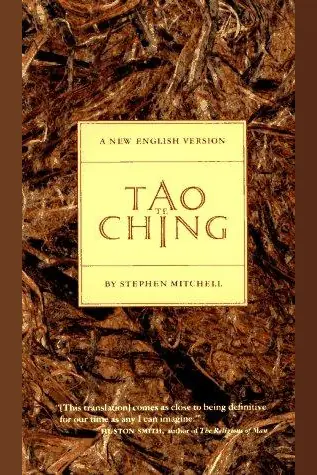
9Tao Te Ching
Stephen Mitchell
named by 2

10Rootkit arsenal
Bill Blunden
named by 2
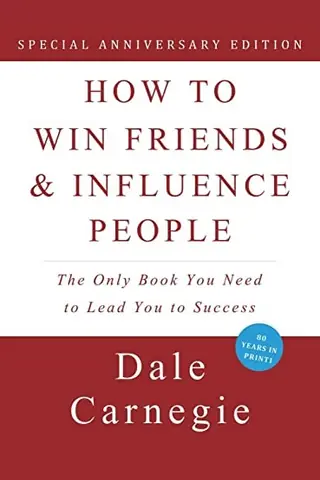
11How to Win Friends and Influence People
Dale Carnegie
named by 1 person
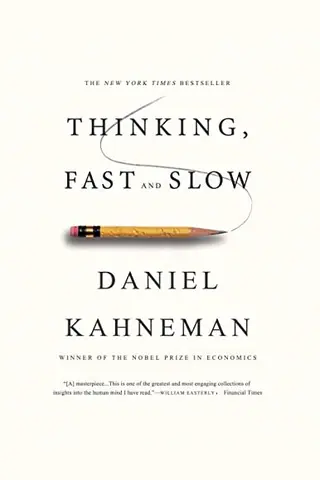
12Thinking, fast and slow
Daniel Kahneman
named by 1 person
What people said
One comment from the thread for each, cut to the part that says why. Amazon links are affiliate links. As an Amazon Associate I earn from qualifying purchases.
The Selfish Gene Richard Dawkins, 1976 · named by 3
“I know this is a little out of left field but I couldn't understand why anyone was Atheist until I read The Demon Haunted World by Carl Sagan... quickly followed by The Selfish Gene by Richard Dawkins.”
Statistical Rethinking Richard McElreath, 2015 · named by 3
“Statistical Rethinking is the first book that helped me make sense of statistical modeling (and probability as applied to modeling):”
Deep Work Cal Newport, 2016 · named by 2
“How to actually do knowledge work and grow, and productivity in general from Cal Newport's book "Deep Work".”
The Little Schemer Daniel P. Friedman, Matthias Felleisen, 1995 · named by 2
“The Little Schemer took me from "getting it" at a conceptual level to really knowing how to use recursion to get stuff done.”
Tao Te Ching Stephen Mitchell, 1842 · named by 2
“For me the fascinating thing about the Tao Te Ching is that it's not a work of philosophy, it's more like Cliff's Notes for the self-evident structure of the Universe.”
Thinking, fast and slow Daniel Kahneman, 2011 · named by 1
“The book "Thinking, Fast and Slow" made some statistics concepts click for me. I think I finally understand the "Law of large numbers" and "Regression to mean".”
Also named
112 books named once
- Code Complete Steve McConnell
- Crafting Interpreters Robert Nystrom
- Learn Python the Hard Way Zed Shaw
- Code Charles Petzold
- The Elements of Computing Systems Noam Nisan, Shimon Schocken
- Why We Sleep Matthew Walker
- The Feynman Lectures on Physics Richard Phillips Feynman
- Siddhartha Hermann Hesse
- Concrete mathematics Ronald L. Graham, Donald Knuth
- On Writing Well William Zinsser
- So Good They Can't Ignore You Cal Newport
- The E-myth revisited Michael E. Gerber
- Getting Things Done David Allen
- Economics in One Lesson Henry Hazlitt
- The Structure of Scientific Revolutions Thomas S. Kuhn
- The Demon-Haunted World Carl Sagan
- The Righteous Mind Jonathan Haidt
- Refactoring Martin Fowler
- On Writing Stephen King
- Calculus Michael Spivak
- Basic economics Thomas Sowell
- Probability Theory E. T. Jaynes
- Pattern Recognition and Machine Learning Christopher M. Bishop
- The mind illuminated Culadasa (John Yates), Matthew Immergut
- How to prove it Daniel J. Velleman
- Neural Networks and Deep Learning Charu C. Aggarwal
- Computer systems Randal E. Bryant, David R. O'Hallaron
- Head First design patterns Eric Freeman, Elisabeth Freeman
- Elements Euclid
- Programming Rust Jim Blandy, Jason Orendorff
- Operating Systems Andrew S. Tanenbaum, Albert S. Woodhull
- Cosmos Carl Sagan
- Mastering Regular Expressions Jeffrey E. F. Friedl
- TCP/IP Illustrated W. Richard Stevens, Kevin R. Fall
- The clean coder Robert C. Martin
- Principles of Mathematical Analysis Walter Rudin
- Book of Proof Richard Hammack
- How to Take Smart Notes Sönke Ahrens
- Systemantics John Gall
- Superforecasting Philip E. Tetlock, Dan Gardner
- Grokking Algorithms Aditya Y. Bhargava
- All of Statistics Larry Wasserman
- The Blind Watchmaker Richard Dawkins
- Three-Body Problem Series Cixin Liu
- The Book of Shaders Patricio Gonzalez Vivo, Jen Lowe
- The Four Agreements Don Miguel Ruiz
- Maps of Meaning Jordan B. Peterson
- The master and his emissary Iain McGilchrist
- Computer networking James F. Kurose, Keith W. Ross
- Everything and more David Foster Wallace
- The Drunkard's Walk Leonard Mlodinow
- The Gene Siddhartha Mukherjee
- Einstein Walter Isaacson
- C programming K. N. King
- The Order of Time Carlo Rovelli
- A Book of Abstract Algebra Charles C. Pinter
- Nonlinear dynamics and Chaos Steven H. Strogatz, Steven Strogatz
- Orthodoxy Gilbert Keith Chesterton
- Effective Python Brett Slatkin
- But How Do It Know J. Scott Clark
- The Extended Phenotype Richard Dawkins, Wolfgang Mayer
- Structured Computer Organization Andrew S. Tanenbaum
- Small Is Beautiful E. F. Schumacher
- Simply Scheme Brian Harvey
- Stick and Rudder Wolfgang Langewiesche
- Scientific Advertising Claude C. Hopkins
- Mathematical proofs Gary Chartrand, Albert D. Polimeni
- Div, grad, curl, and all that H. M. Schey
- The Way of Zen Alan Watts
- How to Talk to Anyone Leil Lowndes
- Common Lisp David S. Touretzky
- The Deficit Myth Stephanie Kelton
- The hungry brain Stephan J. Guyenet
- An introduction to functional programming through Lambda calculus Greg Michaelson
- Imagined communities Benedict Anderson
- Advanced Engineering Mathematics Erwin Kreyszig
- Burn Herman Pontzer
- Framework design guidelines Krzysztof Cwalina, Brad Abrams
- Economics : the user's guide Ha-Joon Chang
- What the Buddha taught Walpola Rahula
- Type Theory and Formal Proof Rob Nederpelt, Herman Geuvers
- Dialectic of Enlightenment Theodor W. Adorno
- Prolog programming for artificial intelligence Ivan Bratko, Bratko, Ivan.
- A Common-Sense Guide to Data Structures and Algorithms Jay Wengrow
- All the Math You Missed Thomas A. Garrity
- Orientalism Edward W. Said
- C++ Crash Course Josh Lospinoso
- Marketing Warfare Al Ries
- The seven principles for making marriage work John Mordechai Gottman, Nan Silver
- In pursuit of the traveling salesman William Cook
- On certainty = Ludwig Wittgenstein
- The heart of the Buddha's teaching Thích Nhất Hạnh
- Calculus, An Intuitive and Physical Approach Morris Kline
- Mating in Captivity Esther Perel
- Money Felix Martin
- Advanced C₊₊ programming styles and idioms James O. Coplien
- Data Science Tiffany-Anne Timbers, Trevor Campbell
- Teach yourself C in 21 days Peter G. Aitken
- Wonderful Life S. Gould
- Impact Mapping Gojko Adzic, Marjory Bisset
- Aircraft Design Daniel P. Raymer
- The World of Carbon Isaac Asimov
- A guide for the perplexed E. F. Schumacher
- The Bible of Options Strategies Guy Cohen
- Java for dummies Barry A. Burd, Barry Burd
- The Culture of Make Believe Derrick Jensen
- Pro Drupal development John K. VanDyk
- What makes love last? John Mordechai Gottman
- Two Zen Classics Katsuki Sekida
- The elements of integration and Lebesgue measure Robert Gardner Bartle
- The structure and interpretation of quantum mechanics R. I. G. Hughes
- A course in mathematical logic for mathematicians I͡U. I. Manin
How this was made
From the site’s data, as of the last data refresh: a book’s count is the number of different people in the thread who named it as an answer, or recommended it in a reply. Books without a page on this site are not counted.
Each quote is a short excerpt of one comment that names the book, picked by a fixed rule: among the 16 books named most, comments that recommend the book, are mostly about it and say why it matters come first. The quotes were then read by hand; where the rule’s pick missed the point, a better excerpt from the same thread replaced it (“…” marks a cut), or the book is shown without one. Follow the date to read the whole comment on Hacker News. All mentions are in the open dataset, mentions.csv.gz.