The Book of Shaders
by Unknown author
75% recommend15% neutral10% critical
Affiliate links. As an Amazon Associate I earn from qualifying purchases.
Mentions per year
What Hacker News says
Related books
 2008–2026
Real-time rendering
Tomas Möller
Recommended by 34 · mentioned by 4834 recommend · 48 mention34 recommend · 4834 recommend
 2016–2025
Tricks of the 3D Game Programming Gurus
Andre LaMothe
Recommended by 5 · mentioned by 75 recommend · 7 mention5 recommend · 75 recommend
Ray Tracing in One Weekend
Peter Shirley, Trevor D. Black, Steve Hollasch
Recommended by 48 · mentioned by 6548 recommend · 65 mention48 recommend · 6548 recommend
 2010–2026
Physically Based Rendering
Matt Pharr, Greg Humphreys, Wenzel Jakob
Recommended by 92 · mentioned by 10992 recommend · 109 mention92 recommend · 10992 recommend
 2014–2026
Build Your Own Lisp
Mr Daniel Holden
Recommended by 23 · mentioned by 3923 recommend · 39 mention23 recommend · 3923 recommend
 2013–2026
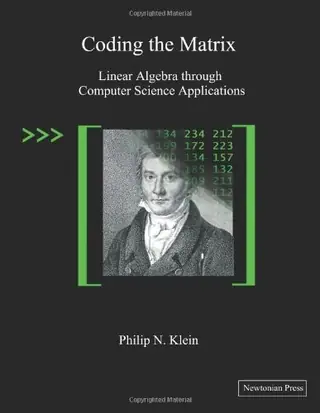
Coding the Matrix
Philip N. Klein
Recommended by 31 · mentioned by 4131 recommend · 41 mention31 recommend · 4131 recommend
 2012–2026
The Nature of Code
Daniel Shiffman
Recommended by 73 · mentioned by 8273 recommend · 82 mention73 recommend · 8273 recommend
 2007–2026
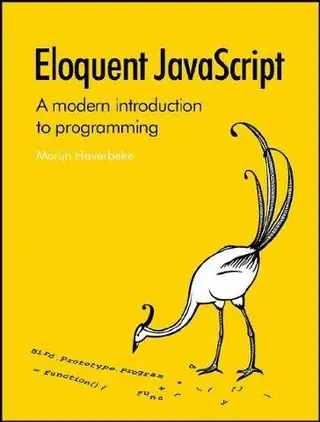
Eloquent Javascript
Marijn Haverbeke
Recommended by 226 · mentioned by 293226 recommend · 293 mention226 recommend · 293226 recommend
Hey, I feel bad for not updating this demo in 6 years! Back then it wouldn't run on iOS, today it could run with no trouble For people on iOS, here's another version with rainbow colors and multi-touch https://haxiomic.github.io/demos/rainbow-fluid/index.html If you like this sort of thing and want to learn more about it I recommend checking out https://www.shadertoy.com/ for more demos and http
on “WebGL Fluid Experiment (2014)” ↗It's all done with shaders. A good starting point is https://thebookofshaders.com/. You can learn a lot from people's examples on https://www.shadertoy.com/. Another amazing resource is iq's website at https://iquilezles.org/. Something to note - it's all math. Changing other people's code and implementing things other people have devised is quite straightforward, but making new styles requires a
on “Fluid Paint” ↗I'm afraid there isn't a single best place. What is important first is to learn how GPU architecture is different from traditional before you start learning Cuda or linear algebra. Take a look at these sources for absolute beginners. https://thebookofshaders.com/ http://duriansoftware.com/joe/An-intro-to-modern-OpenGL.-Tab... http://learnopengl.com/ edit: also when you are ready to pick a lang
on “Ask HN: Best place to learn GPU programing?” ↗What about The Book of Shaders? It's not complete by any means, but will get there eventually, hopefully. :) http://patriciogonzalezvivo.com/2015/thebookofshaders/
on “WebGL Fundamentals” ↗Try learning shader programming. It's math based and you draw beautiful visualizations that represent math equations. An excellent tutorial is at http://thebookofshaders.com/
on “Ask HN: Programming to learn math?” ↗The Book of Shaders is a great resource. Shameless self promotion: if you're interested in general WebGL, I have a Youtube channel with over 100 WebGL videos. I publish a couple times a week. I haven't started diving into…
on “The Book of Shaders” ↗Indeed it is similar to Shadertoy (or any other live GLSL editor like, for example, the live editor from The Book of Shaders ( https://thebookofshaders.com/ - which I really recommend, VERY good source for learning, helped me a lot! ), but I wanted to have a set of more flexible features to fit my personal usage like, for example, using any external images (from imgur or any other website that all
on “Show HN: ShaderLab – My WebGL Social Network” ↗Shaders helped me understand how to program GPUs. My favorite book on the topic is https://thebookofshaders.com/ (free) and I'd highly recommend you mess around with it Blender and Unity also have a graphical language to do shaders which are really fun to mess around with.
on “Molten Bismuth Shader” ↗Graphical programming is a blast. I can totally see how it feels overwhelming, especially with a lot of ways to do the same thing. I will say though that once you get started a lot of the knowledge is transferable to different technologies and methods. I tend to recommend that people start with The Book of Shaders [0]. What kinds of things would you ultimately like to make? [0] - https://thebook
on “Graphics Programming Weekly” ↗https://thebookofshaders.com Still incomplete but browsable online and has its own interactive shader editor (try to click on values like floats or vectors) https://thebookofshaders.com/edit.php?log=161127202429
on “Shader School - An introduction to GLSL shaders that runs in your web browser” ↗I'd recommend starting with javascript: https://thebookofshaders.com/ https://threejs.org/examples/#webgl_geometry_terrain_raycast
on “Source code for 4kb demoscene production “Elevated” released (2016)” ↗…I'm actually trying to avoid targeting the browser as much as possible with my projects, with the exception of things actually returning hypertext or that I get for free via wasm or something else. The Book of Shaders looks quite interesting however, thank you for the link!
on “Source code for 4kb demoscene production “Elevated” released (2016)” ↗Shaders -- https://thebookofshaders.com/
on “Ask HN: Your favourite tutorial for total beginners?” ↗…the Shadertoy website makes it easy to get started with that; you can edit the shader live and see the results in your browser, and save it to a URL. Also maybe check out Patricio Gonzalez Vivo's The Book of Shaders. 7. PyGame, the Python binding for SDL. You can write games in PyGame (solarwolf is in apt, and you can find others with apt-cache rdepends python-pygame) but also it's good for the kind of interactive…
on “The Demise of the Mildly Dynamic Website” ↗These are the other graphics related tutorials I have found. Ray Tracing in a Weekend Series. Most the way through the first book and I plan on continuing it. [1][2][3] Tiny Renderer - How OpenGL Works. A software renderer in 500 lines of code. Wiki has a full tutorial. [4] The Book of Shaders. A step by step introduction into fragment shaders. [5] [1] https://www.amazon.com/_/dp/B01B5AODD8 [
on “Scratchapixel: Computer Graphics Programming from Scratch” ↗