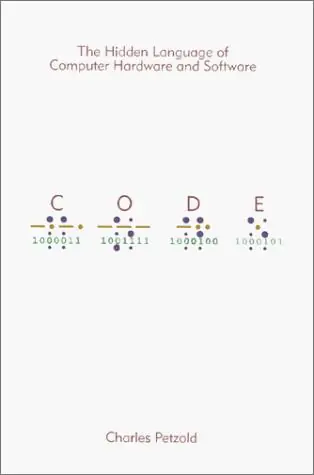
Code
Hidden Language of Computer Hardware and Software
by Charles Petzold · first published 1999
84% recommend14% neutral1% critical
Why HN recommends it
Builds a computer from the ground up, from simple circuits and logic gates to a CPU, in a readable, engaging way. Suits programmers and curious newcomers who want to know what happens under the hood.
Common criticism: Aimed at a general audience, so too shallow for readers with a technical background
Summarised by Claude from recommending comments
What do flashlights, the British invasion, black cats, and seesaws have to do with computers? In CODE, they show us the ingenious ways we manipulate language and invent new means of communicating with each other. And through CODE, we see how this ingenuity and our very human compulsion to communicate have driven the technological innovations of the past two centuries. Using everyday objects and familiar language systems such as Braille and Morse code, author Charles Petzold weaves an illuminating narrative for anyone who’s ever wondered about the secret inner life of computers and other sm
Affiliate links. As an Amazon Associate I earn from qualifying purchases.
Mentions per year
What Hacker News says
Related books
 2008–2026
The Elements of Computing Systems
Noam Nisan, Shimon Schocken
Recommended by 204 · mentioned by 268204 recommend · 268 mention204 recommend · 268204 recommend
 2009–2026
The Annotated Turing
Charles Petzold
Recommended by 56 · mentioned by 7056 recommend · 70 mention56 recommend · 7056 recommend
 2011–2026
The pattern on the stone
W. Daniel Hillis
Recommended by 18 · mentioned by 2118 recommend · 21 mention18 recommend · 2118 recommend
 2010–2025
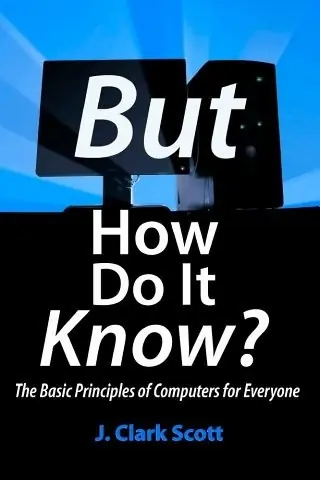
But How Do It Know
J. Scott Clark
Recommended by 21 · mentioned by 2721 recommend · 27 mention21 recommend · 2721 recommend
 2008–2024
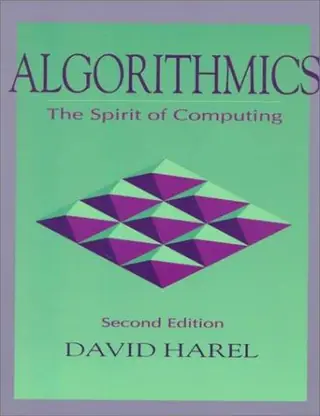
Algorithmics
David Harel
Recommended by 11 · mentioned by 1211 recommend · 12 mention11 recommend · 1211 recommend
 2012–2023
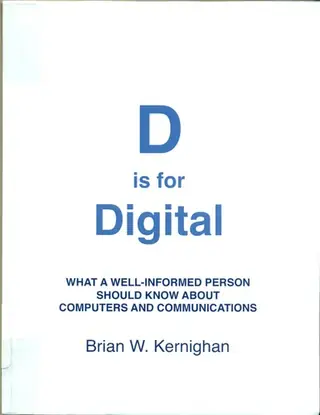
D is for digital
Brian W. Kernighan
Recommended by 7 · mentioned by 127 recommend · 12 mention7 recommend · 127 recommend
 2007–2026
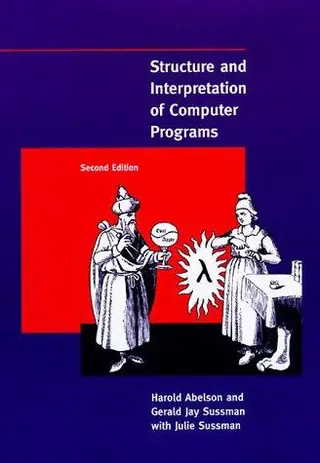
Structure and Interpretation of Computer Programs
Harold Abelson, Gerald Jay Sussman, Julie Sussman
Recommended by 347 · mentioned by 602347 recommend · 602 mention347 recommend · 602347 recommend
 2009–2026
Computer systems
Randal Bryant, Randal E. Bryant, David R. O'Hallaron
Recommended by 67 · mentioned by 8367 recommend · 83 mention67 recommend · 8367 recommend
…curious person into Computer Science, who doesn't know anything about the field yet. One of the books I liked (since I actually studied Linguistics in my Bachelor's) and what drew me towards CS was "Code: The Hidden Language of Computer Hardware and Software" by Charles Petzold.
on “Ask HN: Which book can attract anyone towards your field of study?” ↗…of the best technical books I have ever read. To me, it was a missing piece of the big puzzle of "how do computers work". I read many a book to answer this question, and came away with three books: - CODE by Charles Petzold explains the CPU - Operating Systems: Three Easy Pieces by Arpaci-Dusseau explain OSes - Crafting Interpreters by Robert Nystrom explains programming languages Masterfully done.
on “Crafting Interpreters: A Review” ↗Code: The Hidden Language of Computer Hardware and Software by Charles Petzold. I love this book.
on “Ask HN: What language-agnostic programming books should I read?” ↗Code: The Hidden Language of Computer Hardware and Software" by Charles Petzold. The best book I've ever read.
on “Top Books on Amazon Based on Links in Hacker News Comments” ↗Code: The Hidden Language of Computer Hardware and Software by Charles Petzold This one's for you if you want to learn or just recap principles of computers (and read on evolution as well). I just started…
on “Ask HN: What are the most fundamental books on computer science?” ↗I recommend Code: The Hidden Language of Computer Hardware and Software by Charles Petzold [1]. It is far more comprehensive than the OP, goes from pre-computer code, to electrical circuits, to an overview of assembly.…
on “How These Things Work – A book about CS from first principles (2016)” ↗…learn. That's the reason that learning the fundamentals matters: it's a huge lever. Here's a single, small, very accessible book that takes you all the way from switches to CPUs: http://www.amazon.com/Code-Language-Computer-Hardware-Softwa... SICP gets you from CPUs to Scheme (well, it goes in the other direction, but the end result is the same). That's two books to get from switches to compilers. Anyone…
on “Programming by poking: why MIT stopped teaching SICP” ↗…and aliasing; memory allocation; stack vs heap; statics and globals. C is the lingua franca of this environment, and learning C will give you a good window into what the compiler is doing to turn your code into what's actually running on the CPU. It's also good to understand how computers actually work. I strongly recommend the book "Code" by Charles Petzold (Microsoft Press, be wary of counterfeits and…
on “Using Ghidra to Reverse Engineer Super Monkey Ball for GameCube” ↗Code: The Hidden Language of Computer Hardware and Software by Charles Petzold is an excellent work that very clearly guides the reader through the components and steps that lead to the sophisticated computer…
on “Ask HN: Examples of good technical writing?” ↗OK. Depending on your programming background you're facing a steep learning curve. That's why I recommend a bottom up approach for you. First read "Code" by Charles Petzold. This book will get you "in the mood" and in the right frame of mind: http://www.amazon.com/Code-Language-Computer-Hardware-Softwa... Then I suggest you pick up a good book on Assembler.…
on “Learning C and ASM, what's the way to go?” ↗Not sure if this is the right direction or not. In different ways they are all, essentially, about programming... http://www.amazon.com/Code-Language-Computer-Hardware-Softwa... http://www.amazon.com/Elements-Computing-Systems-Building-Pr... http://www.amazon.com/Structure-Interpretation-Computer-Prog... http://www.amazon.com/G%C3%B6del-Escher-Bach-Eternal-Golden/...…
on “Ask HN: What are the best programming books for someone in prison? ” ↗Code is, in my opinion, always relevant when talking about Petzold. After hearing it mentioned by some podcast pundits I enjoy, I picked up a [dead tree] copy from Amazon. It is a beautiful and well written…
on “Charles Petzold Departing MSDN Magazine” ↗…and accompanying software imo lacks just 2 things. 1:the building of the Nand gate itself and 2: the building of a flip flop. Both these tasks can be easily accomplished with reference to the book 'Code' by Charles Petzold (http://www.amazon.com/Code-Language-Computer-Hardware-Softwa...) and software such as this http://logic.ly/
on “Nand to Tetris 1” ↗Haven't read the book you're recommending, but I feel it's more or less close to Code[0] by Charles Petzold, which in itself is a fascinating read. [0]: https://www.amazon.com/Code-Language-Computer-Hardware-Softw...
on “Building a Modern Computer from First Principles” ↗…layers of abstraction (yet --- and hopefully never?), but certainly more than ten. Indeed it's all about switching binary signals eventually. There's a great book about that too: https://www.amazon.com/Code-Language-Computer-Hardware-Softw...
on “Restoring YC's Xerox Alto day 9: tracing a crash through software and hardware” ↗