Dialectic of Enlightenment
by Theodor W. Adorno · first published 1976
48% recommend48% neutral5% critical
Why HN recommends it
Dense critical theory linking myth, Enlightenment reason, and mass culture. It reframes modern media and instrumental rationality, and suits readers already comfortable with philosophy.
Summarised by Claude from recommending comments
Affiliate links. As an Amazon Associate I earn from qualifying purchases.
Mentions per year
What Hacker News says
Related books
 2010–2024
The culture industry
Theodor W. Adorno
Recommended by 7 · mentioned by 187 recommend · 18 mention7 recommend · 187 recommend
Minima Moralia
Theodor W. Adorno
Recommended by 5 · mentioned by 95 recommend · 9 mention5 recommend · 95 recommend
 2014–2026
One-Dimensional Man
Herbert Marcuse
Recommended by 12 · mentioned by 2012 recommend · 20 mention12 recommend · 2012 recommend
 2009–2026
History of Sexuality
Michel Foucault
Recommended by 8 · mentioned by 158 recommend · 15 mention8 recommend · 158 recommend
 2009–2026
Discipline and Punish
Michel Foucault, Simon Prebble
Recommended by 36 · mentioned by 7036 recommend · 70 mention36 recommend · 7036 recommend
Being and Time
Martin Heidegger
Recommended by 13 · mentioned by 4913 recommend · 49 mention13 recommend · 4913 recommend
 2008–2025
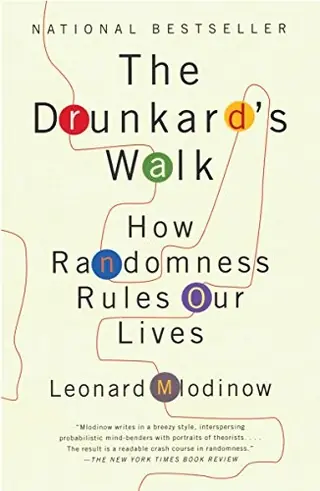
The Drunkard's Walk
Leonard Mlodinow
Recommended by 27 · mentioned by 3927 recommend · 39 mention27 recommend · 3927 recommend
Society of the spectacle
Guy Debord, Black & Red Press
Recommended by 27 · mentioned by 7427 recommend · 74 mention27 recommend · 7427 recommend
…involvement of myth in the Enlightenment and the Enlightenment's unconscious project to simply replace the form of myth with thinking disguised as scientific, I'd recommend Horkheimer and Adorno's The Dialectic of Enlightenment[0]. [0] The book was re-published as late as 1965. Here's a summary before you read: https://frankfurtschool.wordpress.com/2008/02/28/summary-dia...
on “The Myths of Enlightenment” ↗…programs put out by different stations. No mechanism of reply has been developed, and private transmissions are condemned to unfreedom. (from "The Culture Industry: Enlightenment as Mass Deception" in Dialectic of Enlightenment by Max Horkheimer and Theodor W. Adorno) I think this passage is brilliantly relevant to these discussions. For me the internet provides an illusion of interactivity when really most if not all of it…
on “The internet does to the world what radio did to the world” ↗Simulacra and Simulation - Jean Baudrillard Dialectic of Enlightenment - Max Horkheimer, Theodor Adorno The Sublime Object of Ideology - Slavoj Zizek Sources of the Self - Charles Taylor
on “Ask HN: Best Philosophical Books?” ↗…https://www.youtube.com/watch?v=3wfNl2L0Gf8 There is a plethora of writings of substance in the continental tradition. Writings that we should not ignore. 'Discipline and Punish' is one of them. I recommend 'The Dialectic of Enlightenment' by Adorno as your complement to Popper's writings. On another note, I don't generally see the value in antagonisms between paradigms or presentation forms. I find value from the analytical perspective…
on “Foucault’s lecture notes from 1970–71 demolish caricatures of his thought (2013)” ↗> Reading through something boring at first may give interesting results, learned it first hand studying Hegels dialectics :D Nice. If you enjoyed that, you may want to check out Adorno's Dialectic of Enlightenment and/or Negative Dialectics.
on “Economics journal only publishes results that are no big deal” ↗you should read this fun book called the Dialectic of Enlightenment[0] [0]https://monoskop.org/images/2/27/Horkheimer_Max_Adorno_Theod...
on “Aesthetic Fascism” ↗There has been discussion on this topic for about 100 years, but the most prominent is in the books Dialectic of Enlightenment by Theodor Adorno or One-Dimensional Man by Herbert Marcuse. They are a bit heavier than this article but they go into the problem with far more depth. The Frankfurt school in general deals with this…
on “The age of average (2023)” ↗As a German, the idea that mass murder and high tech are different sides of the same coin has shaped my world view forever (after reading Dialectic of Enlightenment and On the Critique of Instrumental Reason). Horkheimer red-pilled me on our western societies and I'm grateful for it.
on “Ask HN: Name one idea that changed your life” ↗'Dialectic of Enlightenment' might be a good place to start when it comes to thinking about thinking. If you want something a bit more fragmented/playful/debatable, then 'Minima Moralia' would be interesting. 'The Culture Industry'…
on “Books on Thinking About Thinking” ↗I would also add that 'The Dialectic of Enlightenment', is perhaps a more thorough precedent to 'The Society of the Spectacle'... if you're at all interested ... the chapter 'The Culture Industry' is good. https://thecharnelhouse.org/wp-content/uploads/2018/03/Max-H...
on “The Society of the Spectacle” ↗Dialectic of Enlightenment crystallized a lot of thoughts in me around critical theory and philosophy in general. Before that book the closest I had ever been to philosophy was John Gall's excellent "Systemantics" which although…
on “Ask HN: Do you recall any book or course that made a topic finally click?” ↗…become TOO output focused. I mistake reading an interpretation for actually integrating knowledge into my own thinking, I disregard following along with the author. I love reading philosophy as well. Dialectic of Enlightenment profoundy shaped how I view the world, but there was not a single part of that book that I could have given you a coherent interpretation of as a read it. The interpretations all come now, years after…
on “I'm Not Consulting an LLM” ↗Theodor Adorno and Max Horkheimer's The Dialectic of Enlightenment (written in 1947 - when Nazism, Stalinism, Fat Boy & Little Man, and the advent of popular culture were still in short-term memory) devotes a good amount of analysis to how - in spite of society's tendency…
on “Harvard and the Making of the Unabomber (2000)” ↗…may qualify. But Adorno has him beat on timing--Rorty's Bibliography doesn't start until '52 (https://web.stanford.edu/~mvr2j/rr/biblio_2007.html). Meanwhile, Horkheimer and Adorno had already published Dialectic of Enlightenment at that point (https://en.wikipedia.org/wiki/Theodor_W._Adorno_bibliography). I am not familiar with David Stove or his works. So he may qualify. I'll certainly check him out later, however! As for…
on “The Utopian Promise of Adorno’s ‘Open Thinking,’ Fifty Years On” ↗…writers with a recent academic background in a journalistic or literary discipline, often swimming in this style of writing, which dates from a particular elitist conception of writing you might find in Dialectic of Enlightenment or Adorno's works of cultural critique) like to make the reader work for it, since this perhaps contributes to the high literary feel of the paper.
on “When did writing in major newspapers become so bad?” ↗