Metaphors We Live By
by George Lakoff, Mark Johnson, Lakoff · first published 1980
69% recommend30% neutral1% critical
Why HN recommends it
Shows that much of everyday language and thought rests on systematic conceptual metaphors, such as time and argument as war. Suits readers curious about linguistics, cognition, and how framing shapes thinking.
Summarised by Claude from recommending comments
Metaphor, the authors explain, is a fundamental mechanism of mind, one that allows us to use what we know about our physical and social experience to provide understanding of countless other subjects. Because such metaphors structure our most basic understandings of our experience, they are "metaphors we live by"--Metaphors that can shape our perceptions and actions without our ever noticing them. --from publisher description.
Affiliate links. As an Amazon Associate I earn from qualifying purchases.
Mentions per year
What Hacker News says
Related books
 2009–2024
Philosophy in the flesh
George Lakoff
Recommended by 14 · mentioned by 2014 recommend · 20 mention14 recommend · 2014 recommend
I Invented the Modern Age
Richard Snow
Recommended by 2 · mentioned by 22 recommend · 2 mention2 recommend · 22 recommend
 2008–2025
Women, fire, and dangerous things
George Lakoff
Recommended by 10 · mentioned by 1810 recommend · 18 mention10 recommend · 1810 recommend
 2013–2017
Louder than words
Benjamin K. Bergen
Recommended by 2 · mentioned by 32 recommend · 3 mention2 recommend · 32 recommend
 2010–2026
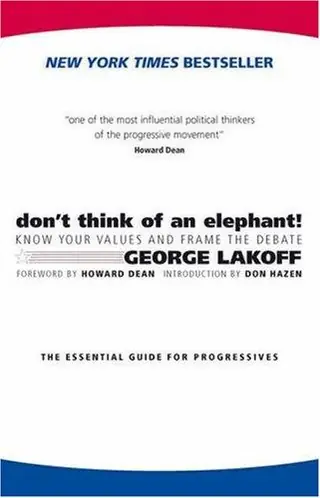
Don't Think of an Elephant!
George Lakoff
Recommended by 11 · mentioned by 1911 recommend · 19 mention11 recommend · 1911 recommend
 2008–2026
Fluid Concepts and Creative Analogies
Douglas R. Hofstadter, Fluid Analogies Research Group
Recommended by 17 · mentioned by 3117 recommend · 31 mention17 recommend · 3117 recommend
 2015–2026
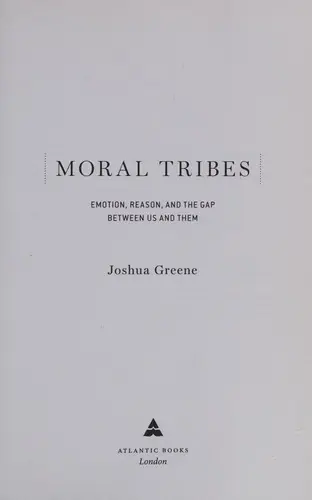
Moral tribes
Joshua David Greene
Recommended by 8 · mentioned by 108 recommend · 10 mention8 recommend · 108 recommend
…how language actually affects the way we think about things. Benjamin Bergen's Louder than Words is an excellent start, and virtually anything from Lakoff's long list of publications is worth reading—Metaphors We Live By is the classic, but Women, Fire, and Dangerous Things in particular is excellent from his more recent work.
on “George Orwell, “Politics and the English Language” (1946)” ↗(I'm in my late 30s, but I always try to look for "time-tested" books first. Books that seem to hold their value after decades; see also: Lindy effect.) Language and linguistics: "Metaphors We Live By" by George Lakoff and Mark Johnson (1980): https://en.wikipedia.org/wiki/Metaphors_We_Live_By Systems thinking: "An Introduction to General Systems Thinking" by Gerald M. Weinberg (1975): https://geraldmweinberg.com/Site/General_Systems.html…
on “Ask HN: Which book can attract anyone towards your field of study?” ↗George Lakoff's Metaphors We Live By is one of my favorite books. It's a great reminder about how powerful words can be at subliminally guiding our thoughts. https://en.wikipedia.org/wiki/Metaphors_We_Live_By Since the predominant implicit…
on “Framing 101” ↗…here[1]) • Moral Tribes by Joshua Greene • The Evolution of Cooperation by Robert Axelrod • Chimpanzee Politics by Frans de Waal • Homo Ludens: A Study of the Play-Element in Culture by Johan Huizinga • Metaphors We Live By, George Lakoff and Mark Johnson • Becoming Human by Michael Tomasello • For Stoicism, I wrote a detailed guide here[2] on good quality English translations by foremost scholars • Not least of all,…
on “Revisiting “The 4-Hour Workweek”” ↗…of his papers, e.g., "Analogy as the Core of Cognition" http://prelectur.stanford.edu/lecturers/hofstadter/analogy.h... But there are others who have focused longer on analogy, e.g., George Lakoff: "Metaphors we Live by" http://www.amazon.com/Metaphors-We-Live-George-Lakoff/dp/022... "Where Mathematics Come From: How The Embodied Mind Brings Mathematics Into Being": http://www.amazon.com/Where-Mathematics-Come-Embodied-Brings...…
on “The Man Who Would Teach Machines to Think” ↗"Metaphors We Live By" by George Lakoff and Mark Johnson changed how I thought about language and how I use it to orient myself in the world. "Thinking in Systems: A Primer" by Donella Meadows changed how I approached designing/troubleshooting…
on “Ask HN: What books changed the way you think about almost everything?” ↗Perhaps a different flavor of mental model, but a great book: "Metaphors We Live By" by George Lakoff
on “Ask HN: Which books teach mental models?” ↗Metaphors We Live By - George Lakoff, Mark Johnson It's a linguistics focused book that suggests people use metaphor to understand abstract constructs. It also helped me understand people, conversation, and intent in an…
on “Ask HN: Which book helped you understand the world?” ↗…that is unique to humans), human developmental psychology, and many other topics. He summarized his most recent book in this talk here[2]. - George Lakoff and Mark Johnson. See their classic work: Metaphors We Live By [1] https://www.intechopen.com/online-first/usage-based-and-univ... [2] https://www.youtube.com/watch?v=BNbeleWvXyQ
on “Chomsky – The Machine, the Ghost and the Limits of Understanding (2012) [video]” ↗AI models usually also lack a body. (An exception would be AI models for driving or for a robot navigating). "Embodied cognition" is a theory worth reviewing, if you haven't. "Metaphors We Live By" by George Lakoff and Mark Johnson is a good place to start.
on “Belief in AI sentience is becoming a problem” ↗In cognitive linguistics this is called conceptual metaphor. If you're interested in it, read "Metaphors We Live By" by Lakoff and Johnson. My favorite conceptual metaphor experiment (I think by Lera Boroditsky) was based on a question like: The meeting was scheduled for Wednesday but was moved forward 2 days. What…
on “Whoa, this is heavy: brain equates weight with importance” ↗…addition, Graham is very good at using metaphors and comparisons with history. There isn't really a good way to analyze metaphor that I know of. Some of the better attempts include Lakoff and Johnson's _Metaphors We Live By_ and Steven Pinker's _The Stuff of Thought_. But, as far as I know, no one has a complete theory of why we think associatively and metaphorically. Good writers, however, will tend to exploit the tendency…
on “A Brief Look At Paul Graham's Writing Habits (with Charts)” ↗…metaphorical. We think in metaphors. They're the concepts we live by. They're the abstractions that help us relate and understand. For an in-depth perspective, read George Lakoff and Mark Johnson's classic "Metaphors We Live By" (http://www.amazon.com/Metaphors-We-Live-George-Lakoff/dp/022...). Here's Peter Norvig's review of it: http://norvig.com/mwlb.html .
on “Why I Left Medium” ↗…Power, Noam Chomsky - The New Jim Crow, Michelle Alexander - Good To Great, Jim Collins - Abundance, Peter Diamandis - The Mystery Of Capital, Hernando De Soto - Pathologies Of Power, Paul Farmer - Metaphors We Live By, George Lakoff - Seeing Like A State, James Scott - Ishmael, Daniel Quinn - Surely You're Joking Mr. Feynman, Richard Feynman - Beyond Fear, Bruce Schneier - The Omnivore's Dilemma, Michael Pollan…
on “Ask HN: book suggestions in non-tech fields (e.g. psychology, philosophy…)” ↗Although the article makes no mention of them, George Lakoff and Mark Johnson's research on conceptual metaphor[0] seems to be intricately tied to this, somehow. I recently read two books by them: Metaphors We Live By (see Peter Norvig's description here[1]), and Philosophy In The Flesh[2] and found the ideas in them on how humans use metaphors to make sese of things very interesting and intuitive. It actually left…
on “Machine learning is teaching us the secret to teaching” ↗