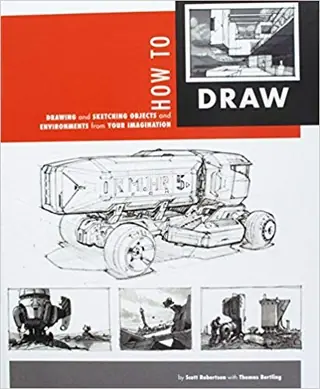
How to draw
by Scott Robertson · first published 2013
71% recommend29% neutral
Why HN recommends it
A mechanical, step-by-step method for drawing objects and environments from imagination, with a strong focus on technical perspective. Suited to aspiring concept artists, industrial designers, and drafters.
Summarised by Claude from recommending comments
How to Draw is for artists, architects and designers. It is useful to the novice, the student and the professional. You will learn how to draw any object or environment from your imagination, starting with the most basic perspective drawing skills. Early chapters explain how to draw accurate perspective grids and ellipses that in later chapters provide the foundation for more complex forms. The research and design processes used to generate visual concepts are demonstrated, making it much easier for you to draw things never-before-seen! Best of all, more than 25 pages can be scanned via a smar
Affiliate links. As an Amazon Associate I earn from qualifying purchases.
Mentions per year
What Hacker News says
Related books
 2021–2022
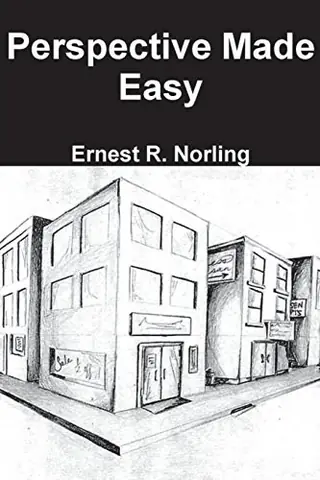
Perspective Made Easy
Ernest R. Norling
Recommended by 2 · mentioned by 22 recommend · 2 mention2 recommend · 22 recommend
 2010–2026
The natural way to draw
Kimon Nicolaïdes
Recommended by 12 · mentioned by 1512 recommend · 15 mention12 recommend · 1512 recommend
 2008–2026
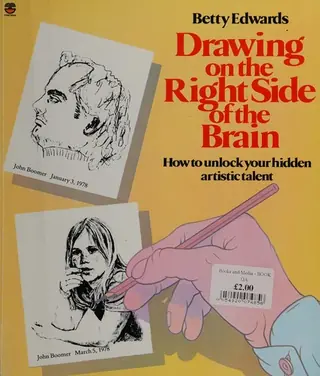
Drawing on the right side of the brain
Betty Edwards
Recommended by 77 · mentioned by 13677 recommend · 136 mention77 recommend · 13677 recommend
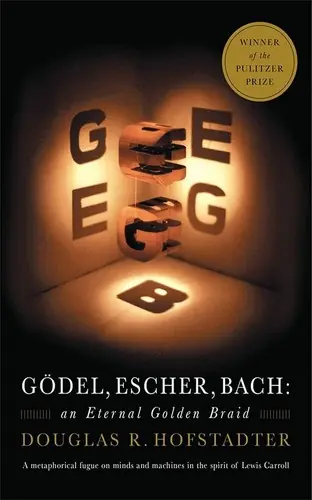 2007–2026
Gödel, Escher, Bach
Douglas R. Hofstadter
Recommended by 505 · mentioned by 1,055505 recommend · 1,055 mention505 recommend · 1,055505 recommend
Optimal way to practice > Deliberate practice Best books > Depends what you want to draw? How to Draw by Scott Robertson and Figure Drawing Design and Invention by Michael Hampton should keep you busy for a while How do I learn to self critique? > Take a picture of your drawing I find it easier to see…
on “Ask HN: How Do I Become as Proficient with Art as I Am with Computing?” ↗…article! For anyone curious about perspective in art, see the book "Perspective Made Easy" by Ernest Norling. It is easy to follow and has simple helpful exercises. A more technical and challenging book is "How to Draw" by Scott Robertson. That one is good if you want more technical theory understanding (plus the illustrations are amazing).
on “How does perspective work in pictures?” ↗"Fermat's Enigma" for Mathematics "The Pleasure of Findings Things Out" for science "How To Draw: Drawing And Sketching Objects And Environments From Your Imagination" for concept art / industrial design
on “Ask HN: Which book can attract anyone towards your field of study?” ↗If you aren't already reading it, may I suggest you checking out Scott Robertson's "How To Draw: Drawing And Sketching Objects And Environments From Your Imagination"
on “Ask HN: What's on your learning list?” ↗Strongly seconding Robertson and Bertling's "How to Draw". Continue on to their "How to Render" after that. They break it down into a very mechanical process that doesn't feel very "creative" but makes for a great foundation for architectural or engineering…
on “Ask HN: How do I learn drawing?” ↗…from descriptive geometry, until it becomes second nature and one can then skip the geometric construction (or at least make it less exact and time consuming, closer to what's described in Robertson's "How to Draw" for instance). ¹: I wrote "instead", but of course both ways complement each other.
on “Ask HN: Anyone learned art (drawing, caricature etc.) as an adult?” ↗…Compelling Contours & Foreshortening At this point, I recommend picking up drawabox.com as well to engage with practice a little differently. It draws from a school of thought that is present in the book "How to Draw" by Scott Robertson. That book is a little more advanced and I'd recommend it only if you are deep enough into understanding drawabox.com (PS: recommend trying but then moving on from the texturing chapter…
on “Ask HN: Anyone learned art (drawing, caricature etc.) as an adult?” ↗