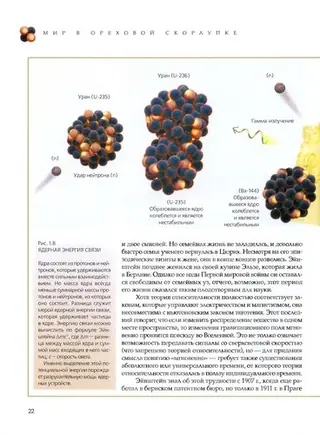
The Universe in a Nutshell
by Stephen Hawking · first published 2000
43% recommend50% neutral7% critical
Why HN recommends it
Accessible popular-science tour of modern physics, with illustrated explanations of relativity, black holes and cosmology. It suits curious lay readers and those seeking a gentle introduction to the field.
Summarised by Claude from recommending comments
"One of the most influential thinkers of our time, Stephen Hawking is an intellectual icon, known not only for the adventurousness of his ideas but for the clarity and wit with which he expresses them. In this new book Hawking takes us to the cutting edge of theoretical physics, where truth is often stranger than fiction, to explain in laymen's terms the principles that control our universe.". "The Universe in a Nutshell is essential reading for all of us who want to understand the universe in which we live. Like its companion volume, A Brief History of Time, it conveys the excitement felt
Affiliate links. As an Amazon Associate I earn from qualifying purchases.
Mentions per year
What Hacker News says
Related books
 2013–2024
Overcoming Gravity
Steven Low
Recommended by 12 · mentioned by 1712 recommend · 17 mention12 recommend · 1712 recommend
 2011–2026
The ego tunnel
Thomas Metzinger
Recommended by 17 · mentioned by 2417 recommend · 24 mention17 recommend · 2417 recommend
 2016–2026
The DevOps handbook
Gene Kim
Recommended by 22 · mentioned by 3322 recommend · 33 mention22 recommend · 3322 recommend
 2008–2026
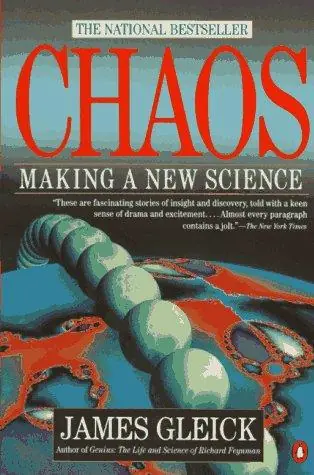
Chaos
James Gleick
Recommended by 45 · mentioned by 6345 recommend · 63 mention45 recommend · 6345 recommend
 2007–2026
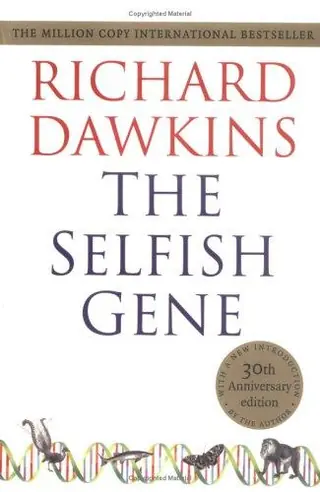
The Selfish Gene
Richard Dawkins
Recommended by 220 · mentioned by 431220 recommend · 431 mention220 recommend · 431220 recommend
 2012–2026
Real World OCaml
Yaron Minsky, Anil Madhavapeddy, Jason Hickey
Recommended by 69 · mentioned by 9969 recommend · 99 mention69 recommend · 9969 recommend
 2016–2026
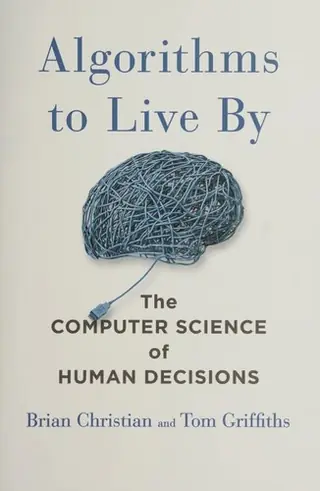
Algorithms to Live By
Brian Christian, Tom Griffiths
Recommended by 69 · mentioned by 10769 recommend · 107 mention69 recommend · 10769 recommend
…out all of your arguments, but there is an abundance of evidence for the long-term expansion of the universe as measured by redshifted cosmological objects at numerous distances. Stephen Hawking's The Universe in a Nutshell does a nice job of introducing many of these concepts for those interested.
on “What If Life Did Not Originate on Earth?” ↗…in nature and see the connection with everything around us. Four books come to mind. Physics: 1. Surely You're Joking, Mr. Feynman! (Adventures of a Curious Character) by Richard P. Feynman 2. The Universe in a Nutshell by Steven Hawking Mathematics: 1. Innumeracy: Mathematical Illiteracy and Its Consequences by J.A. Paulos 2. Gödel, Escher, Bach: An Eternal Golden Braid by D. Hofstadter These books brilliantly illuminate…
on “Ask HN: Which book can attract anyone towards your field of study?” ↗…it's wrong. I last read UiaN years ago. There are also some other interesting properties, like that the any part of hologram contains whole picture of hologram but of lousier quality, etc. 2) I think Universe in a Nutshell covers most of this theory pretty well.
on “Simulations back up theory that Universe is a hologram” ↗…why I chose a life in science in general and physics in particular. I'm just one of many, but he unmistakably and uniquely affected my life for the better. Growing up, I read Brief History of Time and Universe In A Nutshell dozens of times each. I relished the jokes I got, and I won't forget him. I also weep for him, knowing he never got the Nobel prize he wanted so very much. I haven't shed a tear for many people in their…
on “Stephen Hawking has died” ↗"A Brief History of Time" and "Universe in a nutshell" are always there. I never get tired of reading a random page from those books. I have nothing programming related on my desk; we have Google to thanks for that.
on “Ask HN: What books do you keep on your desk?” ↗…almost everything i think about: misc. Forrest Mims notebooks, the Python Tutorial, Practical C Programming first chapter of Sound and the Fury, snippets of Naked Lunch, wide swaths of Ulysses The Universe in a Nutshell, French's Special Relativity The Gamma Function, a graph theory text whose name i don't remember, baby Rudin Brain Structure and Its Origins, The Form Within
on “Ask HN: What books changed the way you think about almost everything?” ↗"The Myth of Sisyphus" by Albert Camus. I've been meaning to read it since I read "The Stranger" by the same author, which is my all-time favourite book. If I finish it early, I'll read "The Universe in a nutshell" by Stephen Hawking
on “Ask HN: What book are you reading this Summer?” ↗She's correct. If you want theory of everything energy you need accelerator the size of our Solar system. Source: Stephen Hawking's Universe in a nutshell.
Thank you, let's see. One part is probably that I was brought up to admire great scientists—my dad gave me popular science books by Stephen Hawking ("The Universe in a Nutshell" in particular) at a young age, and some Feynman books, and such. (I remember "Black Holes, Wormholes, and Time Machines" by Jim al-Khalili from the library.) For a long time I figured I should become…
on “When You Get into Unschooling, It’s Almost Like a Religion” ↗…cognition) and provides a survey of the popular and promising theories? Readable by someone who isn't in the field(s). Maybe even a good popsci book on the topic that is the neuroscience's equivalent of "Universe in a nutshell"
on “What Is a Mathematical Structure of Conscious Experience?” ↗What I cannot create, I do not understand -- as quoted in The Universe in a Nutshell, Richard Feynman The scientist describes what is; the engineer creates what never was. -- Kármán Tódor
on “Homemade GPS Receiver” ↗One more interesting explanation I read in Hawking's Universe in a Nutshell, was that dark matter is extra gravity coming from parallel universes/extra dimension. Basically, what if gravity warps not just this plane, but other realities as well. It would explain why gravity is…
on “Earth Might Have Hairy Dark Matter” ↗…more detailed. I have a degree in economics, so it's usually more efficient for me to read papers than to read popular economic books. But when I want to learn about theoretical physics, I'll read The Universe in a Nutshell, not the most recent paper. (3) Books force you to meditate on a topic. Certainly, not everyone requires such concentration. For me, I remember more if I spend a few hours reading a book rather than <…
on “Ways to Read More Books” ↗For the "Universe in a nutshell" version overview of neuroscience, I'll plug my own book Journey of the Mind: How Thinking Emerged from Chaos (more on that below) Anil Seth's Being You is a recent one that does a good job of summarizing…
on “What Is a Mathematical Structure of Conscious Experience?” ↗…everywhere, all at once. Essentially photons can have Infinite energy and just cause a random Big Bang. This is CCC like explanation. Another answer is Hawking's North of North Pole time problem (from Universe in a Nutshell). If time halts a T0, you can't ask what's before it. It's just logical impossibility. Like what is North of North Pole? Answer is: Question is invalid. Anthropic principle implies there are however many…
on “Age of universe at 26.7B years, nearly twice as old as previously believed” ↗