Ask HN2018
What are the best textbooks in your field of expertise?
272 comments named 145 books. Named most: How to Design Programs, The algorithm design manual, The art of electronics and 8 more, by 2 people each.
The 12 named most
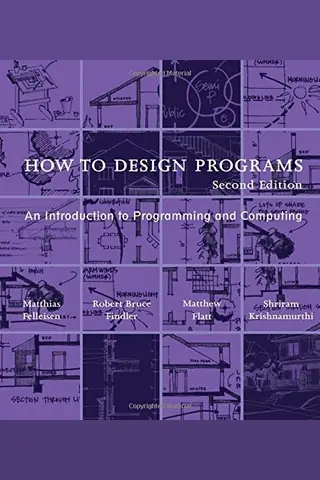
1How to Design Programs
Matthias Felleisen
named by 2
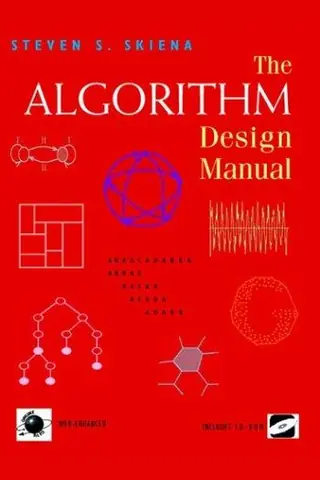
2The algorithm design manual
Steven S. Skiena
named by 2
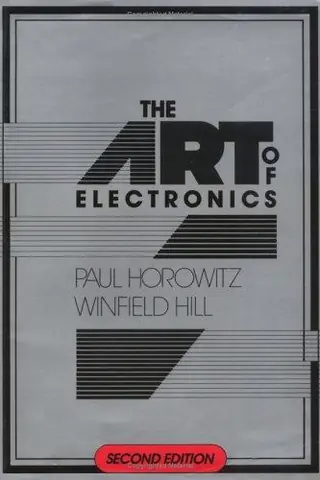
3The art of electronics
Paul Horowitz, Winfield Hill
named by 2
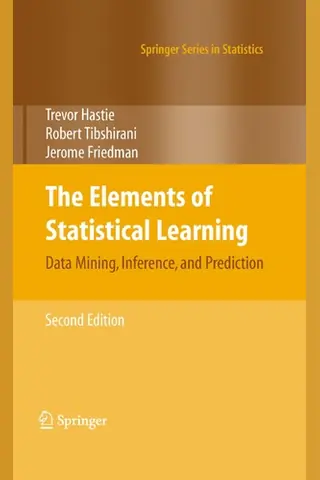
4The Elements of Statistical Learning
Trevor Hastie, Robert Tibshirani
named by 2
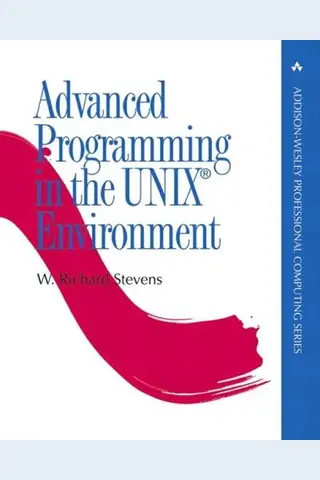
5Advanced programming in the Unix environment
W. Richard Stevens, Stephen A. Rago
named by 2

6Physically Based Rendering
Matt Pharr, Greg Humphreys
named by 2
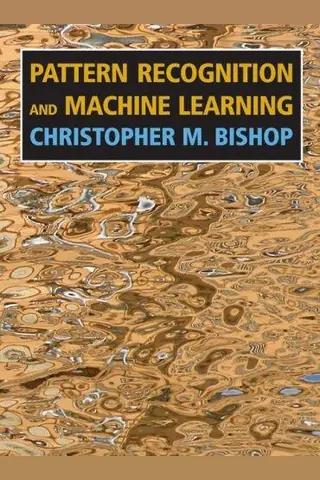
7Pattern Recognition and Machine Learning
Christopher M. Bishop
named by 2
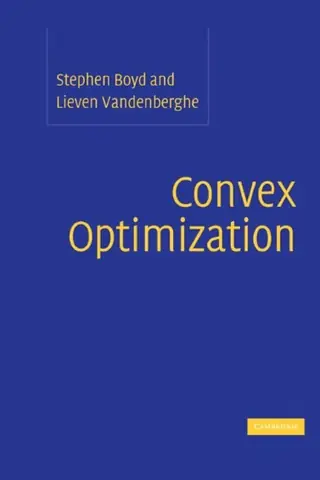
8Convex optimization
Stephen P. Boyd
named by 2

9Real-time rendering
Tomas Möller
named by 2
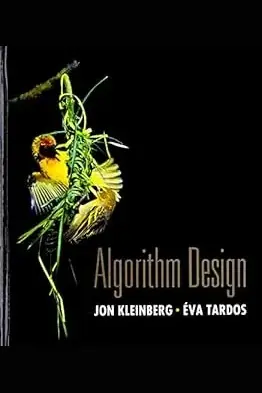
10Algorithm design
Jon Kleinberg, Éva Tardos
named by 2
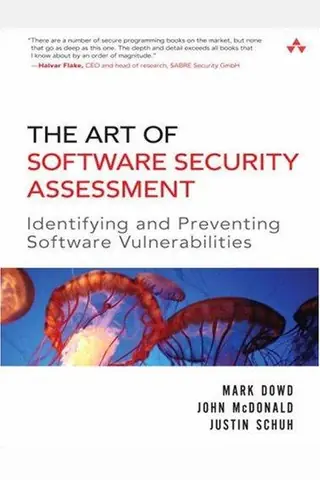
11The art of software security assessment
Mark Dowd, John McDonald
named by 2
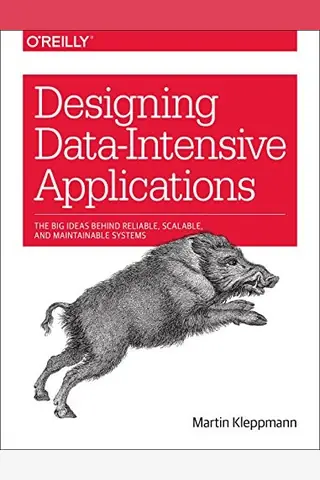
12Designing Data-Intensive Applications
Martin Kleppmann
named by 1 person
What people said
One comment from the thread for each, cut to the part that says why. Amazon links are affiliate links. As an Amazon Associate I earn from qualifying purchases.
How to Design Programs Matthias Felleisen, 2001 · named by 2
“After probably more than 10 years postponing to find what HTDP (how to design programs) is all about I'm now convinced that everyone should go through that book (or an online course) and apply the newly found knowledge…”
The algorithm design manual Steven S. Skiena, 1997 · named by 2
“Skeina won't tell you line-for-line how to balance a red-black tree, but it gets the idea across with clarity.”
The art of electronics Paul Horowitz, Winfield Hill, 1980 · named by 2
“The Art of Electronics. My field is experimental physics so this introductory textbook is often the starting point for our designs for photodetectors, power supplies, amplifiers and the like.”
Advanced programming in the Unix environment W. Richard Stevens, Stephen A. Rago, 1992 · named by 2
“For Linux / Unix things, APUE is standard one, and pretty nice.”
Convex optimization Stephen P. Boyd, 2006 · named by 2
“- "Convex Optimization" by S. Boyd and L. Vandenberghe: the standard for learning convex optimization (also available as a free PDF from the author's website)”
Algorithm design Jon Kleinberg, Éva Tardos, 1922 · named by 2
“About algorithms: Algorithm Design by Kleinberg and Tardos. This gives the much needed insight instead of maths equations, data structure implementations or a catalog of what to apply where, which are all good, but are…”
The art of software security assessment Mark Dowd, John McDonald, 2006 · named by 2
“This book will give you the fundamentals of application security testing.”
Also named
133 books named once
- The art of computer programming Donald Knuth
- Structure and Interpretation of Computer Programs Harold Abelson, Gerald Jay Sussman
- The Little Schemer Daniel P. Friedman, Matthias Felleisen
- Introduction to Algorithms Thomas H. Cormen, Charles E. Leiserson
- The C Programming Language Brian W. Kernighan, Dennis M. Ritchie
- Influence Robert B. Cialdini
- The Feynman Lectures on Physics Richard Phillips Feynman
- Types and Programming Languages Benjamin C. Pierce
- Crossing the Chasm Geoffrey A. Moore
- Lisp in Small Pieces Christian Queinnec
- Programming Perl Larry Wall, Tom Christiansen
- Site Reliability Engineering Betsy Beyer, Chris Jones
- Creativity, Inc. Ed Catmull, Amy Wallace
- Introduction to Statistical Learning Gareth James, Daniela Witten
- Concepts, techniques, and models of computer programming Peter Van Roy, Seif Haridi
- On food and cooking Harold McGee
- Software Foundations Benjamin C. Pierce
- Unix Network Programming W. Richard Stevens, Bill Fenner
- Computer Networks Andrew S. Tanenbaum, Nick Feamster
- Salt, Fat, Acid, Heat Samin Nosrat
- Algorithms Robert Sedgewick
- Molecular Biology of the Cell Bruce Alberts, Alexander Johnson
- Clean Architecture Robert C. Martin
- Trading and Exchanges Larry Harris
- Deep Learning Ian Goodfellow, Yoshua Bengio
- The Food Lab J. Kenji López-Alt
- The design and evolution of C[plus plus] Bjarne Stroustrup
- Visual complex analysis Tristan Needham
- Introduction to linear algebra Gilbert Strang
- Game engine architecture Jason Gregory
- Programming in Haskell Graham Hutton
- Systems Performance Brendan Gregg
- The web application hacker's handbook Dafydd Stuttard, Marcus Pinto
- Accelerate Nicole Forsgren, Jez Humble
- How to Cook Everything Mark Bittman
- Algorithms in C++ Robert Sedgewick
- Probabilistic robotics Sebastian Thrun, Dieter Fox
- Options, futures, & other derivatives John C. Hull
- Ways of Seeing John Berger
- Calculus on manifolds Michael Spivak
- Real-Time Collision Detection Christer Ericson
- The DevOps handbook Gene Kim
- The C++ programming language Bjarne Stroustrup
- Elements of Information Theory T. M. Cover, Joy A. Thomas
- Reinforcement Learning Richard S. Sutton
- ML for the working programmer Lawrence C. Paulson
- Debugging David J. Agans
- Machine learning Kevin P. Murphy
- Vector calculus, linear algebra, and differential forms Hubbard, John H., John H. Hubbard
- The flavor bible Karen Page
- Foundations of Statistical Natural Language Processing Christopher Manning, Hinrich Schütze
- Principles of neural science Eric R. Kandel, James H. Schwartz
- The Psychedelic Explorer's Guide James Fadiman
- The natural way to draw Kimon Nicolaïdes
- The illusion of life Frank Thomas Bullen, Ollie Johnston
- The animator's survival kit Richard Williams
- Understanding digital signal processing Richard G. Lyons
- Computer graphics John F. Hughes
- The bread baker's apprentice Reinhart, Peter.
- Designing sound Andy Farnell
- Modernist cuisine at home Nathan Myhrvold
- Digital image processing Rafael C. Gonzalez, Richard E. Woods
- The Professional Chef Culinary Institute of America., Elizabeth Riely
- Regression Modeling Strategies Frank E. Jr. Harrell
- The little MLer Matthias Felleisen
- Lean Software Development Mary Poppendieck, Tom Poppendieck
- Marketing management Philip Kotler
- Death by Meeting Patrick Lencioni
- How Brands Grow Byron Sharp, Jenni Romaniuk
- The new market wizards Jack D. Schwager
- Hedge fund market wizards Jack D. Schwager
- Modernist bread Nathan Myhrvold
- Think DSP Allen B. Downey
- Mostly harmless econometrics Joshua David Angrist, Jörn-Steffen Pischke
- Physical Biology of the Cell Rob Phillips
- Quantum Field Theory in a Nutshell A. Zee
- Causal Inference in Statistics Judea Pearl, Nicholas P. Jewell
- The science of good cooking Guy Crosby
- An Introduction to Modern Astrophysics Bradley W. Carroll, Dale A. Ostlie
- DAFX Udo Zölzer
- Causal Inference for Statistics, Social, and Biomedical Sciences Guido W. Imbens, Donald B. Rubin
- Applied predictive modeling Max Kuhn, Kjell Johnson
- Shigley's mechanical engineering design Richard G. Budynas, Richard Budynas
- Modern control engineering Katsuhiko Ogata
- Microwave engineering David M. Pozar
- Makers and takers Rana Foroohar
- Chocolates and confections Peter P. Greweling
- Writing Interpreters and Compilers for the Raspberry Pi Using Python Anthony Dos Reis
- The illustrated network Walter Goralski
- Practical watch repairing Donald De Carle
- Continuous integration Paul M. Duvall, Paul Duvall
- Physics of Semiconductor Devices Simon M. Sze, Kwok K. Ng
- Linear regression analysis G. A. F. Seber
- Sound Reinforcement Handbook Gary D. Davis, Ralph Jones
- Generative programming Krzysztof Czarnecki, Ulrich Eisenecker
- Software Engineering Roger S. Pressman, Bruce Maxim
- Engineering electromagnetics Nathan Ida
- Radiation detection and measurement Glenn F. Knoll
- Continuous Delivery and DevOps Paul Swartout
- Spoken language processing Xuedong Huang, Alex Acero
- The Browser Hacker's Handbook Wade Alcorn, Christian Frichot
- Strength of materials Stephen Timoshenko
- Cartoon Animation Preston Blair
- Introduction to graph theory Douglas Brent West
- Lectures on Probability Theory and Mathematical Statistics - 2nd Edition Marco Taboga
- Statistical methods for speech recognition Frederick Jelinek
- Advanced semiconductor fundamentals Robert F. Pierret
- Applied logistic regression David W. Hosmer
- Convex Analysis and Monotone Operator Theory in Hilbert Spaces Heinz H. Bauschke
- Integrated electronics J. Millman
- Principles of model checking Christel Baier
- The wisdom of teams Jon R. Katzenbach
- Good Business Mihaly Csikszentmihalyi
- Introduction to modern statistical mechanics Chandler, David
- Design thinking Cross, Nigel
- Digital Signal Processing SCHAFER OPPENHEIM
- Human molecular genetics T. Strachan
- Elemental magic Joseph Gilland
- Universe Roger A. Freedman, William J. Kaufmann
- Timing for animation Harold Whitaker, John Halas
- Unit operations Ian Bogost
- Process dynamics, modeling, and control Babatunde A. Ogunnaike
- Design Thinking Nigel Cross
- MPLS-enabled applications Ina Minei
- Feedback systems Karl J. Åström
- Digital Signal Processing Primer Kenneth Steiglitz
- Computer graphics Steven Harrington
- The lords of strategy Walter Kiechel
- Advanced Penetration Testing Richard Knowell
- Animation from script to screen Shamus Culhane
- Clinical Examination Simon O'Connor
- The higher infinite Akihiro Kanamori
- Overcoming the five dysfunctions of a team Patrick Lencioni, Joel Leffert
How this was made
From the site’s data, as of the last data refresh: a book’s count is the number of different people in the thread who named it as an answer, or recommended it in a reply. Books without a page on this site are not counted.
Each quote is a short excerpt of one comment that names the book, picked by a fixed rule: among the 16 books named most, comments that recommend the book, are mostly about it and say why it matters come first. The quotes were then read by hand; where the rule’s pick missed the point, a better excerpt from the same thread replaced it (“…” marks a cut), or the book is shown without one. Follow the date to read the whole comment on Hacker News. All mentions are in the open dataset, mentions.csv.gz.