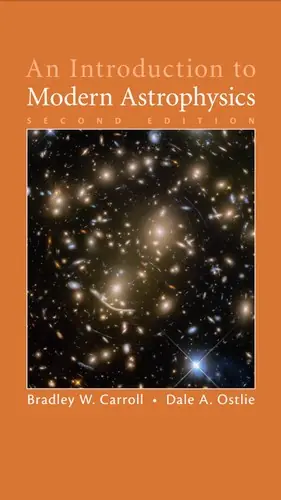
An Introduction to Modern Astrophysics
by Bradley W. Carroll, Dale A. Ostlie · first published 2017
6mentions
5recommended by
6HN commenters
2009–2026first – last mentioned
83% recommend17% neutral
Why HN recommends it
Comprehensive, widely cited university-level introduction to astronomy and astrophysics; recommended for readers with basic physics and calculus who want a serious, reference-quality treatment of the subject.
Summarised by Claude from recommending comments
Affiliate links. As an Amazon Associate I earn from qualifying purchases.
…etc.) are now out of date. Nevertheless, it's well worth buying. If you would like a more serious introduction to astronomy and know some basic physics and calculus, you can do no better than to read Introduction to Modern Astrophysics by Carroll & Ostlie (affectionately known as BOB -- the Big Orange Book). It's about 1500 pages long and covers absolutely everything in astronomy. It's clear, comprehensive, and will likely tell you…
on “Scoping out the Galileoscope: $15 telescope designed by professional astronomers” ↗An Introduction to Modern Astrophysics by Carroll & Ostlie is the Bible, but it is quite large physically and in scope and better serves as a reference for most people. For various topics, I would look at: Introduction to Cosmology by Ryden…
on “Ask HN: What are the best textbooks in your field of expertise?” ↗I would suggest “An Introduction to Modern Astrophysics” by Bradley W Carroll and Dale A Ostlie.
on “Ask HN: How can I get basic astrophysics knowledge?” ↗…read much about astronomy or cosmology compared to topics nearer to Earth and found this to be the most interesting thing I've seen on wikipedia in years. I'm picking up a copy of Carroll and Ostlie's Introduction to Modern Astrophysics. Are there any other niche topics in astronomy that I may find deeply interesting?
on “The Big Rip” ↗I'd recommend Carroll & Ostlie's Introduction to Modern Astrophysics, though it requires some basic calculus and physics.
on “Black Holes or Black Hole Stars? Astronomers Spar over 'Little Red Dots'” ↗…exposes a dense, glowing carbon/oxygen/neon core surrounded by a fraction of the original atmosphere (exact composition varies), which we call a white dwarf. Further reading: Ch. 13, Carroll & Ostlie, Introduction to Modern Astrophysics
on “Ryugu samples reveal traces of rock from before the Sun existed” ↗