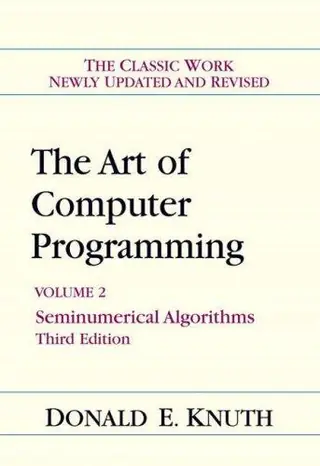
The art of computer programming
by Donald Knuth · first published 1968
30% recommend63% neutral7% critical
Why HN recommends it
Rigorous, math-heavy treatment of fundamental algorithms and data structures, with exercises and its own assembly language. Suits math-minded readers who want depth and a reference to return to over the years.
Summarised by Claude from recommending comments
Affiliate links. As an Amazon Associate I earn from qualifying purchases.
Mentions per year
What Hacker News says
Related books
 2007–2026
Introduction to Algorithms
Thomas H. Cormen, Charles E. Leiserson, Ronald L. Rivest, Clifford Stein
Recommended by 274 · mentioned by 712274 recommend · 712 mention274 recommend · 712274 recommend
 2007–2026
Concrete mathematics
Ronald L. Graham, Donald Knuth, Oren Patashnik
Recommended by 140 · mentioned by 215140 recommend · 215 mention140 recommend · 215140 recommend
 2010–2026
Sorting and searching
Donald Knuth
Recommended by 10 · mentioned by 2510 recommend · 25 mention10 recommend · 2510 recommend
 2007–2026
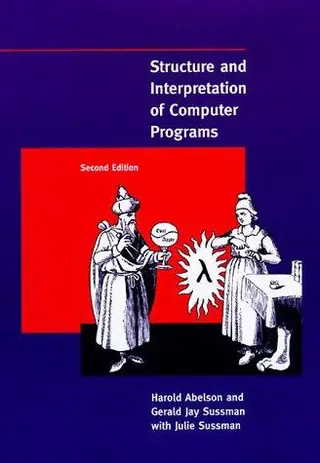
Structure and Interpretation of Computer Programs
Harold Abelson, Gerald Jay Sussman, Julie Sussman
Recommended by 347 · mentioned by 602347 recommend · 602 mention347 recommend · 602347 recommend
 2007–2026
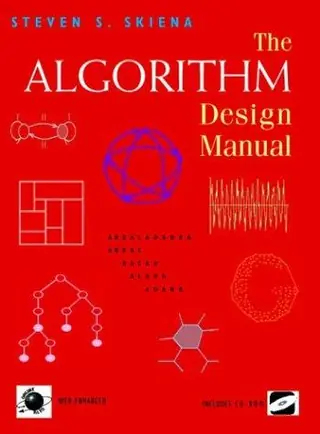
The algorithm design manual
Steven S. Skiena
Recommended by 195 · mentioned by 265195 recommend · 265 mention195 recommend · 265195 recommend
 2007–2026
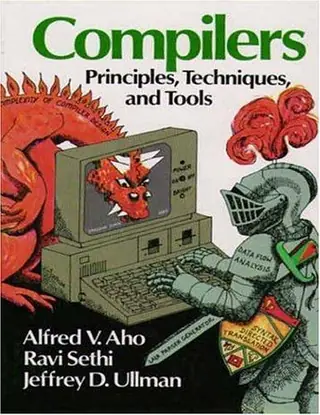
Compilers, principles, techniques, and tools
Alfred V. Aho, Monica S. Lam, Ravi Sethi, Jeffrey D. Ullman
Recommended by 195 · mentioned by 659195 recommend · 659 mention195 recommend · 659195 recommend
 2007–2026
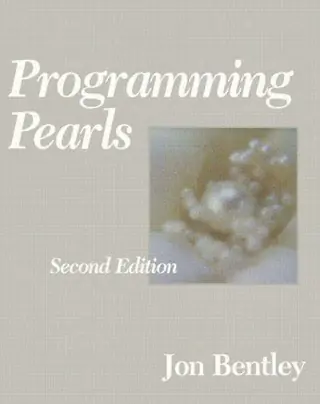
Programming Pearls
Jon Bentley
Recommended by 158 · mentioned by 245158 recommend · 245 mention158 recommend · 245158 recommend
 2007–2026
The C Programming Language
Brian W. Kernighan, Dennis MacAlistair Ritchie
Recommended by 246 · mentioned by 501246 recommend · 501 mention246 recommend · 501246 recommend
…for those who need self-help and "motivation" books. Only exception is Livingston's F@W. The rest is pretty much junk. Please allow me to write down my personal list for those who love to learn: - The Art of Computer Programming - Algorithms (by Dasgupta, Papadimitriou, and Vazirani) - Algorithm Design (by Kleinberg and Tardos) - Feynman Lectures on Physics - Landau & Lifschitz's series - Vladimir Arnold's books on ODEs…
on “Reading list for those who love to learn” ↗…probably read either this or The Art of Software Security Assessment. Both of these are old books, but the core principles are timeless. You absolutely should read one of these, because they are like The Art of Computer Programming for security. Everyone says they have read them, they definitely should read them, and it's evident that almost no one has actually read them. 4. Shellcoder's Handbook - If exploit development if your…
on “Cybersecurity Humble Book Bundle” ↗…taken a published paper, understood it well, thought hard about it, and come up with (what he feels is) the “best” way to present this result. This has been his primary activity all his life, with The Art of Computer Programming, etc. Every page of TAOCP is full of results from the research literature that Knuth has often understood better than even the original authors, and presented in a great and uniform style — those who…
on “Knuth on Huang's Sensitivity Proof: “I've got the proof down to one page” [pdf]” ↗…http://amzn.com/032157351X * Algorithm Design by Jon Kleinberg et al. Link: http://amzn.com/0321295358 * Introduction to Algorithms, 3rd Edition by Thomas H. Cormen et al. Link: http://amzn.com/0262033844 * The Art of Computer Programming, Volumes 1-4A Boxed Set by Donald E. Knuth Link: http://amzn.com/0321751043
on “Ask HN: Help me choose the best first book for Algorithms” ↗…methodologies, design, paradigms, operating systems, frameworks, industry commentary, business/startup-related, etc. Below are my favorites (in no particular order), what other "greats" am I missing? The Art of Computer Programming (three volumes + fascicles) - Knuth (aka TAOCP) Structure and Interpretation of Computer Programs - Abelson and Sussman (aka SICP, aka The Wizard Book) Introduction to Algorithms - Cormen, Leiserson,…
on “ASK HN: Hacker Bibles” ↗…Feynman Lectures on Physics - religion -Donald Knuth Art of Computer Programming - I can fuck around with manuals, other text books, but when I come to read the explanation of a particular concept in TAOCP, I always realise "this is the path of least resistance to understanding X" & then that scares me, because there is so much to know & it's really hard to understand anything well. -William James The…
on “Neil DeGrasse Tyson’s Eight Books Everyone Should Read” ↗…letting me play with the computers, both an IBM 5100 APL machine over one summer, and hands-on access to the IBM 11/30 clone minicomputer that was the main machine. The math prof pointed me at Knuth's "The Art of Computer Programming", and that began my transition from pure mathematics to computer programming/science instead. I even wrote a MIXAL assembler/MIX simulator for the minicomputer that the college ended up using to teach…
on “Illustrated Self-Guided Course On How To Use The Slide Rule” ↗…knowing his shit, and being able to convey it clearly. This has nothing to do with whether the students can understand it easily or not. He could be communicating effectively (e.g as Knuth does in his Art of Computer Programming books) with the students still not getting it. Science is hard -- you have to work up to it. Merely getting some high level view spoon fed to you because you cannot/don't want to study and understand…
on “Dijkstra: “You will be treated as grown-ups”” ↗…Lectures comment on how good they are? I started reading them, but after a few chapters I didn't feel that I was actually learning physics. I get the feeling that the Feynman Lectures are like Knuth's Art of Computer Programming: few people have read it, but it's widely known as being amazing. I'd be interested in hearing if this is correct.
on “How to Study Physics (1949)” ↗…interfacing, history of computing, and some overlap with areas in philosophy. I didn't ever formally study CS, but I did read several books on algorithms. Especially notable is the seven-volume work "The Art of Computer Programming" by Donald Knuth; in particular the volumes "Fundamental Algorithms", "Sorting and Searching", and "Seminumerical Algorithms" are timeless masterpieces, entertaining and witty, and they totally nail their…
on “Ask HN: What book to read to get a footing in CS theory?” ↗Structure and Interpretation of Computer Programs (), Introduction to Automata Theory, Languages and Computation (Hopcroft Ullman), don knuth's art of computer programming, Tanenbaum's Modern Operating Systems, Compilers: Principles, Techniques, and Tools5 (Aho Sethi Ullman)
on “Ask HN: What are the most fundamental books on computer science?” ↗+ The foundation of computer science is Knuth's The Art of Computer Programming. Everything else is footnotes. Knuth is hard. And easy. And everything in between. You won't understand all of it. But you'll have to be ok with not understanding all of CS anyway. Nobody does. You can…
on “Ask HN: How do I choose the right resource to learn CS fundamentals?” ↗I'm surprised Donald Knuth's Art of Computer Programming only got 1 upvote. I've never considered the series a good fit for beginning programmers but for someone with 7 years under their belt who is looking for depth of knowledge I really can't think of a…
on “What should a self-taught programmer with no degree learn/read?” ↗You are young and so forgiven to have not included as #1 the seminal works of Donald Knuth, "The Art of Computer Programming", still as relevant today as it was in the late 60's and 70's. What he described is to this day true of the underpinnings of all we do, everything since is really decoration and elaboration. And I say…
on “Career-Changing Programming Books” ↗…"Structure and Interpretation of Computer Programs" by Abelson/Sussman when I was at university, which I found a good introductory book. For a more thorough understanding I would recommend Donald Knuth's "The Art of Computer Programming".
on “Programming books you might want to consider reading” ↗