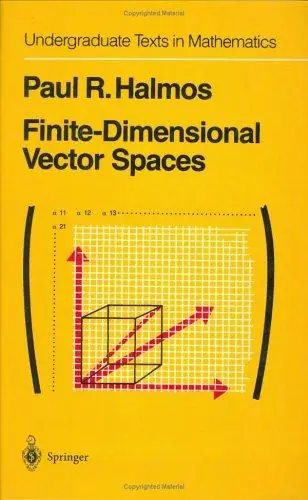
Finite-dimensional vector spaces
by Paul R. Halmos · first published 1942
63% recommend37% neutral
Why HN recommends it
Rigorous, elegantly written second course in linear algebra that treats matrices as linear operators; its determinant treatment is singled out. Suits readers with some proof experience who want abstraction.
Summarised by Claude from recommending comments
Affiliate links. As an Amazon Associate I earn from qualifying purchases.
Mentions per year
What Hacker News says
Related books
 2008–2026
Principles of Mathematical Analysis
Walter Rudin
Recommended by 52 · mentioned by 8852 recommend · 88 mention52 recommend · 8852 recommend
 2009–2025
Real and complex analysis
Walter Rudin
Recommended by 25 · mentioned by 4025 recommend · 40 mention25 recommend · 4025 recommend
 2009–2024
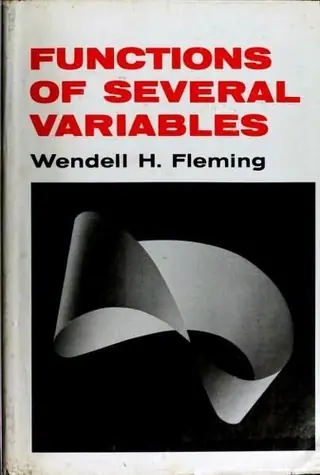
Functions of Several Variables
Wendell Fleming, W. H. Fleming
Recommended by 4 · mentioned by 54 recommend · 5 mention4 recommend · 54 recommend
 2012–2024
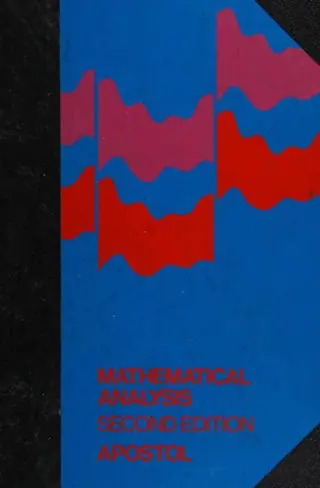
Mathematical Analysis
Tom M. Apostol
Recommended by 6 · mentioned by 96 recommend · 9 mention6 recommend · 96 recommend
 2007–2026
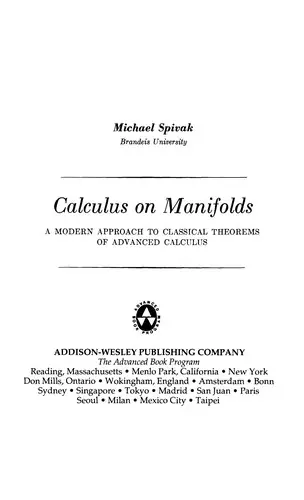
Calculus on manifolds
Michael Spivak
Recommended by 22 · mentioned by 4822 recommend · 48 mention22 recommend · 4822 recommend
 2011–2024
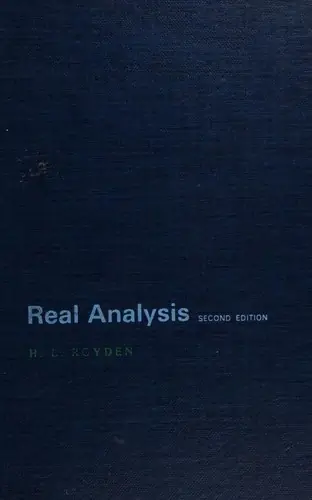
Real Analysis
H. L. Royden, Patrick Fitzpatrick, Halsey Royden, Royden
Recommended by 4 · mentioned by 64 recommend · 6 mention4 recommend · 64 recommend
 2009–2025
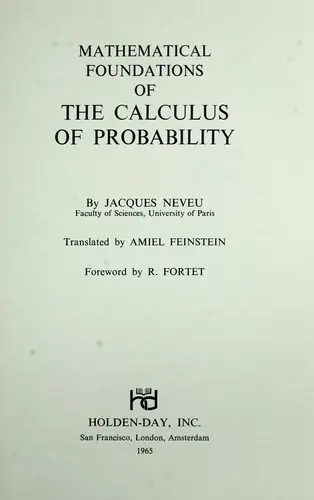
Mathematical foundations of the calculus of probability
J. Neveu
Recommended by 3 · mentioned by 63 recommend · 6 mention3 recommend · 63 recommend
 2008–2026
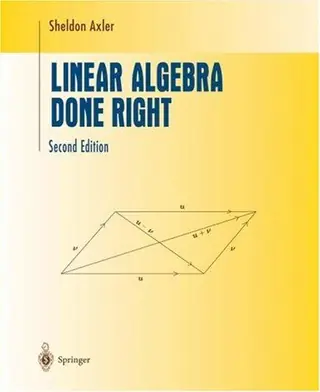
Linear Algebra Done Right
Sheldon Jay Axler
Recommended by 130 · mentioned by 179130 recommend · 179 mention130 recommend · 179130 recommend
…matrix inversion and the simplex algorithm of linear programming (optimization) and network linear programming. A good first text in linear algebra is by Ben Noble. The crown jewel is by Paul Halmos, 'Finite Dimensional Vector Spaces', written when Halmos was an assistant to von Neumann; the book approaches linear algebra much like it was functional analysis and, thus, is a baby version of Hilbert space theory and, thus, sometimes…
on “Ask HN: Learn Math the Hard Way” ↗The best, by far, book on Linear Algebra that elegantly teaches it from Vector Spaces and Linear Operators point of view is Paul Halmos "Finite-Dimensional Vector Spaces" For instance, the way Halmos introduces the determinant of a matrix (or an operator) is the most consistent, elegant and simple way I ever encountered. OTOH, in Kenneth Kuttler's LinAlg books the determinant…
on “Free Math Books” ↗…the language of category theory or not, is up to anyone, but the "standard mathematical treatment" is quite beautiful and intriguing already (if I want to feel inspired, I open up my copy of Halmos's "Finite Dimensional Vector Spaces", not necessarily the best introduction for someone who is new, but very beautifully written for someone who has already seen linear algebra).
on “Graphical Linear Algebra” ↗…about ellipses and get to use complex numbers. Also the course is an introduction to functional analysis and Hilbert space. Use any popular book to get started but in the end cover the classic, Halmos, "Finite Dimensional Vector Spaces'. Halmos wrote this when he was an assistant to von Neumann and intended it to be a finite dimensional introduction to Hilbert space (which once von Neumann had to explain to Hilbert) which it is. It…
on “Ask HN: I want to learn statistics and data mining” ↗…matrix inversion. For pseudo-inverses, cute material, but, especially for your question, likely won't see it again and can skip it. Then if have some time, take a fast pass through the classic, Halmos, Finite Dimensional Vector Spaces. It was written in 1942 when Halmos had just gotten his Ph.D. under J. Doob (e.g., as in Stochastic Processes and, more recently, Classical Potential Theory and Its Probabilistic Counterpart) and showed up…
on “Why squared error? (2014)” ↗About Halmos, that is quite scary. I happened to be reading "Finite-Dimensional Vector Spaces" the last few days and while the material is pretty elementary, Halmos is obviously very good, and the idea that there are people leagues ahead of him is amazing...
on “The pitfalls of jargon and the damage it does to mathematics” ↗Axler's book is very good. An alternative to consider is Paul Halmos's much older Finite-Dimensional Vector Spaces [0]. Both books take the same basic approach, and the proofs of the major theorems are substantially the same. (Halmos's book is well known and well liked and was probably Axler's starting point.) Axler's…
on “Matrix Multiplication” ↗…analysis) and emphasizes eigenvalues and eigenvectors, and finally the grand one, written at the knee of von Neumann as a finite dimensional introduction to Hilbert space theory, Paul R.\ Halmos, {\it Finite-Dimensional Vector Spaces, Second Edition,\/} D.\ Van Nostrand Company, Inc., Princeton, New Jersey, 1958.\ \ If you get very far in real analysis, then you will want a good treatment of at least basic Hilbert space theory, and Halmos…
on “Ask HN: Resources to learn real analysis?” ↗…is often presented more formally than earlier math courses, or go back to the stuff you've already studied, but in a more pure context (for linear algebra, Axler's Linear Algebra Done Right and Halmos' Finite-Dimensional Vector Spaces; for calculus, Spivak as mentioned already and then an analysis book).
on “Great books about mathematics” ↗Why no Halmos, "Finite-dimensional vector spaces"? It's pretty theoretical but very approachable also.
on “The best linear algebra books” ↗Finite Dimensional Vector Spaces is a jewel. But I wish the typesetting was updated to something more modern. Same applies to Rudin. I find well typeset TeX a joy to read. Whereas FDVS is a bit cramped and looks antique.
on “Ask HN: Older textbooks/papers you consider classics still worth studying today?” ↗…and learn some 'mathematical maturity'. Then get a good, first book on linear algebra and learn some important material, still paying attention to the proofs, and get more maturity. Then get Halmos, 'Finite Dimensional Vector Spaces' and learn from one of the best writers of math ever and get an introduction to Hilbert space theory. Then go carefully through Rudin's 'Principles'. Then do some more in ordinary differential equations…
on “Milestone for MIT Press’s bestseller, "Introduction to Algorithms"” ↗…theorems, and the second is likely the most important material in mathematical analysis and applied math. To continue, take a second course in linear algebra. A good start is the now classic P. Halmos, 'Finite Dimensional Vector Spaces'. It was written in 1942 when Halmos, a fresh Ph.D. from Doob at U. IL, was an assistant to von Neumann at the Institute in Princeton and is really a finite dimensional introduction to von Neumann's Hilbert…
on “Thinking of Doing a PhD? Take this simple test” ↗My list (necessarily limited to what I know about, have on my bookshelf, and have studied at least significantly) of mathematical masterpieces? Sure: Halmos, Finite Dimensional Vector Spaces He wrote this in 1942 as an assistant to John von Neumann at the Institute for Advanced Study, and the book is baby Hilbert space. Maybe use as a second book on linear algebra, but, if you wish and…
on “What's a Mathematician to do?” ↗…correct your early efforts at writing proofs -- could help you a lot. But starting with linear algebra is also good. There are lots of good books. The grand classic, best as a second text, is P. Halmos, Finite Dimensional Vector Spaces. He wrote this in 1942 after he had gotten his Ph.D. from J. Doob (long the best guy in the US in stochastic processes) and was an assistant to von Neumann at the Institute for Advanced Study (for much…
on “A Software Engineer’s Adventures in Learning Mathematics” ↗