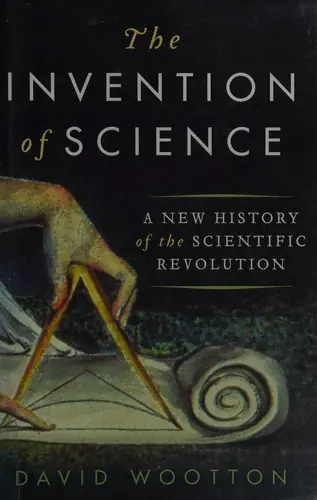
The invention of science
by David Wootton · first published 2015
58% recommend42% neutral
Why HN recommends it
Detailed history of how modern science emerged in the 16th and 17th centuries, drawn from original sources; it shows how messy and contested discoveries were, suiting readers curious about the history of science.
Summarised by Claude from recommending comments
"The Invention of Science goes back five hundred years in time to chronicle this crucial transformation, exploring the factors that led to its birth and the people who made it happen. Wootton argues that the Scientific Revolution was actually five separate yet concurrent events that developed independently, but came to intersect and create a new worldview. Here are the brilliant iconoclasts--Galileo, Copernicus, Brahe, Newton, and many more curious minds from across Europe--whose studies of the natural world challenged centuries of religious orthodoxy and ingrained superstition,"--Amazon.com.
Affiliate links. As an Amazon Associate I earn from qualifying purchases.
Mentions per year
What Hacker News says
Related books
 2010–2025
The Copernican revolution
Thomas S. Kuhn
Recommended by 7 · mentioned by 117 recommend · 11 mention7 recommend · 117 recommend
The Sleepwalkers
Arthur Koestler
Recommended by 9 · mentioned by 139 recommend · 13 mention9 recommend · 139 recommend
 2012–2024
The Day the Universe Changed
Burke, James
Recommended by 15 · mentioned by 2015 recommend · 20 mention15 recommend · 2015 recommend
 2007–2026
A short history of nearly everything
Bill Bryson
Recommended by 102 · mentioned by 123102 recommend · 123 mention102 recommend · 123102 recommend
 2007–2026
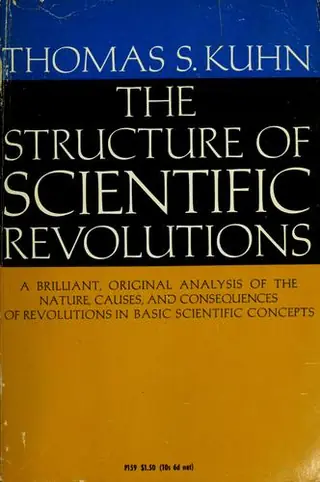
The Structure of Scientific Revolutions
Thomas S. Kuhn, Dennis Holland
Recommended by 96 · mentioned by 21596 recommend · 215 mention96 recommend · 21596 recommend
…history is very messy. Also in science things are never as black and white as people several decennia down the line tend to think about how those scientific discoveries went went down. I really liked "The Invention of Science" by David Wootton which I read a couple of months ago. A Guardian review of that work can be found here: https://www.theguardian.com/books/2015/nov/28/invention-of-s...
on “Opposition to Galileo was scientific, not just religious” ↗Highest recommendation for David Wootton's The Invention of Science [1]. Did you know that the notions of "discovery" and "fact" were invented? His Galileo biography is also wonderful. [1] http://www.inventionofscience.com
on “Histories of the Scientific Revolution” ↗Fascinating! Thank you for sharing. The issues around the assignment of credit is as old as science and the concept of discovery; reading "The Invention of Science: A New History of the Scientific Revolution" by David Wootton really opened my eyes into how this is actually a fundamental feature of our modern conception of scientific discovery (sounds counter-intuitive..…
on “Yann LeCun, Geoffrey Hinton and Yoshua Bengio win Turing Award” ↗I've read a couple dozen. Best by far is David Wootton's The Invention of Science. Wootton has the language skills to work through the primary materials, and shows how in 100 years we went from educated people believing in werewolves and possession to having a modern, materialist understanding…
on “Ask HN: Any recommendation for a good History of Science book?” ↗…biographical and idea focused sources. For me, the absolute best written is Age of Wonder by Richard Holmes. It covers a large swatch of British Science from Newton to Maxwell. Other good reads are 1. The Invention of Science by Wootton (which is very academic in style), 2. The Wizard and the Prophet by Mann 3. Galileo At Work by Drake 4. Newton by Gleik.
on “Ask HN: Any recommendation for a good History of Science book?” ↗You should read "The Invention of Science", by David Wootton, which touches on these issues (and many others). https://www.amazon.com/Invention-Science-History-Scientific-...
on “Ancient water system uncovered at Roman Stabiae” ↗Kuhn's Structure of Scientific Revolutions has been surpassed by Wootton's The Invention of Science. Wootton taught himself to read the major languages of 16th and 17th century science, and, unlike Kuhn, worked from the source material. * https://www.inventionofscience.com * https://en.wikipedia.org/wiki/The_Structure_of_Scientific_Re...
on “Competing Paradigms: On “The Last Writings of Thomas S. Kuhn”” ↗…agree. Same with Capital in the 21st Century, another book I fell in love with. The one sweeping "rethink a field of intellectual endeavor" book I read in the last decade that holds up is Wootton's The Invention of Science.
on “Re-Reading Kahneman's Thinking, Fast and Slow” ↗If you want more (much more) of the author's thoughts on this and related issues, see his book "The Invention of Science" (2016). Highly recommended. https://www.amazon.com/Invention-Science-History-Scientific-...
on “Galileo’s telescopes: Seeing is believing (2010)” ↗The article made me think of a recent book "The Invention of Science" almost immediately - turns out the book is mentioned as one of the references - which is well worth reading if you found the article interesting. It discussed the story of the Earth in a lot more detail.…
on “Columbus and the shape of the Earth, a “Holywood” story” ↗…mountains on the moon. He looked at the same thing as Galileo, but possibly because he was a much less accomplished artist, didn't recognize what he was seeing as depth. I read about this in a book called The Invention of Science--absolutely fascinating.
on “Galileo’s Moon Drawings (2014)” ↗This is also a misconception. The Invention of Science by David Wootton has a long chapter on this. They believed it was impossible because in aristotelian cosmology the planet earth is actually two spheres: a sphere of earth floating in a 10x times larger…
on “On Medieval Cats” ↗…if anyone is interested. A bit of background: I'm an historian of science and medicine who was asked to review the physicist Steven Weinberg's recent book alongside another one by David Wootton ('The Invention of Science') which has also gotten a lot of attention. I actually enjoyed Weinberg's book quite a bit, especially his commitment to getting the technical details right, but I found the overarching picture it gives…
on “Show HN: My Book Review of Steven Weinberg's 'To Explain the World'” ↗…can be better at researching my topic. Can anyone recommend a book along the lines of "So you to be a science historian" or "how to learn to write the history of science"? The book mentioned here, "The Invention of Science", sounds like it's too high of a level - though it does sound interesting. The author points to https://www.google.com/search?q=%22department+of+the+history... . Perhaps I should just cold-call someone…
on “How to Write the History of Science?” ↗…saying experientia magistra rerum, ‘experience is a great teacher’, was familiar in the Middle Ages: you don’t learn to ride a horse or shoot an arrow by reading books." (from the book, oh the irony, The Invention of Science by Wooton)
on “Burnout” ↗