
The control revolution
by James R. Beniger · first published 1986
60% recommend40% neutral
Affiliate links. As an Amazon Associate I earn from qualifying purchases.
Mentions per year
What Hacker News says
Related books
 2021–2026
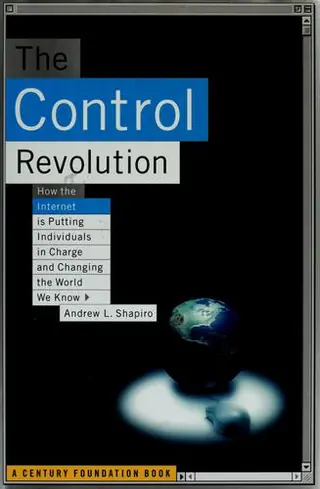
The control revolution
Andrew L. Shapiro
Recommended by 2 · mentioned by 22 recommend · 2 mention2 recommend · 22 recommend
 2021–2022
Data Smog
David Shenk
Recommended by 2 · mentioned by 22 recommend · 2 mention2 recommend · 22 recommend
 2013–2026
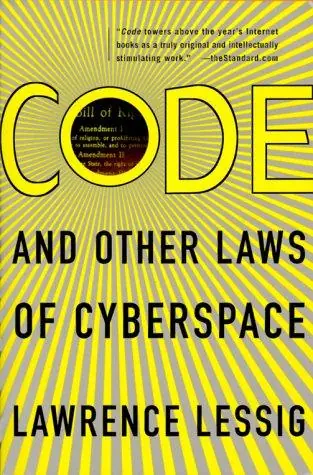
Code
Lawrence Lessig
Recommended by 2 · mentioned by 162 recommend · 16 mention2 recommend · 162 recommend
 2011–2022
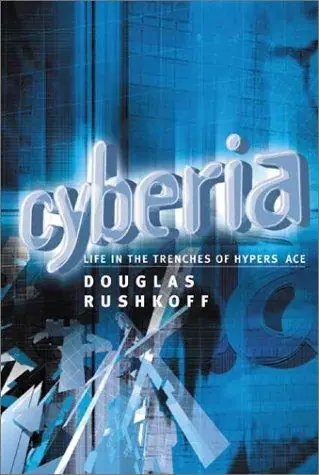
Cyberia
Douglas Rushkoff
Recommended by 4 · mentioned by 94 recommend · 9 mention4 recommend · 94 recommend
 2008–2026
The Confidence Man
Herman Melville
Recommended by 3 · mentioned by 73 recommend · 7 mention3 recommend · 73 recommend
 2010–2025
The printing press as an agent of change
Elizabeth L. Eisenstein
Recommended by 5 · mentioned by 75 recommend · 7 mention5 recommend · 75 recommend
 2019–2023
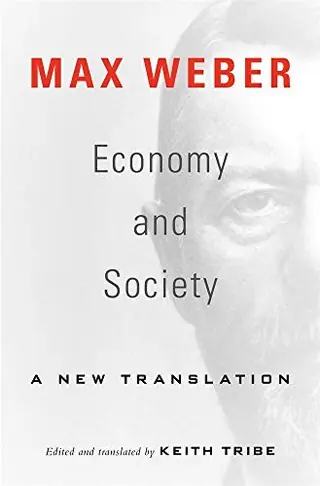
Economy and Society
Max Weber
Recommended by 1 · mentioned by 21 recommend · 2 mention1 recommend · 21 recommend
 2008–2026
Future shock
Alvin Toffler
Recommended by 19 · mentioned by 6219 recommend · 62 mention19 recommend · 6219 recommend
James Beniger's "Control Revolution" http://www.amazon.com/Control-Revolution-Technological-Econo...
on “Ask HN: What history of economics and technology book would you recommend?” ↗For those interested in the problems, and solutions, that increasingly complex businesses and operations provided and created, I can't recommend James Beniger, The Control Revolution (1984) highly enough. https://www.worldcat.org/title/control-revolution-technologi... https://archive.org/details/controlrevolutio0000unse https://libgen.rs/book/index.php?md5=01E624258AF1B44F6649B02...
on “The rise of railroads gave rise to the first org chart (2017)” ↗The Control Revolution book goes into some great detail about Quaker Oats. Fascinating stuff regarding hacking the minds of the masses. A very brief overview of it: http://blog.snailtext.com/posts/quaker-oats.html
…general): <https://archive.ph/8ceqI>, discussed at the time on HN: <https://news.ycombinator.com/item?id=24771470> I'd also very strongly recommend Andrew J. Shapiro's exceedingly prescient 1999 book, The Control Revolution, which covers the prospects, and risks, of online media, amongst numerous other topics: <https://www.worldcat.org/title/41076267> <https://archive.org/details/controlrevolutio0000shap> <http://libgen.rs/book/index.php?md5=9CCE57E117DD4213F395FE07...>
on “Please stop calling it the ‘newsletter economy’” ↗…with extreme frequency in many of them. Whether it's good or bad, this is undeniably big. ________________________________ Notes: 1. An exception to the poor predictions is Andrew L. Shapiro's The Control Revolution (1999), which I'd read for the first time a year or two ago. It seems to me to have done a quite good job of exploring both the upsides and downsides of the Web, and remains worth reading, though as…
on “Ask HN: Has HN become too skewed towards AI/LLM?” ↗…the game. It's instructive to revisit much of the early writing of the Internet. Much of that was strongly hagiographic and deludedly optimistic, but there were exceptions. Andrew J. Shapiro's The Control Revolution (1999) got far more right than wrong. <https://www.worldcat.org/title/41076267> <https://archive.org/details/controlrevolutio0000shap> <http://libgen.vg/book/index.php?md5=9CCE57E117DD4213F395FE07...>
on “The 'papers, please' era of the internet will decimate your privacy” ↗…the cautionary takes have worn better. A partial bibliography here: <https://toot.cat/@dredmorbius/105074933053020193> I'd add to that Lessig's Code and Other Laws of Cyberspace and Andrew Shapiro's Control Revolution, both published in 1999. <https://archive.org/details/codeotherlawsofc0000less> <https://archive.org/details/controlrevolutio00andr> Alvin Toffler's Future Shock addresses this specific issue only…
on “Why Twitter is such a big deal (2009)” ↗…Genre" http://www.ismlab.usf.edu/dcom/Ch6_YatesMemoMgtCommQtly1989.... Yates: Control Through Communication: The rise of system in American management https://www.worldcat.org/title/control-through-communication... Beniger, The Control Revolution http://www.worldcat.org/title/control-revolution-technologic... In particular, broadcast technologies give leverage, but work best, as with the agricultural model, where seed can be scattered at will,…
on “YouTube employees say violent threats from creators have been going on for years” ↗…1997, "Real News": http://www.canonical.org/~kragen/real-news.html A book that explores some of these concepts (in terms of the Net's impact on traditional news media) is Andrew L. Shapiro's book The Control Revolution (1999).[2] What numerous prognosticators (yourself, Epic, Shapiro, and more) got right was that the traditional print media would be profoundly disrupted. What seems to have been broadly missed was…
on “Over 200 newspapers now involved in lawsuits vs. Google, Facebook” ↗…ways I'm starting to suspect are more substantive than is generally appreciated. There are several histories of corporate communications, where this trends appears, to an extent. James R. Beniger's The Control Revolution (1986 or thereabouts) and JoAnne Yates, Control Through Communciation (2005) are two of which I'm aware. The role of trust isn't central to either, but it's touched on.
on “Performance Reviews Are a Waste of Time” ↗…http://www.ismlab.usf.edu/dcom/Ch6_YatesMemoMgtCommQtly1989.... https://doi.org/10.1177/0893318989002004003 https://journals.sagepub.com/doi/10.1177/0893318989002004003 https://sci-hub.tw/10.1177/0893318989002004003 James R Beniger, The control revolution : technological and economic origins of the information society https://www.worldcat.org/title/control-revolution-technologi... JoAnne Yates, Control through communication : the rise of system in American…
on “Please Don't Say Just Hello In Chat (2013)” ↗…government, law, and education, representing the societal programming -- socialization, education, law making -- and collective or representative decision making to effect control. -- James Beniger, *The Control Revolution,8 p. 179. For participants, perhaps: unskilled labour, skilled labour, professionals, managers, finance, consumers?
on “Patio11's Law: The software economy is bigger than you think” ↗…intimacies amongst strangers gives rise to both positive and negative aspects. The co-evolution of communications, trust indicia and mechanisms, and frauds and trickeries, is constant. James R. Beniger's The Control Revolution addresses this somewhat in its study of business and commercial communications technologies and practices. Trust at a distance, over time, and at scale is particularly challenging. ________________________________…
on “Privacy Is OK” ↗…communication and information management, dating back to paper-based systems. James Beniger and JoAnne Yates are amongst two scholars who've studied and written on this in detail. Beniger's book, The Control Revolution (1986) particularly.
…expense of the medium, but, carrying over to even non-telegraphic correspondence, because long sustained absences or periods of incommunicado no longer occurred. (This is one topic touched on in The Control Revolution by James Beniger (1986): <https://openlibrary.org/books/OL2549490M/The_control_revolut...> Not to be confused with another excellent book of the same title by Andrew Shapiro, addressing the nascent…
on “A ‘plague’ comes before the fall: lessons from Roman history” ↗