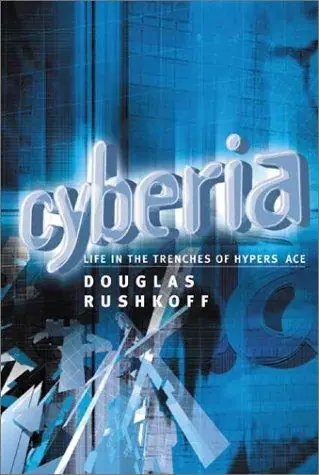
Cyberia
life in the trenches of hyperspace
by Douglas Rushkoff · first published 1994
44% recommend44% neutral11% critical
Cyberia is an eye-opening and up-to-the-minute portrait of America in the age of digital highways, all-night raves, cyberliterature, and psychedelic renaissance - by a young journalist with a fresh voice and a remarkable skill for mapping the terrain of the new world in which we have all, somehow, found ourselves. For over two years, Douglas Rushkoff lived among the players who are creating Cyberia and delivering it to the rest of us. Cyberia is his vivid report. Written in a language accessible to those who've never tested psychedelics or communicated over a computer modem, it is a journey i
Affiliate links. As an Amazon Associate I earn from qualifying purchases.
Mentions per year
What Hacker News says
Related books
 2021–2022
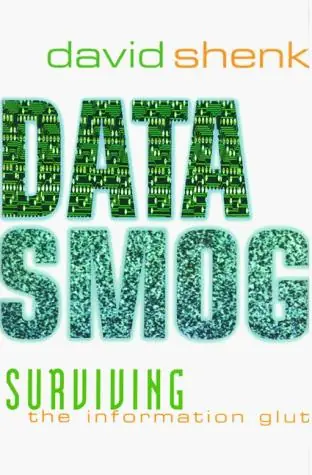
Data Smog
David Shenk
Recommended by 2 · mentioned by 22 recommend · 2 mention2 recommend · 22 recommend
 2021–2026
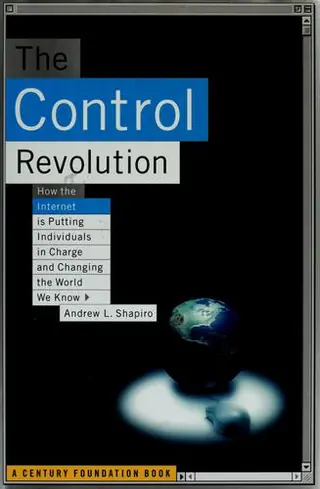
The control revolution
Andrew L. Shapiro
Recommended by 2 · mentioned by 22 recommend · 2 mention2 recommend · 22 recommend
 2013–2026
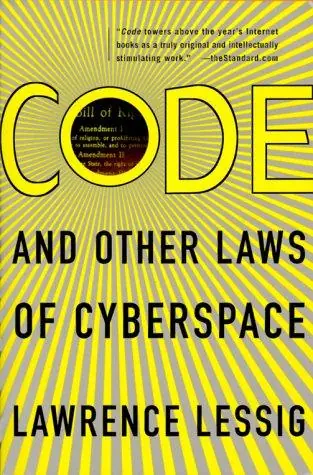
Code
Lawrence Lessig
Recommended by 2 · mentioned by 162 recommend · 16 mention2 recommend · 162 recommend
 2010–2026
The control revolution
James R. Beniger
Recommended by 3 · mentioned by 53 recommend · 5 mention3 recommend · 53 recommend
Douglas Rushkoff's Cyberia (1994) has some coverage on the idea of a true hacker and the "curious" personality archetype that matches it. It was more than 10 years ago that I read it and it resonated strongly with me, so perhaps…
on “How I Made $200k When I Was 16 Years Old Through Coding (2018)” ↗…somehow back and forward in time at the same time enmeshed in psychedelics and psychedelia but somehow also part of both machines and cultures far older than machines. A super important part of my history. Cyberia by Rushkoff comes closest to capturing parts of it from an anthropology perspective I think.
on “Dropping Acid” ↗…Jonathan Taplin Move Fast and Break Things Andrew L. Shapiro The Control Revolution Lawrence Lessig Code and Other Laws of Cyberspace David Shenk Data Smog Douglas Rushkoff Cyberia Paulina Borsook Cyberselfish.
on “Are smartphones serving as adult pacifiers?” ↗I found Doug Rushkoff's Cyberia to be an effective substitute for having properly witnessed that era. It has the advantage of not being a look back, but a look around. I get the sense, in flipping through it again now, that a historical…
on “MTV News covers "The Internet", video from 1995” ↗My introduction to Rushkoff was Cyberia [1]. He's much more temperate now than he was in Cyberia. He has a great point, though. Restated, it's as follows: If we have abundance, why are we working for more, instead of sending the abundance…
on “Are jobs obsolete?” ↗I remember reading about Marc de Groot (author of this software) in Douglas Rushkoff's Cyberia. Unfortunately he passed away in 2004. https://www.sfgate.com/news/article/DE-GROOT-Marc-2732584.ph...
on “Meme (Multitasking Extensible Messaging Environment): Multiuser Forth VR (1994)” ↗…https://archive.org/search.php?query=verbum%20magazine I went deep into that for back research on my most recent article https://siliconfolklore.com/internet-history/ I'll revisit it soon for something else I'm sure. Maybe the Douglas Rushkoff Cyberia world where this tech scene was entangled with the most hedonistic strains of new-ageism and overly indulgent on psychotropics - where a burner rambling about their dreams who won't live to see Y2K is…
on “Cameras on phones? (2001) [video]” ↗Another artifact of this time is Rushkoff's book Cyberia. It didn't age well either, but it informs an understanding of the time.
on “A Declaration of the Independence of Cyberspace” ↗…"He also wrote a book on the internet in 1992 that was never published, based on the belief that the online phenomenon would be over by 1993." I think that sentence is incorrect. Rushkoff's first book Cyberia was apparently completed in 1992 but not published until 1994 because the publisher initially believed that that the Internet, email, etc. was a fad that would pass.
on “Silicon Valley is broken and heading for social unrest” ↗…the book. David Shenk's Data Smog is similarly pioneering and insightful. Other signers are better known. Douglas Rushkoff's current project is his Team Human podcast, he's also known for his book Cyberia, both of which are strongly critical of tech trends since the late 1990s. Steven Johnson has written several books on technology. Paulina Borsook wrote Cyberselfish.
on “Technorealism (1998)” ↗