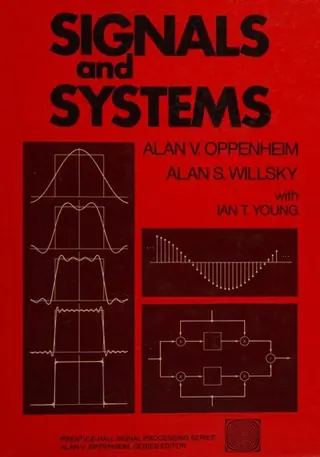
Signals and Systems
by Alan V. Oppenheim, Alan S. Willsky · first published 1983
57% recommend38% neutral5% critical
Why HN recommends it
Standard introductory text on signals and systems, with Fourier analysis taught as a core way of thinking. Suited to aspiring EEs and anyone learning filter design or signal processing, where poles and zeros matter.
Summarised by Claude from recommending comments
This book explains all topics about signals and systems in electronics.
Affiliate links. As an Amazon Associate I earn from qualifying purchases.
Mentions per year
What Hacker News says
Related books
Introduction to Embedded Systems
Edward A. Lee, Sanjit A. Seshia
Recommended by 3 · mentioned by 43 recommend · 4 mention3 recommend · 43 recommend
 2015–2025
Functional Analysis
Walter Rudin
Recommended by 3 · mentioned by 33 recommend · 3 mention3 recommend · 33 recommend
 2012–2026
Classical electrodynamics
John David Jackson
Recommended by 10 · mentioned by 1610 recommend · 16 mention10 recommend · 1610 recommend
 2007–2022
Story
Robert McKee
Recommended by 11 · mentioned by 1611 recommend · 16 mention11 recommend · 1611 recommend
 2008–2025
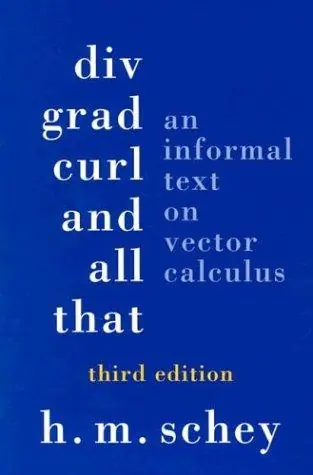
Div, grad, curl, and all that
H. M. Schey
Recommended by 17 · mentioned by 1717 recommend · 17 mention17 recommend · 1717 recommend
 2010–2026
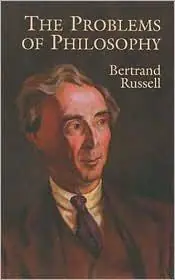
The Problems of Philosophy
Bertrand Russell
Recommended by 17 · mentioned by 2617 recommend · 26 mention17 recommend · 2617 recommend
 2009–2026
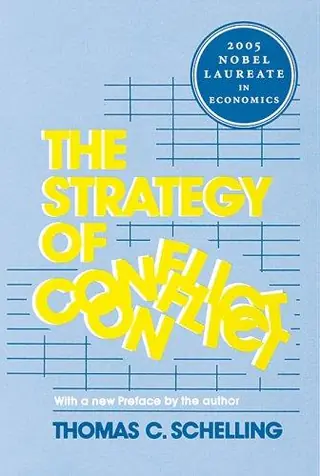
The strategy of conflict
Thomas C. Schelling
Recommended by 18 · mentioned by 2818 recommend · 28 mention18 recommend · 2818 recommend
 2007–2026
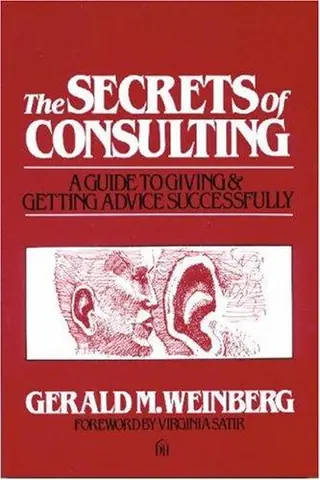
Secrets of Consulting
Gerald M. Weinberg
Recommended by 47 · mentioned by 6847 recommend · 68 mention47 recommend · 6847 recommend
…whole theory of IIR filter design is predicated on understanding the effects of the transfer's function poles and zeroes (generally complex numbers) on the behavior of the filter. Pick up any book on signals and systems like Oppenheim to get the details. Julius Smith's online books are also very good albeit terse.
on “Understanding Algebra: Why do we factor equations?” ↗…more about this? there is the canonical Fundamentals of Wireless Communication (https://people.eecs.berkeley.edu/~dtse/book.html) which is pretty good. also, iirc, there is a book by oppenheim as well (signals and systems, i think) edit-00k : yes, oppneheim book is called 'signals and systems' and it is available on ocw as well (https://ocw.mit.edu/resources/res-6-007-signals-and-systems-...)
on “Intro to SDR and RF Signal Analysis” ↗I would recommend reading Oppenheim's Signals & Systems book. It's important material for many subfields of EE.
on “Ask HN: Personal electrical engineering curriculum?” ↗Blanchard, Devaney and Hall, "Differential Equations". The first math textbook I found that you can actually read. Oppenheim, Willsky, and Nawab, "Signals and Systems". The foundational modern text for signals processing; Fourier analysis becomes a fundamental way of thinking.
on “Ask HN: What are your favorite non-fiction books of all time?” ↗…Art of Electronics by Horowitz and Hill has a permanent place on my desk. It is quite simply the bible of electronics engineering, the EE analogue of the famed Machinery’s Handbook. I also recommend Signals and Systems by Oppenheim for any aspiring EE.
on “My self-study plan for electrical engineering” ↗I try to find lectures online of professors who wrote books. Good example is Mr. Gilbert Strang. Good books and lectures. For theory of computation Sipser Michael. Signals and Systems by Opprnheimer. And so on.
on “Ask HN: Serious mathematics books that can replace a good teacher?” ↗Computer science: Knuth's TAOCP. And Sipser's Introduction to the Theory of Computation. Programming: SICP, K&R, and Stroustrup. Siebel's Practical common lisp. Artificial intelligence: AI a modern approach. Signals and Systems: Oppenheim's book Probability and statistics: Probability Theory: The Logic of Science by Jaynes
on “Ask HN: Which books do you consider real gems in your field of work/study?” ↗Microelectronic Circuits by Adel S. Sedra and Kenneth C. Smith Signals and Systems by Alan V. Oppenheim and Alan S. Willsky
on “Ask HN: Which books do you consider real gems in your field of work/study?” ↗Signals & Systems by Oppenheim is a classic introductory textbook.
on “You need to know what right-half-plane zeros are” ↗Signals and Systems by Oppenheim, Willsky and Nawab is a foundational text.
on “Ask HN: Which books do you consider real gems in your field of work/study?” ↗…textbooks, but there was too much piled on top of them (I've moved house three times since I last worked with signal processing... :) I remember two introductory books which were quite good - Kamen/Heck's 'Signals and Systems' - tells you a bit about the tools of the trade, laplace and fourier transforms, transfer functions, filter design &c - the book was accompanied by a number of MatLab scripts which let you visualise how…
on “Humidity in New Jersey impeding radio transmissions and slowing stock trades” ↗You may like Chapter 16, "DURATION-BANDWIDTH RELATIONSHIPS AND THE UNCERTAINTY PRINCIPLE", of one of my favorite books [1]. [1] Siebert, William McC.. Circuits, Signals, and Systems. MIT Press, 1986.
on “The Heisenberg Uncertainty Principle Is Pure Mathematics” ↗You could try reading (and working through) "Structure and Interpretation of Signals and Systems".
on “Wolfram Alpha's take on the Drake Equation” ↗His Signals and Systems book is still around and not bad either.
on “Nasir Ahmed's digital-compression breakthrough helped make JPEGs/MPEGs possible” ↗…schooling, Sedra & Smith is on the short list of ones I remember explicitly - along with Silberschatz & Galvin on operating systems (with the ridiculous dinosaurs on the cover), Oppenheim and Willsky's Signals and Systems, EOPL, and Stewart's Calculus.
on “All About Circuits” ↗