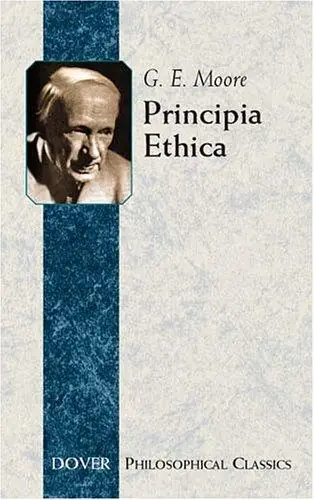
Principia ethica
by George Edward Moore · first published 1903
67% recommend33% neutral
Affiliate links. As an Amazon Associate I earn from qualifying purchases.
Mentions per year
What Hacker News says
Related books
 2015–2025
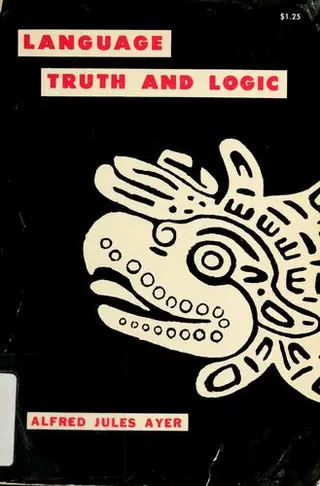
Language, truth and logic
A. J. Ayer
Recommended by 5 · mentioned by 95 recommend · 9 mention5 recommend · 95 recommend
 2012–2025
Essay concerning human understanding
John Locke
Recommended by 5 · mentioned by 165 recommend · 16 mention5 recommend · 165 recommend
Being and Nothingness
Jean-Paul Sartre
Recommended by 4 · mentioned by 214 recommend · 21 mention4 recommend · 214 recommend
 2007–2026
An enquiry concerning human understanding
David Hume
Recommended by 18 · mentioned by 2418 recommend · 24 mention18 recommend · 2418 recommend
 2007–2024
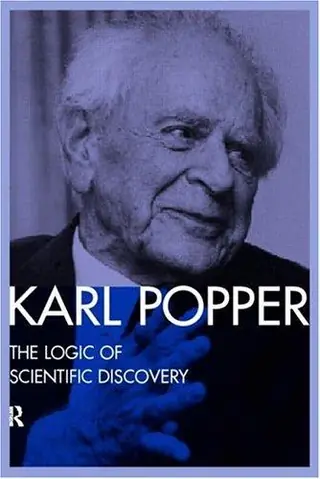
The Logic of Scientific Discovery
Karl Popper
Recommended by 15 · mentioned by 2615 recommend · 26 mention15 recommend · 2615 recommend
 2010–2026
The Problems of Philosophy
Bertrand Russell
Recommended by 17 · mentioned by 2617 recommend · 26 mention17 recommend · 2617 recommend
 2010–2026
A treatise of human nature
David Hume
Recommended by 12 · mentioned by 2512 recommend · 25 mention12 recommend · 2512 recommend
 2011–2026
The Social Contract
Jean-Jacques Rousseau
Recommended by 9 · mentioned by 279 recommend · 27 mention9 recommend · 279 recommend
G.E. Moore didn't disappear from history. His Ethics (1907) and Principia Ethica (1903) both remain widely cited. His naturalistic fallacy remains a major tour de force in ethics[1], and his moral "super-objectivism" was studied and critiqued throughout the 1900s by every heavy hitter…
on “Why did GE Moore disappear from history?” ↗…deals with knowledge, reason, human reasoning, and empirical reason. One cannot ignore Kant or does so at his/her peril, (perhaps this book is better left until you've a fuller grasp of the subject). 17. Principia Ethica—G. E. Moore (George Edward) Prof of Phil., Cambridge, UK at turn of the 20th Century. Since it was published in 1903 Principia Ethica has had a huge influence on philosophers and still does (incl. yours…
on “Philosophy of Science: Suggested Core Readings and Background Texts [pdf]” ↗…world where traditional ethics has gone off the rails, the study of ethics is absolutely essential. The key person to study here is the English philosopher G. E. Moore, and the definitive text is Moore's Principia ethica. 7e. Philosophy of Language. an ancient branch of philosophy which gained prominence in the last century under Wittgenstein. Basically it's concerned with how our languages affect our thought. Classic…
on “Ask HN: Learning about philosophy” ↗Having been brought up on G.E. Moore's Principia Ethica not to mention the work of Russell and Whitehead I'd have to say what I said as a first-pass comment. However I agree with you, things are never quite as simple as they seem when one grinds them fine,…
on ““Science must respect the dignity and rights of all humans”” ↗"G.E. Moore didn't disappear from history. His Ethics (1907) and Principia Ethica (1903) both remain widely cited." Correct, G.E. Moore certainly didn't disappear from history. I still have my copy of Principia Ethica that was drummed into me in Phil. classes at university decades…
on “Why did GE Moore disappear from history?” ↗Right, true. Hovever, the matter of goodness/ethics, etc. is probably best summed up by G.E. Moore in his 1903 work Principia Ethica: https://en.m.wikipedia.org/wiki/Principia_Ethica
on “Samsung remotely disables TVs looted from South African warehouse” ↗…engineering. It's thus fair to say the analytical philosophers and their ilk have had a strong influence on my thinking—Frege, Whitehead, Russell, Wittgenstein, and G.E. Moore—I can even see my copy of Principia Ethica on the bookshelf on the other side of the room from where I'm sitting. (BTW, In my world I cannot see any relevant connection between number theory (as mathematicians understand it) and ethics.) The…
on “'The tyranny of apps': those without smartphones are unfairly penalised” ↗G. E. Moore (in his Principia Ethica, 1903) makes a very similar case to this relation to consequentialist ethics: "The first difficulty in the way of establishing a probability that one course of action will give a better total result…
on “AGI is Mathematically Impossible 2: When Entropy Returns” ↗…themselves have no universally-accepted 'truths'. Moreover, with philosophy, linguistics, semantics and even its epistemological underpinnings—the theory of knowledge—continue to be subject of argument. In Principia Ethica G.E. Moore questions the foundations of ethics. One can't put a measure on "good", similarly, one can't explain or convey a sense of "yellow" to someone who's been blind from birth. In his books Language,…
on “'The tyranny of apps': those without smartphones are unfairly penalised” ↗