Being and Nothingness
by Jean-Paul Sartre · first published 1965
18% recommend73% neutral9% critical
Affiliate links. As an Amazon Associate I earn from qualifying purchases.
Mentions per year
What Hacker News says
Related books
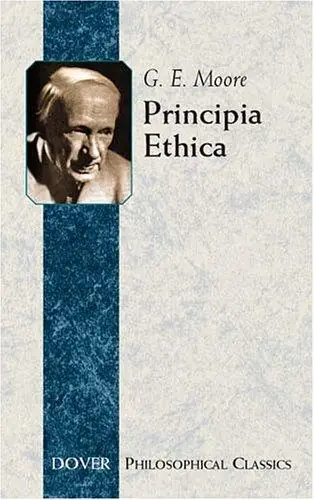 2020–2025
Principia ethica
George Edward Moore
Recommended by 2 · mentioned by 32 recommend · 3 mention2 recommend · 32 recommend
 2015–2025
Language, truth and logic
A. J. Ayer
Recommended by 5 · mentioned by 95 recommend · 9 mention5 recommend · 95 recommend
Thousand Plateaus
Gilles Deleuze, Felix Guattari
Recommended by 8 · mentioned by 298 recommend · 29 mention8 recommend · 298 recommend
Being and Time
Martin Heidegger
Recommended by 13 · mentioned by 4913 recommend · 49 mention13 recommend · 4913 recommend
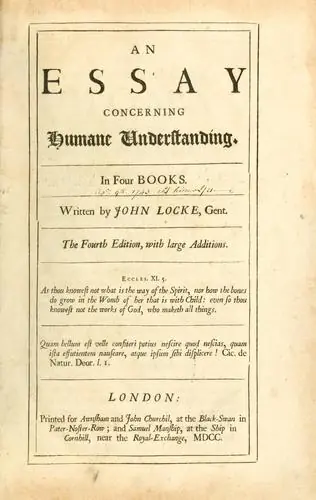 2012–2025
Essay concerning human understanding
John Locke
Recommended by 5 · mentioned by 165 recommend · 16 mention5 recommend · 165 recommend
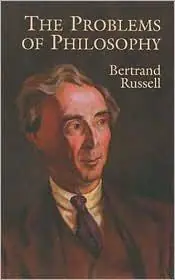 2010–2026
The Problems of Philosophy
Bertrand Russell
Recommended by 17 · mentioned by 2617 recommend · 26 mention17 recommend · 2617 recommend
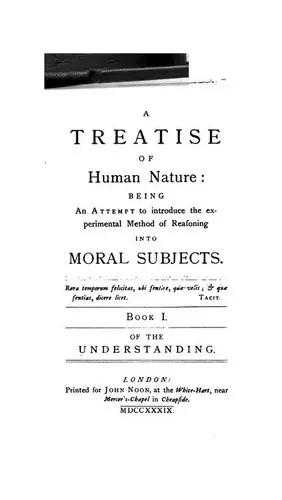 2010–2026
A treatise of human nature
David Hume
Recommended by 12 · mentioned by 2512 recommend · 25 mention12 recommend · 2512 recommend
 2010–2026
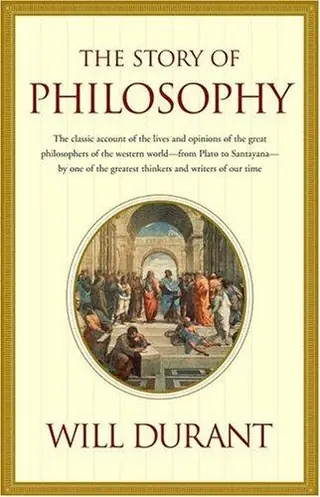
The Story of Philosophy
Will Durant, Du Shu Xin Wen She
Recommended by 22 · mentioned by 3822 recommend · 38 mention22 recommend · 3822 recommend
…of Pure Reason Kant - Critique of Judgment Hegel - Phenomenology of Spirit Hegel - Logic von Kleist - Marionette Theatre Kierkegaard - The Sickness Unto Death Heidegger - Being and Time Sartre - Being and Nothingness Sartre - Flies Sartre - Nausea Deleuze - Difference and Repetition Kafka - Metamorphosis Kafka - The Castle Lem - Magellan Nebula Lem - His Master's Voice Cioran - A Short History of Decay Pessoa…
on “Ask HN: What books changed the way you think about almost everything?” ↗Our Mathematical Universe - Max Tegmark Being and Nothingness - Sartre Chaos - Gleik Surely You're Joking, Mr. Feynman! - Feynman
on “Ask HN: What books have made the biggest impact on your mental models?” ↗Jean-Paul Sarte (Martin Heidegger : Being and Time) -> Being and Nothingness
on “What are good philosophical books?” ↗…Moreover, it illustrates the why one should progress through a formally structured curriculum. As with any study, to stay on course and to progress quickly certain topics are essential prerequisites. 23. Being and Nothingness—Jean-Paul Sartre* This text is one of the pillars of 20th C. existentialism, it's considered a true tour de force in the subject. It deals with one's role in the world—of being an existential human being…
on “Philosophy of Science: Suggested Core Readings and Background Texts [pdf]” ↗…a fascinating subject. Then there are the books, some of the most significant and influential ever written, Republic, Leviathan, A Treatise of Human Nature, Social Contract, Critique of Pure Reason, Being and Nothingness, etc., etc. These are works of brilliant minds that have endured over the centuries—and they endured for so long for the very reason that many have valued their contents greatly.
on “Whither Philosophy?” ↗…studied philosophy because of what it seemed to be. It seemed to promise a direct route to the most general truths. I pursued this illusion for some time as well. Then the first 50-some pages of Sartre's Being and Nothingness started a turn toward my present view that 20th-century academic philosophy is on the whole little more than a sophistical hustle.
on “Brown Political Review Interviews Paul Graham” ↗…have to put up with them. It's because of how we are unable to escape the watchful gaze of everyone around us, whether you work from home or not. "By there mere appearance of the Other," says Sartre in Being and Nothingness, "I am put in the position of passing judgment on myself as on an object, for it is as an object that I appear to the Other." Side note, the Economist is a rag.
on “A monk’s guide to office life” ↗…even mention Heidegger, the most influential 20th Century philosopher in the Continental tradition. Being and Time is his most influential book. They don't mention Sartre, who probably comes in 2nd. Being and Nothingness is his most famous book (you can tell the Heidegger influence just from the title). Their token Continentals are Foucault, Derrida, Habermas, and Ricouer... out of a list of 30. Update: Looks like…
on “Eminent Philosophers Name the Most Important Philosophy Books from 1950-2000” ↗…cause. How is this sensation any different from any other existensial crisis? There are many causes for that, widely discussed both in Western and Eastern Philosophy. E.g. Sartre's most known work, Being and Nothingness, is very much focused on this. Sartre's Nothingness is, despite what you might think, a positive force and ultimately what provides for our free will; it resembles somehow the tabula rasa of Aristotle,…
on “Virtual Reality Can Leave You with an Existential Hangover” ↗…pandemic really made this clear to me. "Hell is other people" — because of how we are unable to escape the watchful gaze of everyone around us. "By there mere appearance of the Other," says Sartre in Being and Nothingness, "I am put in the position of passing judgment on myself as on an object, for it is as an object that I appear to the Other." https://www.vox.com/2014/11/17/7229547/philosophy-quotes-mis...
on “Not interacting with people reduces cognitive function over time, study finds” ↗…ontology go back at least, most notably, to Hegel (consider Oxford's "Very Short Introduction" series if you're interested), and various philosophers have been dealing with the idea ever since: Sartre's Being and Nothingness being one example a century and a half after Hegel. In any event, "this sort of thing" might still be "an assault on the mind," but it's hard to judge it as such unless you have the context to do the…
on “Postmodernism Disrobed by Richard Dawkins” ↗…concern whether or not you pass on your particular genes, I just can't resist this discussion. Related reading if you're interested: Albert Camus (The Stranger, The Myth of Sisyphus), Sartre (Nausea, Being and Nothingness)
on “An Awesome Book” ↗…now. --- As a side note, if someone can recommend some good philosophy books on this, I’d appreciate it. I thought the branch that studies it might’ve been ontology, but I’ve read a bit of Sartre’s Being and Nothingness and realised what he’s talking about it not exactly what I’m looking for.
on “Stephen Hawking has died” ↗Jean-Paul Sartre is sitting at a French cafe, revising his draft of Being and Nothingness. He says to the waitress, "I'd like a cup of coffee, please, with no cream." The waitress replies, "I'm sorry, Monsieur, but we're out of cream. How about with no milk?”
on “Relation between alcohol consumption in midlife and dementia in late life” ↗…what older modernist philosophers like Nietzsche generally mean by suffering. Second, there is suffering from awareness of our freedom, which we find frightening. This idea really starts with Sartre's Being and Nothingness, and is a big part of the difference between existentialism and earlier philosophy. Nietzsche was generally hostile to compassion, finding it indistinguishable from pity most of the time. He believed…