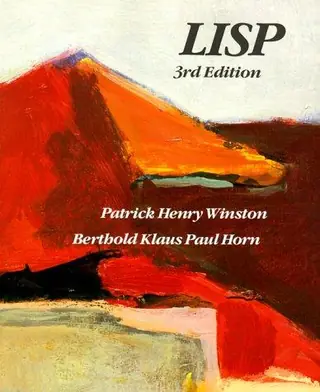
LISP
by Patrick Henry Winston · first published 1981
64% recommend36% neutral
Why HN recommends it
Assumes no prior programming, then moves quickly into deeper material like recursion, streams and abstraction, showing what Lisp can do; often cited as an excellent first Lisp book for beginners.
Summarised by Claude from recommending comments
Affiliate links. As an Amazon Associate I earn from qualifying purchases.
Mentions per year
What Hacker News says
Related books
 2007–2026
The Mind's I
Douglas R. Hofstadter, Daniel C. Dennett
Recommended by 36 · mentioned by 5736 recommend · 57 mention36 recommend · 5736 recommend
 2008–2026
Introduction to the theory of computation
Michael Sipser
Recommended by 66 · mentioned by 8966 recommend · 89 mention66 recommend · 8966 recommend
 2007–2026
Practical Common Lisp
Peter Seibel
Recommended by 218 · mentioned by 294218 recommend · 294 mention218 recommend · 294218 recommend
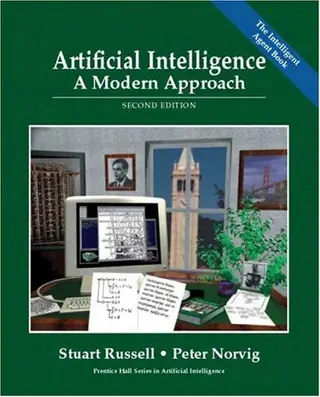 2007–2026
Artificial Intelligence
Stuart J. Russell, Peter Norvig
Recommended by 60 · mentioned by 13660 recommend · 136 mention60 recommend · 13660 recommend
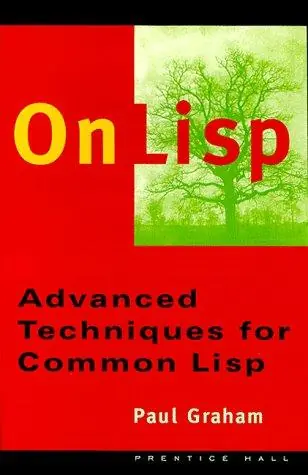 2007–2026
On LISP
Paul Graham
Recommended by 192 · mentioned by 355192 recommend · 355 mention192 recommend · 355192 recommend
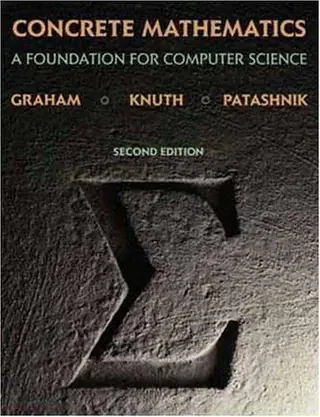 2007–2026
Concrete mathematics
Ronald L. Graham, Donald Knuth, Oren Patashnik
Recommended by 140 · mentioned by 215140 recommend · 215 mention140 recommend · 215140 recommend
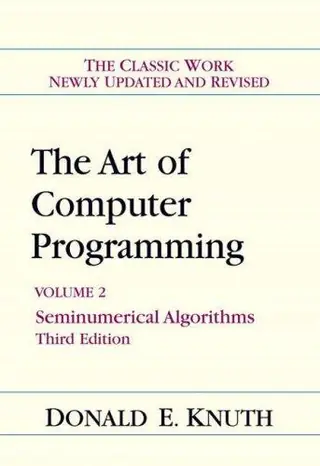 2007–2026
The art of computer programming
Donald Knuth
Recommended by 336 · mentioned by 1,125336 recommend · 1,125 mention336 recommend · 1,125336 recommend
 2007–2026
Design Patterns
Erich Gamma, John Vlissides, Richard Helm, Ralph Johnson
Recommended by 95 · mentioned by 41295 recommend · 412 mention95 recommend · 41295 recommend
I really like Winston and Horn's Lisp. It actually is written assuming you don't know how to program at all, but quickly moves along into more complex stuff, really showing off what Lisp can do. Winston teaches (taught?) at MIT, and when…
on “The Art of Computer Programming - eBook” ↗…programs, it is rather a good introduction to common scheme programming techniques. It teaches abstraction and techniques like streams and recursion. In that respect HtPD is very similar to Winston & Horn's Lisp.
on “How to Design Programs, second edition” ↗RIP, my first intro to Winston was when I was a lad in high schools and got the LISP book that also goes by the name "Winston & Horn" Still an excellent LISP book.
on “Patrick Winston of MIT CSAIL has died” ↗* This book, PAIP, by Peter Norvig * SICP, by Abelson and Sussman * Lisp (3rd ed), by Winston and Horn * The Art of Prolog, by Sterling and Shapiro It's like the same book written by different authors, and all of them are good.
on “Paradigms of A.I. Programming: Case Studies in Common Lisp (1991)” ↗"... Even though in Computer Science terms Lisp is an ancient language, few people to date figured out how to teach it well enough to make it accessible." Don't know why that is, to me Lisp came naturally reading Winston's book Lisp. I guess the…
on “The Nature of Lisp (2006)” ↗Might also consider Winston's other book more focused on AI (rather than Lisp): https://people.csail.mit.edu/phw/Books/index.html#AI https://courses.csail.mit.edu/6.034f/ai3/rest.pdf
on “Ask HN: Touring Symbolic AI” ↗…very remote. Gladly we had then a well connected university where I got in contact with some of the more interesting stuff mid 80s. The book I found most useful in the early times as an introduction to Lisp and programming with it was LISP from Winston & Horn. The first edition was from 1981 and the second edition from 1984. I especially liked the third edition. https://en.wikipedia.org/wiki/Lisp_(book)…
on “Hofstadter on Lisp (1983)” ↗What about non-bibles ? Henderson's FP book: https://www.amazon.com/Functional-Programming-Application-Im... Watson's Lisp: https://www.amazon.com/Lisp-3rd-Patrick-Winston/dp/020108319...
on “Ask HN: What are the bibles of Computer Science?” ↗Heh, funny you learned from the Winston & Horn book - that was my first too. The biggest philosophical problem I have with Lisp (and a lot of dynamically typed languages) is the lack of compile time safety-nets (it really bites me when I'm trying to work with a large, distributed team). I miss interfaces/abstract-classes, type…
on “Why I chose Common Lisp over Python, Ruby, and Clojure” ↗It's idiomatic to use a sublanguage. Think FORMAT. CLOS. Control flows using the condition system. LOOP is just another style to extend Lisp. There are older libraries which use similar style. Simple example from Winston&Horn's book LISP for a database query language: (db-select screwdrivers with color eql red)
on “One Major Difference Between Clojure and Common Lisp” ↗…fashion and the education switched to a different approach: assemble available Python modules. Still I like the SICP approach to give students a deep understanding how to build up from basics. In the Lisp world, there are books like Winston/Horn 'Lisp' (which adapts some content from SICP) or 'PAIP' from Peter Norvig, which are also challenging. 'Lisp' is more interested in teaching actual programming…
on “How to recommend books, or, stop recommending SICP” ↗The historic Lisp-AI connection is well articulated in the Introduction chapter of the Winston and Horn Lisp book. It captures the attitude of that time that some Lisp people had as being in a position of supremacy in…
on “IPL-V Manual (1964) [pdf]” ↗