Emperor's New Mind
by Roger Penrose · first published 1999
33% recommend54% neutral13% critical
Why HN recommends it
Wide-ranging tour of computability, Gödel, relativity and quantum mechanics that builds the needed math, arguing against strong AI. Valued as the counterpoint to Gödel, Escher, Bach, even by readers who disagree.
Common criticism: Critics say its Gödel and quantum-brain arguments are flawed or weakly supported
Summarised by Claude from recommending comments
Affiliate links. As an Amazon Associate I earn from qualifying purchases.
Mentions per year
What Hacker News says
Related books
 2008–2026
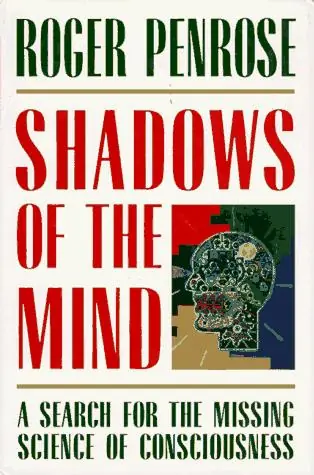
Shadows of the mind
Roger Penrose
Recommended by 13 · mentioned by 3113 recommend · 31 mention13 recommend · 3113 recommend
 2007–2026
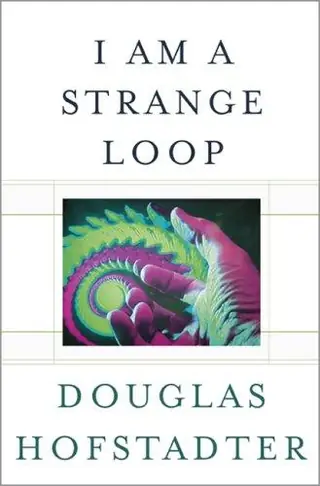
I Am a Strange Loop
Douglas R. Hofstadter
Recommended by 101 · mentioned by 204101 recommend · 204 mention101 recommend · 204101 recommend
Portrait of Dorian Gray
Robert Boettcher, Oscar Wilde
Recommended by 2 · mentioned by 32 recommend · 3 mention2 recommend · 32 recommend
 2012–2020
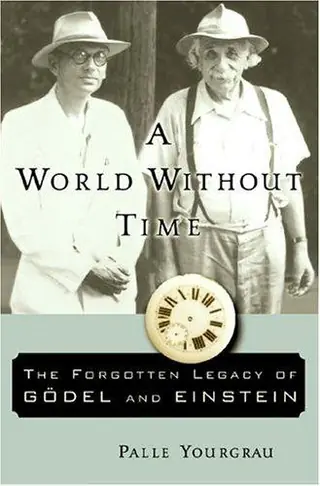
A World Without Time
Palle Yourgrau
Recommended by 1 · mentioned by 31 recommend · 3 mention1 recommend · 31 recommend
 2010–2019
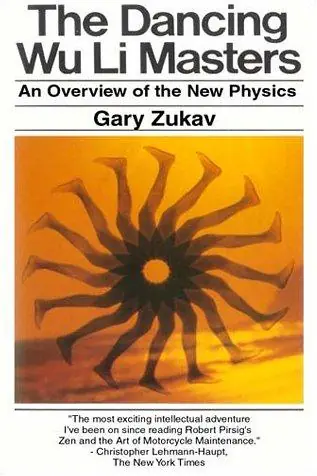
The Dancing Wu Li Masters
Gary Zukav
Recommended by 3 · mentioned by 33 recommend · 3 mention3 recommend · 33 recommend
 2007–2026
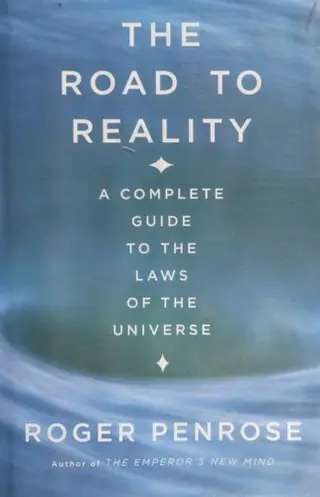
The Road to Reality
Roger Penrose
Recommended by 67 · mentioned by 12867 recommend · 128 mention67 recommend · 12867 recommend
 2009–2024
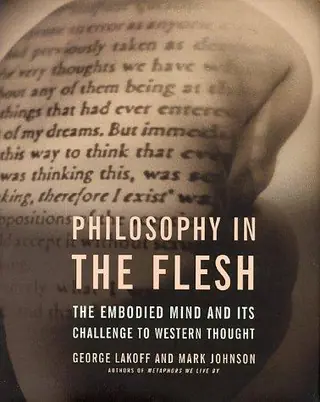
Philosophy in the flesh
George Lakoff
Recommended by 14 · mentioned by 2014 recommend · 20 mention14 recommend · 2014 recommend
 2007–2026
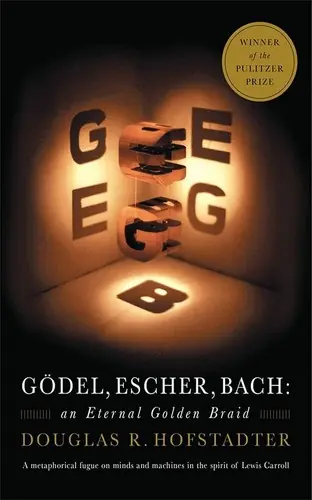
Gödel, Escher, Bach
Douglas R. Hofstadter
Recommended by 505 · mentioned by 1,055505 recommend · 1,055 mention505 recommend · 1,055505 recommend
The author of the obituary, Roger Penrose, is also a distinguished and forward thinking scientist. I highly recommend reading his book "The Emperor's New Mind". It's especially relevant in today's climate of rapidly accelerating machine learning and A.I. advances (whether you agree with his premises or not).
on “'Mind Over Matter': Stephen Hawking – Obituary by Roger Penrose” ↗To add to this: The Emperor's New Mind, by Roger Penrose. Really cool book. The Road to Reality: A Complete Guide to the Laws of the Universe, by Penrose again. Shadows of the Mind: A Search for the Missing Science of Consciousness, Penrose.
on “5 Great Science Books to Expand Your Mind” ↗The Emperor's New Mind, by Roger Penrose The Tao of Physics, by Fritjof Capra Dancing Wu Li Masters, by Gary Zukav The Naked Ape, by Desmond Morris The Road to Serfdom, by Friedrich Hayek The Worldly Philosophers, by Robert…
on “Ask HN: What books have made the biggest impact on your mental models?” ↗Check out "Godel, Escher, Bach" by Douglas Hofstadter, he tackles that question and argues from the point of view that hard ai is possible. Check out "Emperor's new mind" by roger penrose for a conflicting viewpoint. Both books will teach you much, much more than it's central thesis and is a tour through other important topics in science. Also, you might find the brain…
on “Ask HN: Where does consciousness come from?” ↗I read this stuff in "The Emperor's New Mind" by Roger Penrose. It not only talks about this, but introduces to Relativity, Quantum Mechanics, Phase Spaces. It also builds up all the mathematics required, so if you know what complex numbers are…
on “Gödel and the limits of logic” ↗The Emperor’s New Mind, Penrose. The Mind's I: Fantasies And Reflections On Self & Soul, Hofstadter and Dennet. The Society of Mind, Minsky. Martin Gardner. http://www.amazon.com/Martin-Gardner/e/B000AP8X8G/ref=sr_ntt...…
on “Ask HN: What recreational books related to programming can you recommend?” ↗…first came upon the consciousness as reality theme when I read “The self-aware universe” [0] by Goswami which introduces the idea of monistic idealism. Penrose also contemplates with the idea in the “Emperor’s New Mind” [1]. I highly recommend both books to anyone interested in exploring alternate theories. [0]: https://www.amazon.com/Self-Aware-Universe-Consciousness-Cre... [1]: https://www.amazon.com/Emperors-New-Mind-Concerning-Computer...
on “The Challenge of Consciousness” ↗I didn't realise people were making these arguments back in the sixties. I came across this in Penrose's much more recent books "The Emperor's New Mind" and to a lesser extent "The Shadow Of The Mind" which make similar arguments to this paper, appealing to incompleteness (and in the second book quantum mechanics) to argue against strong AI. Both books…
on “Minds, Machines and Gödel (1961)” ↗…Hofstadter. Hofstadter draws lines between the math, art, and music of these three giants of human creation, and it's a lot easier to read than anything written directly by Gödel. Roger Penrose's "The Emperor's New Mind" also has some good material on GIT.
on “Gödel Incompleteness for Startups (2013)” ↗> Penrose's "Emperor's New Mind" also discusses this topic at length (within the context of whether human brains can be emulated). I wasn't convinced with his argument regarding AI but his overview of the problem of what's computable…
on “Where do type systems come from? (2017)” ↗…the study of formal systems, which is a subset of things that can be computed and decided, ie computer science, which is a subset of things can be expressed and communicated, ie information theory. The Emperor's New Mind: Concerning Computers, Minds, and the Laws of Physics by Roger Penrose, a massive grand tour of scientific knowledge and big questions of the late 20th century. When you get done with that, go for the…
on “Ask HN: Good books?” ↗A comment here, which is unfortunately dead, says this: Make sure you don't neglect its contrary twin: Emperor's New Mind. (The entire dialectic between these two books is something straight out of G.E.B.) I haven't read GEB, but I loved reading the Emperor's New Mind by Roger Penrose. It's a little all over the place,…
on “Gödel, Escher, Bach: A Mental Space Odyssey” ↗"Gödel, Escher, Bach" by Douglas Hofstadter. It taught me a lot about thinking about not just patterns, but metapatterns and metametapatterns. "The Emperor's New Mind" by Roger Penrose. A truly brilliant and eminent mathematician/physicist boldly stepping up to grapple with the profound challenge of understanding how math, mind, and physics intertwine. Penrose's commentary…
on “What is the book that has completely changed your way of thinking?” ↗The Emperor's New Mind by Sir Roger Penrose. It's a very accessible and highly fascinating discussion about whether machines will ever be able to emulate the human mind.
on “Ask HN: What interesting books are you reading now?” ↗…actually seem that surprising. It's also relevant to the part of the book I'm reading now, which I highly recommend to anyone interested in QED, Electromagnetism, or even just Computer Science. "The Emperor's New Mind" by Roger Penrose (1989) - http://en.wikipedia.org/wiki/The_Emperor%27s_New_Mind
on “Researchers Demonstrate Heat and Sound Are Magnetic” ↗