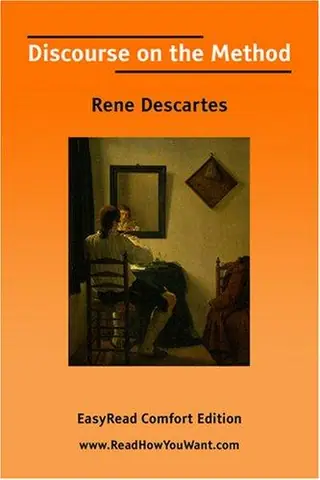
Discourse on the method
by René Descartes · first published 1996
31% recommend65% neutral4% critical
Why HN recommends it
Short, readable account of Descartes' method for seeking truth through doubt and reason; recommended to teenagers and students as an early model of critical thinking and a classic primer on philosophy.
Summarised by Claude from recommending comments
Affiliate links. As an Amazon Associate I earn from qualifying purchases.
Mentions per year
What Hacker News says
Related books
Meditations on First Philosophy
Rene Descartes
Recommended by 9 · mentioned by 269 recommend · 26 mention9 recommend · 269 recommend
 2012–2025
Essay concerning human understanding
John Locke
Recommended by 5 · mentioned by 165 recommend · 16 mention5 recommend · 165 recommend
 2007–2024
The Logic of Scientific Discovery
Karl Popper
Recommended by 15 · mentioned by 2615 recommend · 26 mention15 recommend · 2615 recommend
 2010–2026
Nicomachean Ethics
Aristotle
Recommended by 28 · mentioned by 7028 recommend · 70 mention28 recommend · 7028 recommend
 2007–2026
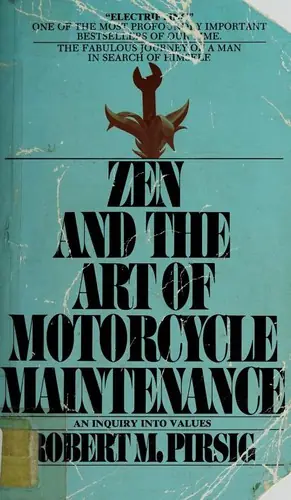
Zen and the Art of Motorcycle Maintenance
Robert M. Pirsig
Recommended by 302 · mentioned by 508302 recommend · 508 mention302 recommend · 508302 recommend
Permutation City
Greg Egan
Recommended by 256 · mentioned by 354256 recommend · 354 mention256 recommend · 354256 recommend
Republic
Plato, Benjamin Jowett
Recommended by 50 · mentioned by 18650 recommend · 186 mention50 recommend · 18650 recommend
 2007–2026
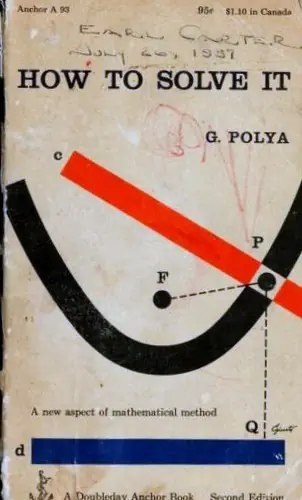
How to solve it
George Pólya
Recommended by 161 · mentioned by 206161 recommend · 206 mention161 recommend · 206161 recommend
…incomplete without studying him. The book's deals with ethics and how people should live their lives. 4. Meditations on First Philosophy, & etc.—René Descartes Very influential book. Initially, just read Discourse on the Method, it's about finding the truth, especially the sciences. Here, you'll find the famous phrase "I think therefore I exist/am". It also turns up in the 'related' Principles of Philosophy as Cogito, ergo sum.…
on “Philosophy of Science: Suggested Core Readings and Background Texts [pdf]” ↗Different books for different ages: - Discourse on the Method [1], to become a healthy criticist of everything (perfect for your 15's-20's development) - Beyond Good and Evil [2], a definition of the 20th century craziness by the crazy genius Nietzsche (perfect…
on “Ask HN: What book impacted your life the most and how?” ↗…lecture notes used for an intro pure math course also covers communications in math like how to write and structure a proof https://infinitedescent.xyz/ There is also classic material, like Descartes 'Discourse on the Method'. As for being able to argue well, any books on thesis defense will help like what a committee looks for when tearing apart your hypothesis and results/logic.
on “Ask HN: How do I learn to think?” ↗Ones I read as a teenager that have a lasting, if not nostalgic, effect: - Blaise Pascal's "Pensées" (Thoughts) - René Descartes' "Discours de la méthode" (Discourse on the method) - Henri Poincaré's "L'avenir des mathématiques" (The future of mathematics) The way they wielded words pleased me. Their hopes and doubts moved me. Their intellect shattered my brain.
on “Ask HN: What are your favorite essays?” ↗Discourse on the Method by René Descartes
on “Ask HN: What are some deep, mentality changing books?” ↗…hard question. 2. If you were pleased to hear another person's discovery that "my experience of experiencing is irrefutable", you might like to read Descartes's account from over 400 years ago in his Discourse on Method. He veered off into some strange and tenuous territory, but the opening of that book is excellent and it uses that discovery (a.k.a. the Cogito - I think, therefore I am) as the first axiom from which…
on “A Neuroscientist’s Theory of How Networks Become Conscious (2013)” ↗…Learn" Thinking Fast and Slow, Kahneman How to Read a Book, Adler[0] The Trivium, Sister Miriam Joseph How to Solve It, Polya I'd also recommend others that have already been recommended, such as the Discourse On the Method, the logic course (which I haven't personally taken, but a logic course certainly helps enter the right frame of mind for evaluating arguements with others or yourself, ime) and of course, learning more…
on “Ask HN: How do I learn to think?” ↗…reading or books. At least, not for people with intellectual curiosity. Written materials, fiction or non-fiction, are a good way to present complex ideas efficiently. Multimedia is not. Descarte's Discourse on the Method of Rightly Conducting One's Reason and of Seeking Truth in the Sciences (1637), which lays some of the foundations of modern science, is a worthwhile read. What would an iPad version look like if it's…
on “Dear Authors, Your Next Book Should be an App, Not an iBook” ↗…interesting! My understanding of Descartes comes from the book Descartes' Bones, which frustrated me in some ways but made an argument about Descartes that I found very interesting: when Descartes wrote his Discourse on Method, he was a Christian who felt his works very strongly connected with the existing works of the Church. He was not an advocate of discarding all non-mechanistic discovery so much as he advocated reexamining…
on “Train Philosophers with Pearl and Kahneman, not Plato and Kant” ↗…superseded. Or at least I guess so, because nothing in philosophy ever really is. The identification of thought (or rather reason) with language was explicitly advocated by Descartes in part V of the Discourse on the Method, where he suggested a test for distinguishing a perfect automaton from a human being. It's a view more often associated with him, but other early modern thinkers such as Locke, Leibniz and Kant made similar…
on “Can we know what animals are thinking?” ↗Any honest attempt at attaining objectivity through introspection will, I believe, be written in the first person. See the introduction to Descartes' "Discourse on the method" for the classical example. This list looks more like the author being pissed off after some arguments, and gathering a collection of what he believes are his opponents' repelling personality traits.
on “Robin Hanson's Opinion Warning Signs” ↗…are simply reactions to British rule (i.e. safety from the quartering of troops)? Should those laws be held in as high esteem as those laws that are truly based on human rights? Descartes continues in Discourse on Method: As for the opinions which up to that time I had embraced, I thought that I could not do better than resolve at once to sweep them wholly away, that I might afterwards be in a position to admit…
on “It’s easy to make something incredible.” ↗From a higher vantage point, the ultimate reference still is from Descartes in Discourse on the Method of Rightly Conducting One's Reason and of Seeking Truth in the Sciences, esp. Part II [0] https://en.m.wikipedia.org/wiki/Discourse_on_the_Method
on “Show HN: Learn to Code for Free” ↗Basically this is Descartes’s Discourse on the Method (2) The second ·was· to divide each of the difficulties I examined into as many parts as possible and as might be required in order to resolve them better. (3) The third ·was· to direct my thoughts in…
on “How to do hard things” ↗…of the box” thinking are traditional, analog, and noninvasive. These methods can be found in John Dewey’s classic “How to Think” primer, first published in 1910 or even earlier from Rene’ Descartes’s Discourse on the Method of Rightly Conducting One’s Reason and Seeking Truth in the Science." The opening few paragraphs are just setting the stage. Showing you what crazy people get up to. A juicy dystopic vision to capture…
on “What are your options for cognitive enhancement?” ↗