Meditations on First Philosophy
by Rene Descartes · first published 2007
35% recommend62% neutral4% critical
Why HN recommends it
Foundational modern philosophy text that builds knowledge from radical doubt. It is suggested for anyone starting to read philosophy and for those who want to understand how ideas on mind and certainty began.
Summarised by Claude from recommending comments
Affiliate links. As an Amazon Associate I earn from qualifying purchases.
Mentions per year
What Hacker News says
Related books
 2010–2015
Homo sacer
Giorgio Agamben
Recommended by 1 · mentioned by 21 recommend · 2 mention1 recommend · 21 recommend
 2010–2021
An enquiry concerning the principles of morals
David Hume
Recommended by 2 · mentioned by 32 recommend · 3 mention2 recommend · 32 recommend
 2010–2026
Discussion of the method
Billy Vaughn Koen
Recommended by 4 · mentioned by 44 recommend · 4 mention4 recommend · 44 recommend
 2008–2021
Utilitarianism
John Stuart Mill
Recommended by 5 · mentioned by 75 recommend · 7 mention5 recommend · 75 recommend
 2012–2025
Essay concerning human understanding
John Locke
Recommended by 5 · mentioned by 165 recommend · 16 mention5 recommend · 165 recommend
 2009–2023
Discourse on the method
René Descartes
Recommended by 8 · mentioned by 268 recommend · 26 mention8 recommend · 268 recommend
 2008–2024
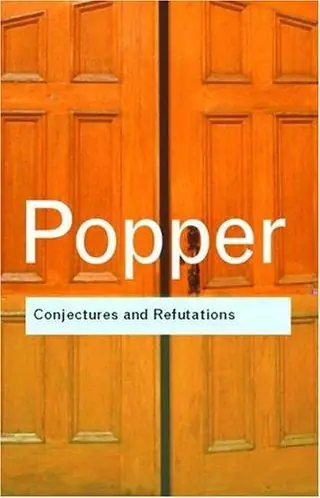
Conjectures and refutations
Karl Popper, Michelle Irene, de Launay Marc B., Melitta Mew
Recommended by 9 · mentioned by 179 recommend · 17 mention9 recommend · 179 recommend
 2009–2026
The Very Hungry Caterpillar
Eric Carle
Recommended by 13 · mentioned by 3313 recommend · 33 mention13 recommend · 3313 recommend
…hard to see just how brilliant a discovery it was. He had some things to say about consciousness that have not yet been improved upon. EDITED to say that the book I was talking about was Descartes's Meditations on First Philosophy, for anyone interested. He decides, "let's doubt that anything at all exists, just doubt everything - where does that take us?"
on “A Neuroscientist’s Theory of How Networks Become Conscious (2013)” ↗…of Scepticism by Julia Annas and Jonathan Barnes (a beautiful collection of texts from Pyrrhonian scepticism and analysis of their arguments; the best way I know to meet ancient scepticism) Descartes: Meditations on First Philosophy (The Cambridge University Press edition is very good; it's probably worth buying their Selected Philosophical Writings for a good basic Descartes text) David Hume: An Enquiry concerning Human Understanding…
on “Ask HN: Best Philosophical Books?” ↗What? Descartes' Meditations on First Philosophy is one of the most important books in the history of Western thought. Saying that "even in France no one longer reads this" is like saying that The Origin of Species is irrelevant because one never sees…
on “Extracting Hacker News Book Recommendations with the ChatGPT API” ↗…a giant in the field, his influence is still stamped all over Western culture today. Phil. is incomplete without studying him. The book's deals with ethics and how people should live their lives. 4. Meditations on First Philosophy, & etc.—René Descartes Very influential book. Initially, just read Discourse on the Method, it's about finding the truth, especially the sciences. Here, you'll find the famous phrase "I think therefore…
on “Philosophy of Science: Suggested Core Readings and Background Texts [pdf]” ↗…philosophy, but it's a dry start. Russell's Unpopular Essays is a good deal more fun to read. Other things I'd recommend for wading into the waters of philosophy would be Utopia by Sir Thomas More, or Meditations on First Philosophy by René Descartes.
on “Ask HN: Best Philosophical Books?” ↗See also Descartes' Meditations on First Philosophy "Why is this guy saying all these obvious things as if they were important?" Because he was literally the first one.
on “Wall of Sound” ↗…Deepness in the Sky - Vernor Vinge * Foundation - Isaac Asimov (But, the sequel Foundation and Empire is more interesting as it presents ideas that continue to challenge current assumptions of software) * Meditations on First Philosophy - Rene Descartes * Road - Cormac McCarthy
on “Ask HN: What are the best Well-Written Books?” ↗…Philosophers. Why? Because they don't go off into la-la land but try very hard to have both observed evidence and a mathematical model of it match cleanly via a Theory. For your edification, read first "Meditations on First Philosophy by Rene Descartes" followed by "Physics and Philosophy by Werner Heisenberg".
The Value of Science http://www.amazon.com/gp/aw/d/0375758488/ Meditations on First Philosophy http://www.amazon.com/gp/aw/d/0192806963/
on “Philosophy of science books every computer scientist should read” ↗…them, never to return. This is the birth of modernism. The rejection of the past, the 'blank slate' of a hypothetical 'view from nowhere' acutely expressed in Descartes' notion of Radical Doubt (in the Meditations on First Philosophy). Descartes argues that, like a city built by multiple architects over many centuries, contemporary knowledge in the 17th Century was brilliant and confused all at once, at odds with itself and incapable…
on “Train Philosophers with Pearl and Kahneman, not Plato and Kant” ↗…beliefs together in one go, as if they were all uncertain and false. They can then go over each belief in turn and re-adopt only those which they recognize to be true and indubitable.” --René Descartes, Meditations on First Philosophy
on “Ask HN: What has been your most rewarding job or project and why?” ↗…least in my frame there is. This isn't something you can prove because it comes any sort of structure capable of doing proving. It's just something that's a given and you start from there. Descartes' "Meditations on First Philosophy" is the originator of this idea. While it is dated, the form of its principal argument hasn't changed. With regards to conscious unity, there is at least a weak form of it in the sense that you can't…
on “What If Consciousness Comes First?” ↗Your starting point is taken up by Descartes in his Meditations on First Philosophy. The more modern expansion of these ideas can be found in Phenomenology by people like Husserl or Heidegger. There are a lot of contemporary philosophers dealing directly with philosophy of mind and…
on “Münchhausen Trilemma” ↗Interesting article. I've been covering Descartes recently, and his writing style is extremely ornate and complicated. From Meditations on First Philosophy: "For this reason I have no doubt that if you deign to take the trouble in the first place of correcting this work (for being conscious not only of my infirmity, but also of my ignorance, I should not…
on “On the Pedagogical Motive for Esoteric Writing (2007)” ↗Huh, this is discussed at the beginning of Descartes's Meditations on First Philosophy but I didn't realize it was such a widespread phenomenon in the time leading up to it. ... nisi me forte comparem nescio quibus insanis, quorum cerebella tam contumax vapor ex atra bile labefactat, ut…
on “The French King Who Believed He Was Made of Glass” ↗