De Rerum Natura
by Lucretius, Marciano Guerrero, MaryMarc Translations · first published 2014
30% recommend70% neutral
Why HN recommends it
Didactic poem presenting Epicurean natural philosophy, valued for its early reasoning from observation about physical phenomena and atoms; suits readers interested in the history of scientific thought and ideas.
Summarised by Claude from recommending comments
Affiliate links. As an Amazon Associate I earn from qualifying purchases.
Mentions per year
What Hacker News says
Related books
 2012–2026
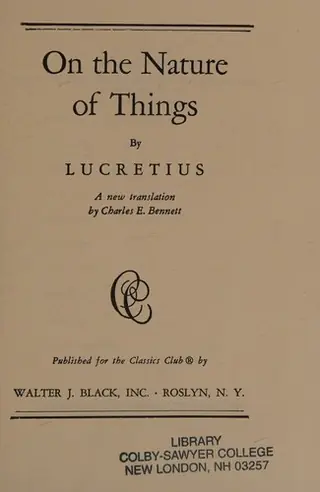
On the nature of things
lucretius
Recommended by 9 · mentioned by 169 recommend · 16 mention9 recommend · 169 recommend
 2013–2026
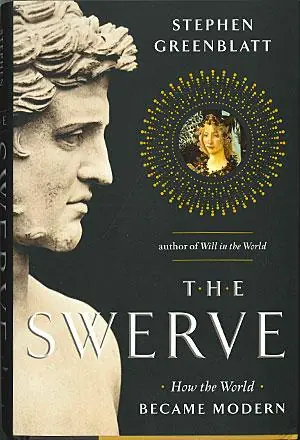
The swerve
Stephen Greenblatt
Recommended by 8 · mentioned by 138 recommend · 13 mention8 recommend · 138 recommend
The Swerve, How the World Became Modern
Stephen Greenblatt
Recommended by 5 · mentioned by 75 recommend · 7 mention5 recommend · 75 recommend
 2011–2026
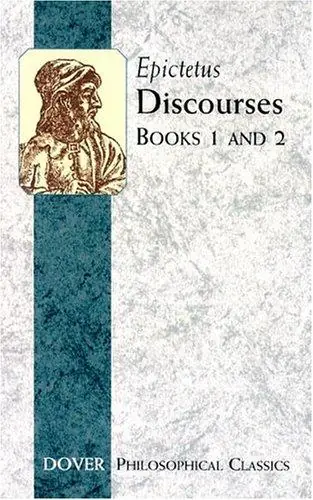
Discourses
Epictetus
Recommended by 17 · mentioned by 2717 recommend · 27 mention17 recommend · 2717 recommend
 2014–2025
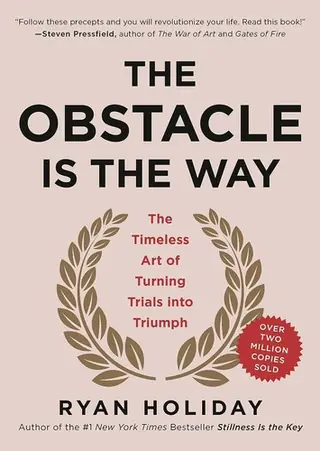
The Obstacle is the Way
Ryan Holiday
Recommended by 47 · mentioned by 6247 recommend · 62 mention47 recommend · 6247 recommend
 2010–2026
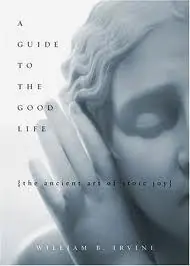
A Guide to the Good Life
William B. Irvine
Recommended by 135 · mentioned by 158135 recommend · 158 mention135 recommend · 158135 recommend
 2009–2026
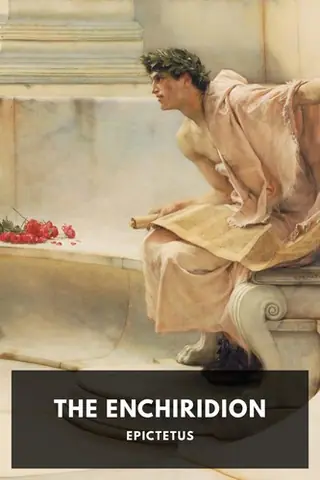
The Enchiridion
Epictetus
Recommended by 47 · mentioned by 6647 recommend · 66 mention47 recommend · 6647 recommend
On the Nature of Things (De rerum natura) by Lucretius is a fascinating glimpse at the foundation of scientific thought from the 1st century BC. I just finished reading it; it's an interesting mix of combining logic with observation to try…
on “Why we should all learn from the ancient Greeks” ↗They were. But hey, learning Latin would give you the ability to read Lucretius in the original, and his "De Rerum Natura" is quite an interesting contrast to the Stoicism of "Meditations".
on “The Meditations by Marcus Aurelius” ↗I personally found a lot from Lucretius Carus's "De Rerum Natura"[0]. It was important to popularize the philosophy of Epicurus. It describes three types of needs: 1. Necessary and natural needs: Sleep, eat, the other thing. 2. Unnecessary (from the individual's…
on “Work/life balance should be difficult” ↗…that we live in today. Of course the bible had a lot of influence on western culture but one could argue whether it was not more detrimental than beneficial. There is more to be learnt from Lucretius' De Rerum Natura (On the Nature of Things) than from The Bible.
on “Seven books I keep close because I love them” ↗…researched over the pandemic and it's AMAZING. So what a lot of people might not really know is that many modern ideas are older than we think, specifically compiled into a poem in 50 BCE by Lucretius called De Rerum Natura ("The Nature of Things). The ideas there included survival of the fittest as the mechanism driving the life we see around us and ourselves, that parents pass on traits to children from a doubled seed…
on “Internet Sacred Text Archive” ↗…dreams, and you can see how well that would work as an analogy with using X-rays to look at subtle changes in the arrangement of atoms in charred scrolls. (These are covered in https://en.wikipedia.org/wiki/De_rerum_natura - if you have some time, I highly recommend reading Stalling's rhyming translation. You'll be shocked and admire the rationality & scientificness of Epicurean materialist atomist explanations of the world,…
on “Vesuvius Challenge 2023 Grand Prize awarded: we can read the first scroll” ↗…of the first pre-Socratic Greek philosophers, such as Anaximander and Empedocles.[34] Such proposals survived into Roman times. The poet and philosopher Lucretius followed Empedocles in his masterwork De rerum natura (On the Nature of Things). https://en.wikipedia.org/wiki/Evolution#History_of_evolution... Darwin described one mechanism (i.e. natural selection) that drives evolution.
on “Another person that discovered evolution besides Darwin” ↗By coincidence, I'm reading Lucretius' De rerum natura. [1] Lucretius of course is also a materialist. The world is made of "primordial units" which are the indivisible particles. These particles do not have parts. Later Newton picked up this atomic materialism…
on “A Man Who Questioned Everything” ↗I have a PhD in Classics. My focus was on ancient philosophy, in particular on Epicurean philosophy, in particular on a Roman Epicurean named Lucretius, in particular on Book 3 of his De Rerum Natura, in particular about his arguments against the fear of death in that book, in particular about the structure, formal & logical analysis and evaluation of his argument for the thesis that "death is nothing…
on “The illustrated guide to a Ph.D.” ↗…terror and imagine will come true. This terror therefore and darkness of mind must be dispelled not by the rays of the sun and glittering shafts of day, but by the aspect and law of nature." LUCRETIUS, De Rerum Natura :)
on “If You're Not Writing a Program, Don't Use a Programming Language [video]” ↗…whether the words of a song are true. But this seems to ignore the long tradition of didactic poetry, which was typically sung rather than simply read aloud. How would this theory account for Lucretius' De Rerum Natura, for instance, or Hesiod's Works and Days? These are musical works, intended for singing, but they are also supposed to convey fairly detailed factual information to the listener. We still use song for…
on “Music is a negative superstimulus for speech (2020)” ↗…knows that Aristotle – and thus “the Greeks” – thought that heavy objects fall faster than light ones. Supposedly it took Galileo to prove him wrong. But in fact there is a clear statement in Lucretius (De Rerum Natura II:225-239) that objects of different weight fall at the same speed, unless air resistance kicks in;
on “The Forgotten Revolution” ↗Except that it's the Epicureans that got the closest to modern scientific knowledge in hindsight. Lucretius's De Rerum Natura is the only extant work from antiquity to explicitly describe the claim that what we see around us started from senseless primordial beings that through intermediate mutants came to be what we see around…
on “Epicurus for Our Time” ↗…unified theory of physics, all written by an author who lived in the 1st century BCE. Such was the discovery of 15th century manuscript collector Poggio Bracciolini, who discovered a surviving copy of De Rerum Natura (On the Nature of Things [1]) in a Benedictine monastery. The lost work of Lucretius inspired many Enlightenment thinkers and led people to challenge the orthodoxies of that time. [1] https://en.wikipedia.org/wiki/De_rerum_natura
on “Archive of medieval books and manuscripts discovered in Romanian church” ↗I'm reading "The Swerve", Stephen Greenblatt's marvelous book on the discovery of Lucretius' De Rerum Natura (The Nature of Things"), a Roman-era scroll on Epicurus' philosophy, by Poggio Bracciolini in 1417. The work was copied by hand repeatedly since 50 BCE by monks and other scripturae, despite its essential…
on “The End of Handwriting” ↗