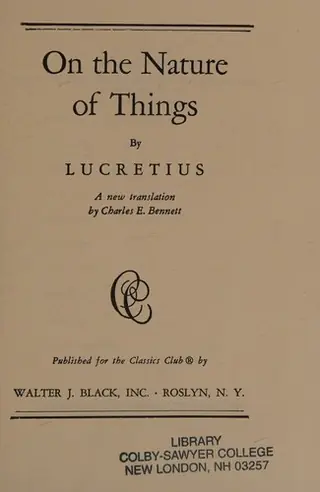
On the nature of things
by lucretius · first published 1946
53% recommend41% neutral6% critical
Why HN recommends it
Presents Epicurus's core ideas on nature and atoms in a poetic, readable form. It offers a rewarding classic for anyone curious about early scientific reasoning and philosophy.
Summarised by Claude from recommending comments
Affiliate links. As an Amazon Associate I earn from qualifying purchases.
Mentions per year
What Hacker News says
Related books
De Rerum Natura
Lucretius, Marciano Guerrero, MaryMarc Translations
Recommended by 6 · mentioned by 206 recommend · 20 mention6 recommend · 206 recommend
 2012–2023
Prior Analytics
Aristotle
0 recommend · 7 mentioned0 recommend · 7 mention0 recommend · 70 recommend
 2013–2026
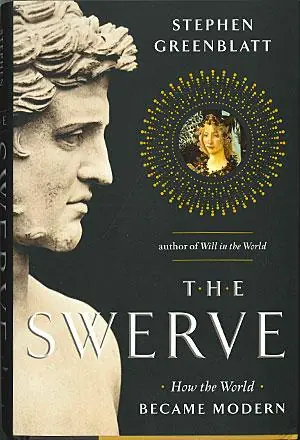
The swerve
Stephen Greenblatt
Recommended by 8 · mentioned by 138 recommend · 13 mention8 recommend · 138 recommend
 2015–2025
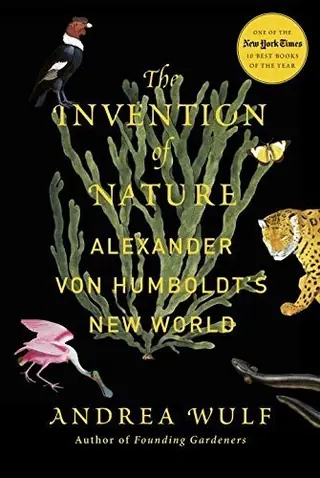
The Invention of Nature
Andrea Wulf
Recommended by 12 · mentioned by 1412 recommend · 14 mention12 recommend · 1412 recommend
 2011–2026
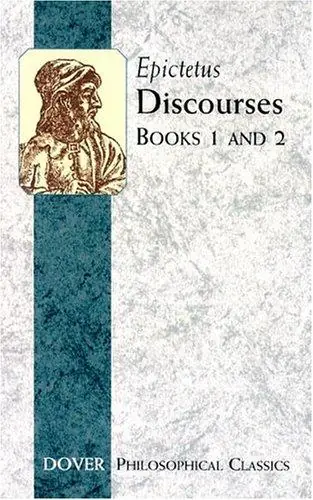
Discourses
Epictetus
Recommended by 17 · mentioned by 2717 recommend · 27 mention17 recommend · 2717 recommend
 2010–2026
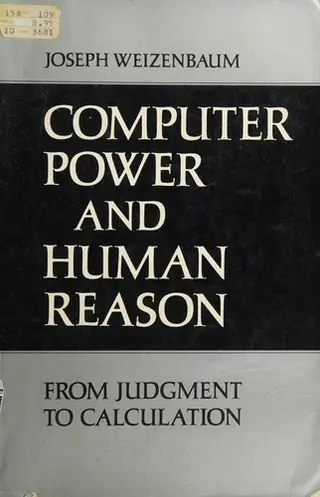
Computer Power and Human Reason
Joseph Weizenbaum
Recommended by 14 · mentioned by 3014 recommend · 30 mention14 recommend · 3014 recommend
 2010–2026
Letters from a Stoic
Seneca
Recommended by 40 · mentioned by 5240 recommend · 52 mention40 recommend · 5240 recommend
 2008–2026
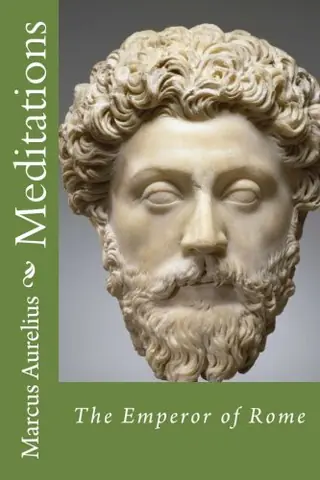
Meditations by Marcus Aurelius
Marcus Aurelius, Meric Casaubon
Recommended by 184 · mentioned by 251184 recommend · 251 mention184 recommend · 251184 recommend
On the Nature of Things (De rerum natura) by Lucretius is a fascinating glimpse at the foundation of scientific thought from the 1st century BC. I just finished reading it; it's an interesting mix of combining logic with observation…
on “Why we should all learn from the ancient Greeks” ↗…10 times: Social Contract (Rousseau), Republic (of Plato), Apology (Socrates), As a Man Think, Inquiry into the Wealth of Nation (if you can muster the energy) Books worth reading 3 times: Lucretius (on the nature of things) And pretty much most books in the Great Books of the Western World list
on “Why reading a book 100 times is a great idea” ↗I recently read, The Swerve about On the Nature of Things by Lucretius. It was very well written has made reading On the Nature of things that much more enjoyable. Getting that context and backstory was -ironically- a godsend. While I agree with his point about…
on “C.S. Lewis on the Reading of Old Books” ↗First, to understand what Epicurus said, I strongly recommend "On the Nature of things" by Lucretius. It's a beautiful (and poetic) work on the core ideas of Epicurus. Second, a small nit-pick on the subtitle of the article: while Epicurus was a "rival" to the Stoics in a broad sense,…
on “Living for Pleasure by Emily A. Austin – An Epicurean Guide to Happiness” ↗…today. Of course the bible had a lot of influence on western culture but one could argue whether it was not more detrimental than beneficial. There is more to be learnt from Lucretius' De Rerum Natura (On the Nature of Things) than from The Bible.
on “Seven books I keep close because I love them” ↗…through it. Frankenstein: Mary Shelley's classic. I started collecting the new Penguin Classics line and the introductions are really insightful. These are well-researched and produced editions. The Nature of Things: The epic from Lucretius. It was really eye-opening to finally read this book. Atomism, psychology, and poetic metaphors... from thousands of years ago. ... probably more I'm forgetting.
on “Ask HN: Books you read in 2015?” ↗…any attitude you like towards this, but why not a positive attitude which will lead you to enjoying this existence as much as possible, and also helping others to do the same? Lucretius laid out The Nature of Things very well in 79 A.D.: https://philosophybreak.com/articles/why-death-is-nothing-to...
on “A neuroscientist prepares for death” ↗I would put On The Nature of Things on my list of life changing books as well. Its sublime
on “Ask HN: What books have you read that have changed your life?” ↗I'm reading "The Swerve", Stephen Greenblatt's marvelous book on the discovery of Lucretius' De Rerum Natura (The Nature of Things"), a Roman-era scroll on Epicurus' philosophy, by Poggio Bracciolini in 1417. The work was copied by hand repeatedly since 50 BCE by monks and other scripturae, despite its essential refutation of both…
on “The End of Handwriting” ↗…pre-Socratic Greek philosophers, such as Anaximander and Empedocles.[34] Such proposals survived into Roman times. The poet and philosopher Lucretius followed Empedocles in his masterwork De rerum natura (On the Nature of Things). https://en.wikipedia.org/wiki/Evolution#History_of_evolution... Darwin described one mechanism (i.e. natural selection) that drives evolution.
on “Another person that discovered evolution besides Darwin” ↗Any reason as to why you'd single me out? I have read On the Nature of Things but what would make you question if I have? We can all contribute opinions, just as the author cannot read Lucretius' mind as to why he would choose to write the way he did
on “Lucretius saw no boundary between scientific interests and ethical claims” ↗The same concept has been argued in details some 2100 years ago by Lucretius in "On the nature of things."
on “How big is the entire universe?” ↗On a sidenote i just started to read "The Swerve" which is about how epicurs thoughts (by Lucretius "On the nature of things") were rediscovered at the beginning of the renaissance, until now a great read (and Pullitzer price winner last year, apparently)! https://en.wikipedia.org/wiki/The_Swerve:_How_the_World_Beca...
on “The Meditations of Marcus Aurelius” ↗…physics, all written by an author who lived in the 1st century BCE. Such was the discovery of 15th century manuscript collector Poggio Bracciolini, who discovered a surviving copy of De Rerum Natura (On the Nature of Things [1]) in a Benedictine monastery. The lost work of Lucretius inspired many Enlightenment thinkers and led people to challenge the orthodoxies of that time. [1] https://en.wikipedia.org/wiki/De_rerum_natura
on “Archive of medieval books and manuscripts discovered in Romanian church” ↗It was by an incredible amount of luck that Lucretius' On the Nature of Things is still published today. If it wasn't for a group of Florentine hipsters the last copy might have rotted on a shelf in a neglected monastery library. Who knows how the Renaissance might have progressed…
on “Ellen Ullman wrote the most precise account of “computer culture” I have seen” ↗