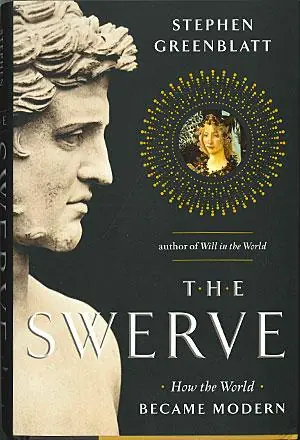
The swerve
by Stephen Greenblatt · first published 2011
62% recommend31% neutral8% critical
Why HN recommends it
Narrative history of how Poggio Bracciolini recovered Lucretius' De Rerum Natura in 1417 and how that Epicurean atomism spread. Suited to lay readers interested in lost knowledge and the history of ideas.
Summarised by Claude from recommending comments
One of the world's most celebrated scholars, Stephen Greenblatt has crafted both an innovative work of history and a thrilling story of discovery, in which one manuscript, plucked from a thousand years of neglect, changed the course of human thought and made possible the world as we know it. Nearly six hundred years ago, a short, genial, cannily alert man in his late thirties took a very old manuscript off a library shelf, saw with excitement what he had discovered, and ordered that it be copied. That book was the last surviving manuscript of an ancient Roman philosophical epic, On the Nature
Affiliate links. As an Amazon Associate I earn from qualifying purchases.
Mentions per year
What Hacker News says
Related books
 2020–2023
The food explorer
Daniel Stone
Recommended by 1 · mentioned by 21 recommend · 2 mention1 recommend · 21 recommend
De Rerum Natura
Lucretius, Marciano Guerrero, MaryMarc Translations
Recommended by 6 · mentioned by 206 recommend · 20 mention6 recommend · 206 recommend
 2012–2026
On the nature of things
lucretius
Recommended by 9 · mentioned by 169 recommend · 16 mention9 recommend · 169 recommend
 2011–2026
The origins of political order
Francis Fukuyama
Recommended by 22 · mentioned by 3222 recommend · 32 mention22 recommend · 3222 recommend
 2010–2026
Mere Christianity
C. S. Lewis
Recommended by 29 · mentioned by 5229 recommend · 52 mention29 recommend · 5229 recommend
 2008–2026
Meditations by Marcus Aurelius
Marcus Aurelius, Meric Casaubon
Recommended by 184 · mentioned by 251184 recommend · 251 mention184 recommend · 251184 recommend
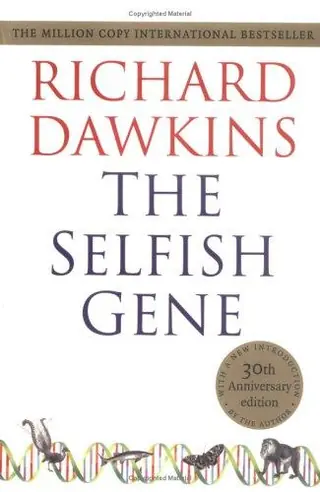 2007–2026
The Selfish Gene
Richard Dawkins
Recommended by 220 · mentioned by 431220 recommend · 431 mention220 recommend · 431220 recommend
I just read two books that I thought would be unrelated, but ended up being very related in a way that was fascinating to read the two in tandem — The Swerve by Stephen Greenblatt, and The Making of the Atomic Bomb by Richard Rhodes. The Swerve is about Epicurus and Lucretius — who both helped popularize atomism 2000+ years ago. I never thought much of the…
on “Is atomic theory the most important idea in human history?” ↗…humming...and the origin of the word slave from the Slavs who were captured by the red-haired Vikings as they moved south...knowns as the Russes, who became known as the Russians.. some others-- The Swerve by Stephen Greenblatt The Food Explorer by Daniel Stone anything by Erik Larson but especially Isaac's Storm (about the Galveston hurricane of 1900) and In the Garden of Beasts (about the American ambassort…
on “Ask HN: What are your favourite history books?” ↗A Guide to the Good Life by William Irvine (about the Stoics, and last I knew, free to download online) The Swerve by Stephen Greenblatt (about the impact of the Roman poet Lucretius' poem On The Nature of Things--everything from the idea of the atom, Botticelli's Venus on the Half Shell to why Thomas Jefferson put…
on “Ask HN: What books have you read that have changed your life?” ↗Christianity: The Swerve - Greenblatt The Kingdom - Carrére Both very much in the sense of historical development of the religion.
on “Ask HN: What's the Best Book on Religion” ↗Those interested in this topic may also want to read Stephen Greenblatt‘s The Swerve.
on “Publishing in a Medieval Monastery” ↗That's not necessarily bad news. Everyone interested in this story should read Stephen Greenblatt's The Swerve (https://www.pulitzer.org/winners/stephen-greenblatt). It traces the story of a Renaissance humanist who tracked down and translated the Epicurean philosopher/poet Lucretius' De Rerem Natura, which Greenblatt…
on “Vesuvius Challenge 2023 Grand Prize awarded: we can read the first scroll” ↗> Everyone interested in this story should read Stephen Greenblatt's The Swerve (https://www.pulitzer.org/winners/stephen-greenblatt). It's interesting reading for a layperson, but as with any other pop-history book, one should read this with a heaping plate of salt at hand. (I'm...…
on “Vesuvius Challenge 2023 Grand Prize awarded: we can read the first scroll” ↗I'm reading "The Swerve", Stephen Greenblatt's marvelous book on the discovery of Lucretius' De Rerum Natura (The Nature of Things"), a Roman-era scroll on Epicurus' philosophy, by Poggio Bracciolini in 1417. The work was copied…
on “The End of Handwriting” ↗If you're interested in the history of science and lost knowledge, you may enjoy the book entitled "The Swerve" by Greenblatt which is about similar discoveries of ancient codices in Europe--in particular "de Rerum Natura" by Lucretius.
on “Medieval Monks Wrote over Ancient Star Catalog – Particle Accel Reveals Original” ↗I'm by no means a medieval scholar. But this doesn't mesh at all with the information in the"The Swerve" by Stephen Greenblatt (a national book award winner). The texts of the pagans were not preserved because they were revered but because it was the duty of a monk to know how to write. To learn how to…
on “Why did science make little real progress in Europe in the Middle Ages?” ↗…us" in the later portion of Book 3. (De Rerum Natura is a Roman philosophical poem from the mid-first century BCE. Lucretius and his poem are getting a lot of press recently because of a book called The Swerve by Stephen Greenblatt.) The linked guide to PhDs made me smile, and it rings true to me for non-sciences. As an undergraduate I was a Comparative Literature major with lots of credits in Latin, Greek…
on “The illustrated guide to a Ph.D.” ↗…David Graeber; The Glass Bead Game by Hermann Hesse;[7] The Chalice and the Blade by sociologist Riane Eisler; The Origins of Political Order by Francis Fukuyama; The War Lovers by Evan Thomas; and The Swerve by Stephen Greenblatt.[8]
on “Interview: Francis Ford Coppola (2012)” ↗…geography matters in the development of civilizations. (That book also introduced me to cargo cults, a concept I think about a lot.) But gun to my head, I couldn't tell you what Stephen Greenblatt's The Swerve is about. Not even the title—I don't know what "the swerve" is referring to at all. My degree is in Humanities so it was right up my alley but I've completely forgotten that whole book.
on “Why Books Donʼt Work (2019)” ↗Stephen Greenblatt is a great scholar but "The Swerve" is a deeply problematic book. At any rate, the comments in this thread are conflating two very different things: 1) humanistic learning, particularly Greek scholarship and 2) technological and scientific…
on “Why did science make little real progress in Europe in the Middle Ages?” ↗