The Swerve, How the World Became Modern
by Stephen Greenblatt · first published 2011
71% recommend29% neutral
Why HN recommends it
Narrative history of how a lost Lucretius poem, De rerum natura, was rediscovered and helped shape modern thought. It is engaging non-fiction about books and Epicurean ideas.
Summarised by Claude from recommending comments
Affiliate links. As an Amazon Associate I earn from qualifying purchases.
Mentions per year
What Hacker News says
Related books
De Rerum Natura
Lucretius, Marciano Guerrero, MaryMarc Translations
Recommended by 6 · mentioned by 206 recommend · 20 mention6 recommend · 206 recommend
Essays
Michel de Montaigne
Recommended by 20 · mentioned by 3520 recommend · 35 mention20 recommend · 3520 recommend
 2010–2025
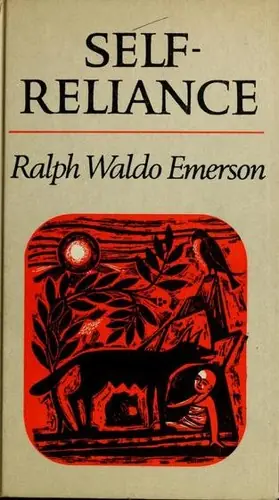
Self-reliance
Ralph Waldo Emerson
Recommended by 25 · mentioned by 3825 recommend · 38 mention25 recommend · 3825 recommend
 2010–2026
Letters from a Stoic
Seneca
Recommended by 40 · mentioned by 5240 recommend · 52 mention40 recommend · 5240 recommend
 2009–2026
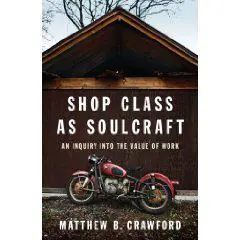
Shop class as soulcraft
Matthew B. Crawford
Recommended by 42 · mentioned by 5342 recommend · 53 mention42 recommend · 5342 recommend
 2008–2026
A History of Western Philosophy
Bertrand Russell
Recommended by 64 · mentioned by 11264 recommend · 112 mention64 recommend · 11264 recommend
 2007–2026
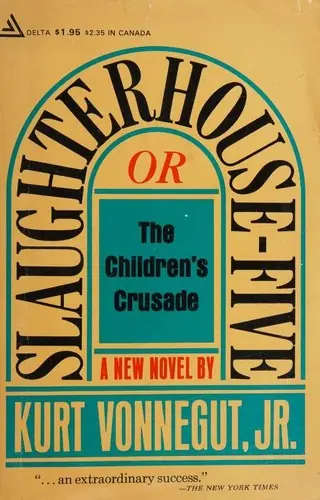
Slaughterhouse-Five
Kurt Vonnegut
Recommended by 58 · mentioned by 13558 recommend · 135 mention58 recommend · 13558 recommend
 2010–2026
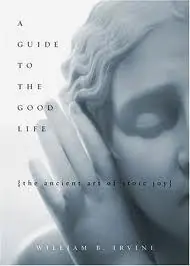
A Guide to the Good Life
William B. Irvine
Recommended by 135 · mentioned by 158135 recommend · 158 mention135 recommend · 158135 recommend
…sounded a bit self help-like so I avoided it. Eventually I did ready and it's pretty great. It covers how people manage to get work done, which is pretty important for everyone. Last year I read The Swerve: How the World Became Modern by Stephen Greenblatt. It's non-fiction, though I believe the central premise is a little tongue in cheek. An ancient Roman manuscript that's rediscovered and helps set off the enlightenment and our modern…
on “Ask HN: What are your favorite books? I'm bored” ↗I suppose you’ve read that delightful summer read, Stephen Greenblatt, The Swerve: How the World Became Modern, (W.W. Norton, 2011).
on “The Latest Project to Preserve Pompeii Reveals New Treasures” ↗Absolutely. One of my favorite books about the power of books is The Swerve: How the World Became Modern (2011) by Stephen Greenblatt. It tells the story of the rediscovery of Lucretius's poem De rerum natura (On the Nature of Things), which was assumed lost.
on “70k Books Found in Hidden Library in This Germany Home” ↗The Swerve: How the World Became Modern by Stephen Greenblatt
on “Ask HN: Best book you read in 2011” ↗…mindedness is one of their great contributions. Of all these, Epicureism is possibly the one that has ultimately triumphed, via Lucrecius' De Rerum Natura. This point of view is wonderfully explained in The Swerve: How the World Became Modern. Absolutely fascinating how by starting by speculating that everyting that exists has an exclusively material substance and is made of atoms (he wasn't the first to speculate this though), Epicureus,…
on ““Study Death Always”: Seneca’s advice for living centered on dying” ↗…ethic that is essentially modern. If you haven't read it yet, I think you would appreciate an account of the whole story, of how it was supressed by the church for centuries and eventually triumphed: "The Swerve: How the World Became Modern" https://www.amazon.com/Swerve-How-World-Became-Modern/dp/039....
on “A True Story” ↗…into a Visionary Leader 36. Shurnyu Suzuki: Zen Mind, Beginner's Mind 37. William Shirer: The Rise and Fall of the Third Reich 38. Jhumpa Lahiri: Interpreter of Maladies 39. Stephen Greenblatt: The Swerve: How the world became modern 40. Professor Andrew R. Wilson: The Art of War [great courses] 41. Prof. Jennifer Paxton: 1066: The Year That Changed Everything [great courses] 42. Prof. Sherwin B. Nuland: Doctors: The History of…
on “Ask HN: Books you read in 2015?” ↗…translations that i looked at were in verse form and hence i did not followup on it. I am less interested in his poetry/form and more in his ideas. Maybe i should start with the book that you mention. The Swerve: How the World Became Modern - https://en.wikipedia.org/wiki/The_Swerve De rerum natura - https://en.wikipedia.org/wiki/De_rerum_natura PS: I just submitted this which you might also find interesting - https://news.ycombinator.com/item?id=47295304
on “70k Books Found in Hidden Library in This Germany Home” ↗