What computers can't do
22% recommend65% neutral13% critical
Why HN recommends it
Philosophical critique of early AI claims, grounded in Heidegger and phenomenology; the standard reference on what symbolic AI can and cannot achieve, suited to readers interested in the limits of AI.
Common criticism: Critics say its predictions about AI limits were overstated and its reasoning flawed.
Summarised by Claude from recommending comments
Affiliate links. As an Amazon Associate I earn from qualifying purchases.
Mentions per year
What Hacker News says
Related books
 2015–2026
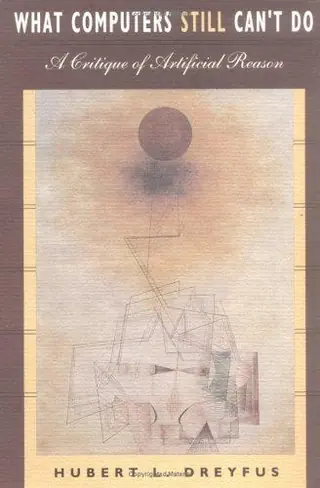
What computers still can't do
Hubert L. Dreyfus
Recommended by 5 · mentioned by 105 recommend · 10 mention5 recommend · 105 recommend
 2014–2026
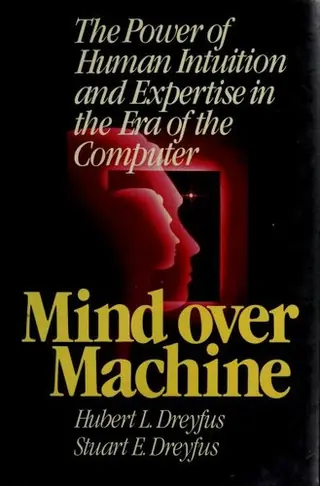
Mind Over Machine
Hubert L. Dreyfus
Recommended by 3 · mentioned by 73 recommend · 7 mention3 recommend · 73 recommend
Being and Time
Martin Heidegger
Recommended by 13 · mentioned by 4913 recommend · 49 mention13 recommend · 4913 recommend
 2010–2026
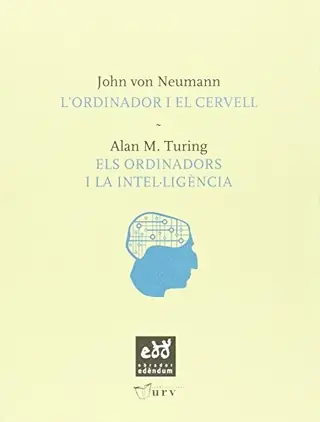
Computing machinery and intelligence
Alan Mathison Turing, John von Neumann
Recommended by 10 · mentioned by 5410 recommend · 54 mention10 recommend · 5410 recommend
 2007–2026
Gödel, Escher, Bach
Douglas R. Hofstadter
Recommended by 505 · mentioned by 1,055505 recommend · 1,055 mention505 recommend · 1,055505 recommend
Yes. The critiques of AI from Hubert Dreyfus have stood the test of time, those who want to understand or challenge them directly can read What Computers Can't Do (1972, 1979), or even better the updated reprint What Computers Still Can't Do (1992). He's a Heideggarian Philosopher but all you need to know is that modern AI is ignorant of vast swathes of 20th Century…
on “The Limits of Machine Learning” ↗…for me as this paper appears to be a damn good stab at being a comprehensive review of why machine learning projects fail, except for missing this critical point. The idea is best explored in the book What Computers Can't Do (H.Dreyfus, 1972), recounted in the book What Computer's Still Can't Do (H.Dreyfus, 1992), and well summarized in A History of First Step Fallacies (H.Dreyfus, 2012) [1] Finally, any paper that's freely…
on “A few useful things to know about machine learning (2012) [pdf]” ↗The gold standard for thinking about the limits of AI is the work of Herbert Dreyfus, specifically the books What Computers Can't Do: The Limits of Artificial Intelligence published in 1972, and the revised What Computers Still Can't Do: A Critique of Artificial Reason, published in 1992, and Mind over Machine, from 1986.
on “AI Is No Match for the Quirks of Human Intelligence” ↗…facts. As the fad continues, we may hear like robots replacing scientists to produce knowledge about various phenomena. For a best critique of AI, check the book by UCBerkeley philosopher Hubert Dreyfus: what computers can't do, a critique of artificial reason.
on “The joyless world of data-driven startups” ↗…MIT who specialized in Heidegger and argued that his colleagues in the CS department were codifying just the kind of naive views on cognition that Heidegger spent his life criticizing. See his books “What Computers Can’t Do”, “Being-in-the-world”, and the paper “Why Heideggerian AI Failed and Why Fixing It Would Require Making it More Heideggerian” (something like that). A basic point is that ordinary human coping does…
on “Ask HN: Will there ever be a resurgence of interest in symbolic AI?” ↗…of the presentation of the report, with McCarthy present and responding, is available online also [https://www.youtube.com/watch?v=yReDbeY7ZMU&list=PLhThm05V6b...]. Finally I'd cite the 1970s era book What Computers Can't Do, and its 90s reprint, What Computers Still Can't Do as all you need to know about the current state of AI, its ultimate aims and the fatal flaws in its fundamental assumptions. The fact that it was written…
on “Computing machinery and intelligence (1950)” ↗A characteristic of the field since the beginning. Reading What Computers Can't Do in college (early 2000s) was an important contrast for me. > A great misunderstanding accounts for public confusion about thinking machines, a misunderstanding perpetrated by the unrealistic claims researchers…
on “An untidy history of AI across four books” ↗Maybe you're familiar with Dreyfus's critique of "cognitivism" in AI, as explained in his book What Computers Can't Do. His recent article "Why Heideggerian AI Failed" is also relevant... and his book on Heidegger, Being-in-the-World, which has some philosophical background for his anti-cognitivism.
on “Why programming is a good medium for expressing poorly understood ideas (1967)” ↗Philosophers have been saying this for 60 years Hubert Dreyfus' 1972 book "What Computers Can't Do" is a notable example.
on “Artificial Intelligence Is Stuck” ↗…a sophisticated form of computational behaviorism. Just like the research program of behaviorism died out, this will eventually too. There are other respectable criticisms of AI, like Hubert Dreyfus' 'What computers can't do'. Neither Chomsky nor Dreyfus claimed that machine learning and/or AI won't solve any problems, but rather that the kind of problems these solve are not relevant in terms of aspiring to be humans.
on “IBM is not doing "cognitive computing" with Watson (2016)” ↗…comment is one of the better ways I've seen it expressed. I hope we're getting closer to a point where we can eventually turn the page on this, and the Hubert Dreyfus-style arguments/declarations about what "computers can't do."
on “Biology Will Be the Next Great Computing Platform” ↗There's a philosopher name Hubert Dreyfus who has written a couple of books about the subject. In 1972 he published What Computers Can't Do: The Limits of Artificial Intelligence, a 3rd edition published in 1992 was titled What Computers Still Can't Do. He also co-wrote, with his brother Stuart, Mind Over Machine: The Power of Human Intuition…
on “Ask HN: Is there a mental task at which average humans can still beat computers?” ↗…thought SHRDLU was basically AGI after seeing its demo in 1970. The hype around such systems was so strong that Hubert Dreyfus felt the need to write an entire book arguing against this viewpoint (1972 What Computers Can't Do). All this demonstrates is that we need to be careful with various claims about computer intelligence.
on “The next phase of the Microsoft OpenAI partnership – OpenAI” ↗…AI folks spew. Yes, AI can solve particular tasks (a chess game, autonomous driving): but can it replace humans? Yes, say the AI group; No, say the philosopher Hubert Dreyfus. Check the latter's book: What computers can't do, a critique of artificial reason.
on “Why Philosophers Should Care About Computational Complexity [pdf]” ↗…meaningless facts, rather than a field of concern organized by sensory-motor skills. Our risk is not the advent of superintelligent computers, but of subintelligent human beings." - Hubert L. Dreyfus, What Computers Can't Do 1972
on “Hubert Dreyfus, preeminent philosopher and AI critic, dies at 87” ↗