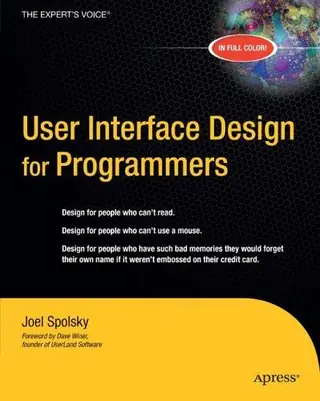
User Interface Design for Programmers
by Joel Spolsky · first published 2001
78% recommend22% neutral
Why HN recommends it
A practical introduction to user interface design for programmers with little UX background. It is a good starting point for foundational ideas about what makes an interface good, and it is free online.
Summarised by Claude from recommending comments
Affiliate links. As an Amazon Associate I earn from qualifying purchases.
Mentions per year
What Hacker News says
Related books
 2007–2023
Defensive Design for the Web
Jason Fried
Recommended by 4 · mentioned by 44 recommend · 4 mention4 recommend · 44 recommend
 2007–2026
Dont Make Me Think
Steve Krug
Recommended by 38 · mentioned by 4338 recommend · 43 mention38 recommend · 4338 recommend
 2009–2026
About Face
Alan Cooper, Robert Reimann, David Cronin, Christopher Noessel
Recommended by 23 · mentioned by 3323 recommend · 33 mention23 recommend · 3323 recommend
 2009–2024
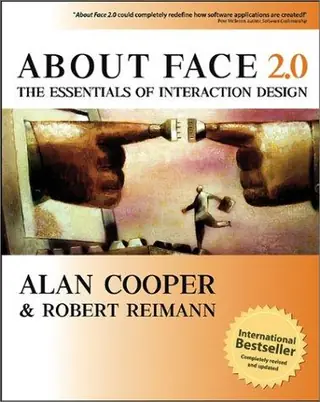
About face 2.0
Cooper, Alan
Recommended by 5 · mentioned by 85 recommend · 8 mention5 recommend · 85 recommend
 2010–2026
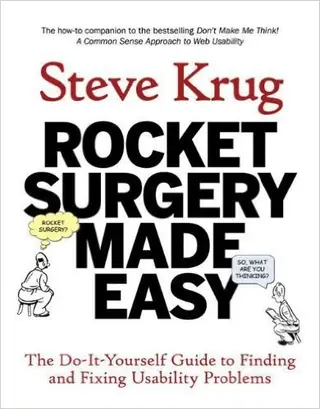
Rocket Surgery Made Easy
Steve Krug
Recommended by 19 · mentioned by 2419 recommend · 24 mention19 recommend · 2419 recommend
 2007–2026
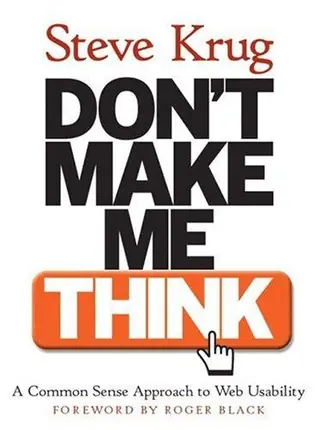
Don't Make Me Think
Steve Krug
Recommended by 237 · mentioned by 339237 recommend · 339 mention237 recommend · 339237 recommend
 2008–2023
About face
David H. Hackworth
Recommended by 5 · mentioned by 125 recommend · 12 mention5 recommend · 125 recommend
 2007–2024
Universal principles of design
William Lidwell
Recommended by 24 · mentioned by 3624 recommend · 36 mention24 recommend · 3624 recommend
…understanding of the language, we can point at menus to select our dinner from the dining room. But language allows us to discuss exactly what we would like to eat with the waiter or chef. Joel Spolsky's User Interface Design for Programmers (an excellent book, looks like it's available online in full on his blog: https://www.joelonsoftware.com/2001/10/24/user-interface-des...) says: > Using a command-line interface is like having to learn…
on “The Anti-Mac User Interface (1996)” ↗…work for 25 years and I run https://www.TrialToPaid.com where I'm well paid to improve UX to grow trial conversion revenue. Here are three steps you can take: 1. Read Don't Make Me Think by Steve Krug, User Interface Design for Programmers by Joel Spolsky, Refactoring UI, and (optionally) The Design of Everyday Things (this will get you paying attention to UX and UI in the real world). The core principal of good UX is Spolsky's maxim:…
on “Ask HN: How did you increase your UX skills?” ↗…helpful to learn more about design? Some suggestions of my own: - Usability overlaps with design quite a bit (making things pleasant to use, getting rid of clutter etc), so books like Joel Spolsky's user interface design for programmers, Steve Krug's Don't make me think, or Alan Cooper's About Face can help with design, too. - Robin Williams: The Non-designer's design book. Short, to the point, and teaches the basic principles. - Blogs:…
on “Ask HN: Best resources to learn about design?” ↗User Interface Design for Programmers (by Joel Spolsky) is pretty good. I think it's available for free at this point: https://www.joelonsoftware.com/2001/10/24/user-interface-des... It covers some foundational ideas of what makes a good…
on “Ask HN: What topics are good for a UI/UX Primer?” ↗I don't use it, and I won't use it for a very simple, trivial even, yet important usability related reason: there is a gap left between the tabs bar and the top edge of the screen, which is inconvenient for switching tabs. For UI designers, if they ever wondered why Firefox or Chrome don't have this gap - old but gold: http://www.joelonsoftware.com/uibook/chapters/fog0000000063....
on “Vivaldi Browser Now Features Improved Support for Large Screens, Mouse Gestures” ↗Hi Paul, Did you ever read Joel Spolsky's guide for User Interface Design? Users don't read anything. You need to design your UI with that in mind. http://www.joelonsoftware.com/uibook/chapters/fog0000000062....
on “What it means when you get an "expired link" when submitting an application” ↗Joel Spolsky's "User Interface Design for Programmers" is concise, educational, entertaining... and free (even an easy-to-read all-in-one HTML page): http://www.joelonsoftware.com/uibook/fog0000000249.html Also highly recommend Steve Krug's "Don't Make Me Think" (as others have already commented): http://www.sensible.com/dmmt.html
on “Ask HN: Good books or articles on UI design?” ↗As a programmer myself, I believe there is some truth to it though. Programmers tend to be superusers and therefore design for other superusers. By the way, old but gold: "User Interface Design For Programmers" http://www.joelonsoftware.com/uibook/fog0000000249.html
on “Design for programmers” ↗When you look at user tests, no one pauses to read this text. And the very few who do immediately forget what they read... Even though some of the technologies discussed are hillariously obsolete, nearly everything published on joelonsoftware.com 10+ years ago remains surprisingly relevant: You could explain things in the manual, but everybody knows that users don't read manuals, and they probab
on “Designing a Mobile App for Maximum Growth” ↗Joel Spolsky's "User Interface Design for Programmers" is phenomenal, and available freely online (!): http://www.joelonsoftware.com/uibook/fog0000000249.html If you build websites, also check out Steve Krug's "Don't Make Me Think": http://www.sensible.com/dmmt.html
on “How to fix a bad user interface” ↗Yup, summed up much better than I could. FWIW Joel's coverage of user design is a great read for things like this: http://www.joelonsoftware.com/uibook/fog0000000249.html > Most flame wars you read about user interface issues focus on the wrong thing. Windows is better because it gives you more ways to resize the window. So what? That's missing the point. The point is, does the UI respond to the
on “Open-Source 3D Graphics Design: Where to Begin” ↗"User Interface Design for Programmers" (159 pages)
on “Ask HN: Best books under 200 pages for developers?” ↗That looks interesting, but be sure to check out Joel Spolsky's "User Interface Design for Programmers." http://www.joelonsoftware.com/uibook/fog0000000249.html I'm skeptical of a ruleset that includes "Some things can't be made simple." I say that not because it isn't true, but if you find yourself devoting a whole rule to a caveat then there is probably a better way to explain the first 8 rul
on “Laws of simplicity” ↗Joel's book is a great introduction and a must read if you haven't taken a look before. http://www.joelonsoftware.com/uibook/chapters/fog0000000057.... Jakob Neilson's site is a treasure trove of usability information. http://www.useit.com/ 37 Signals will often write blog posts outlining particular design decisions in their products. http://www.37signals.com/svn/ For a more specific topic, I
on “Ask news YC: Your best sources to learn about design & usability” ↗If you're short on time: http://joelonsoftware.com/uibook/chapters/fog0000000057.html Spolsky's work is light and easy to read. This work is geared towards "progammers", although that is not mutually exclusive with the word "CEO". It'll help you avoid more obvious mistakes. Nielson and About Face are more thorough. I haven't read Don't Make Me Think but I've heard good things (and lots of com
on “Ask HC: Which books on user interface design do you wish your CEO/Cofounders would read?” ↗