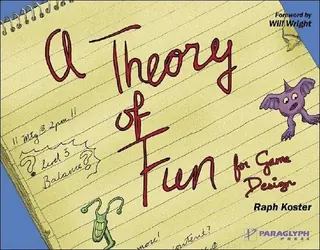
Theory of Fun for Game Design
by Raph Koster · first published 2004
79% recommend21% neutral
Why HN recommends it
Breezy, illustrated introduction to what fun is and why games exist, framing play as mastering challenges and learning. Suits newcomers, even teens, and designers who want lessons beyond video games.
Summarised by Claude from recommending comments
It's about - What fun is - Why some games are fun and some games are boring - How different people respond to different kinds of fun - What makes a game fun or not - How games fit into the wider human culture - Whether games can be art - What degree of social responsibility game makers need to have - How games can develop At its core, though, it is about why games matter.
Affiliate links. As an Amazon Associate I earn from qualifying purchases.
Mentions per year
What Hacker News says
Related books
 2010–2026
The Art of Game Design
Jesse Schell
Recommended by 35 · mentioned by 4835 recommend · 48 mention35 recommend · 4835 recommend
 2013–2026
Game Design Workshop
Tracy Fullerton
Recommended by 6 · mentioned by 86 recommend · 8 mention6 recommend · 86 recommend
 2009–2026
Game feel
Steve Swink
Recommended by 6 · mentioned by 86 recommend · 8 mention6 recommend · 86 recommend
 2009–2026
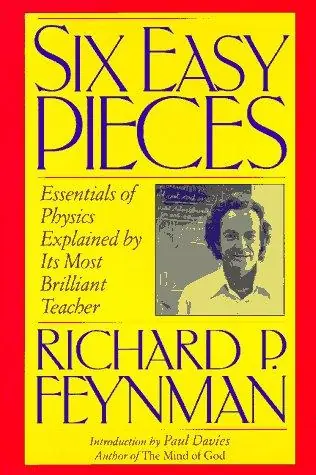
Six Easy Pieces
Richard Phillips Feynman, Paul Davies
Recommended by 14 · mentioned by 2314 recommend · 23 mention14 recommend · 2314 recommend
 2011–2026
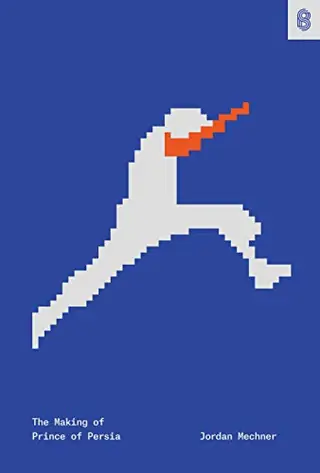
The Making of Prince of Persia
Jordan Mechner
Recommended by 31 · mentioned by 4431 recommend · 44 mention31 recommend · 4431 recommend
 2007–2026
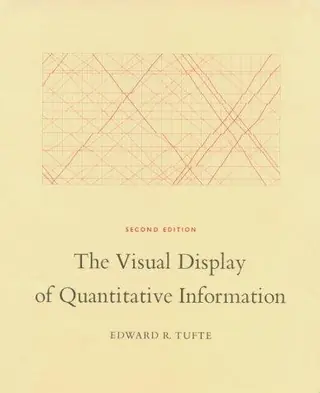
The Visual Display of Quantitative Information
Edward R. Tufte
Recommended by 100 · mentioned by 138100 recommend · 138 mention100 recommend · 138100 recommend
 2007–2025
The inmates are running the asylum
Cooper, Alan
Recommended by 40 · mentioned by 7040 recommend · 70 mention40 recommend · 7040 recommend
 2007–2026
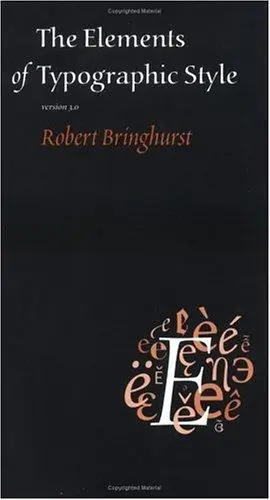
The Elements of Typographic Style
Robert Bringhurst
Recommended by 85 · mentioned by 13585 recommend · 135 mention85 recommend · 13585 recommend
…teaching real musical skill (in contrast to say Guitar Hero :o). The pedagogy and game mechanics did clash into each other during development, we did a lot of user testing to find a balance. Raph Koster's Theory of Fun for Game Design was invaluable, as were lectures and posts by Daniel Cook. It's a hard game, especially for people with no musical background, but nonetheless we had strong engagement. Players who topped the leaderboard…
on “Ask HN: Any good examples of learning through games/puzzles, for adults?” ↗…usable as argument in any discussion. I don't subscribe to the self-entitled tone of the article that making games in itself is something virtuous and should be basically subsidized. I love Koster though, Theory of Fun for Game Design is what made me really interested in game development.
on “The Financial Future of Game Developers” ↗Raph Koster has a good book, "A Theory of Fun for Game Design", which I think does a pretty good job as an easy read intro to the problem. My main takeaway from it, if I had to boil it down to one point, is your brain finds fun in mastering something (beating a…
on “The new legend of Zelda is a toy box of delights” ↗Not to be too literal, but to answer the kid's question, "What are games good for?" Raph Koster's A Theory of Fun for Game Design sets out to answer just this. Essentially his argument boils down to that games are made to teach us things, that they can be used for amusement, and that they allow us to have experiences that paintings,…
on “I'm 20, brilliant and totally lost” ↗…— Brenda Laurel, Computers as Theater — Kim Goodwin, Designing for the Digital Age: How to Create Human-Centered Products and Servicesa — Bill Moggridge, Designing Interactions Bonus: — Raph Koster, A Theory of Fun for Game Design (meant for video game design, but has a lot of lessons that can be applied to good UX) For UI design, I'd also heavily recommend "Semiology of Graphics: Diagrams, Networks, Maps" by Jacques Bertin, and…
on “Ask HN: Recommendations for learning and improving UX/UI skills?” ↗I quite enjoyed "Theory of Fun for Game Design" by Raph Koster. It has many great insights about what we'd call product or design decisions, but it feels like a philosophy book, and you'll also learn stuff that applies to daily life.
on “Game Design Wiki” ↗Doesn’t hurt to jump start that loop iteration by taking in some principles and interrogations. Two little books that can help: 1. From A Theory of Fun book blurb: “A Theory of Fun for Game Design is not your typical how-to book. It features a novel way of teaching interactive designers how to create and improve their designs to incorporate the highest degree of fun. As the book shows, designing…
on “Making Games on Your Own as an Engineer” ↗There are many good books on game design. Here are a few that I own: The Art of Game Design: A Book of Lenses, by Jesse Schell Level Up! The Guide to Great Video Game Design, by Scott Rogers A Theory of Fun for Game Design, by Raph Koster Designing Games: A Guide to Engineering Experiences, by Tynan Sylvester Game Feel: A Game Designers Guide yo Virtual Sensation, by Steve Swink Designing Virtual Worlds, by Richard Bartle…
on “Foundations of Game Engine Development” ↗Not a technical book but A Theory of Fun for Game Design by Raph Koster had a few perspectives I’d never considered.
on “Ask HN: Which books do you consider real gems in your field of work/study?” ↗One of the classic introductory game design books (Theory Of Fun For Game Design by Raph Koster [0]) attempts to tackle the question of what fun is, and what a game is. It's a breezy read, with every second page an illustration. (Especially the chapter Different Fun For Different…
on “The fun factor of the video game Uplink” ↗I'll put in a plug for his book Theory of Fun for Game Design (https://www.amazon.com/Theory-Game-Design-Raph-Koster/dp/144...). It's a great read that's accessible but also deep and thorough.
on “Database “sharding” came from Ultima Online? (2009)” ↗Well don't forget to read the part where I split it into three tasks - the web part, the game engine part, and the game design part. For game design, I highly recommend A Theory of Fun for Game Design [1] and the column Making Magic by the head designer for Magic: The Gathering[2]. [1] http://www.amazon.com/Theory-Fun-Game-Design-ebook/dp/B004D4... only $4 on Kindle or $12 on paper [2] Look for the…
on “GeekStack Postmortem” ↗…her by sharing her work and helping her with it. I don't have feedback on the game so I'll just recommend a book which I think is readable for a 12 year old (I'd also recommend it to anyone here): "A Theory of Fun for Game Design" (https://www.theoryoffun.com). It's a great introduction to game design and it's full of fun cartoons.
on “Show HN: A game my 12-year-old daughter wrote” ↗…first class. They looked fine, although the video is probably where all the meat is. But I was extremely dissapointed with your Resources slide. Reddit, Twitter and Indie Game the Movie? Where is "A Theory of Fun for Game Design", "The Art of Game Design: A Book of Lenses", "Andrew Rollings and Ernest Adams on Game Design", etc. Where is the real, valid and, may I say, academic knowledge we have? You say have worked in the industry,…
on “Fundamentals of Video Game Design (4-Part Video Course)” ↗…Pattern Language * Notes on the Synthesis of Form * Never Leave Well Enough Alone * Don't Make Me Think * How Things Don't Work * Usable Usability * The Visual Display of Quantitative Information * A Theory of Fun for Game Design Other left-field books I've found myself going back to for design inspiration more than I would've thought * The Death and Life of Great American Cities * The Philosophy of Andy Warhol * Influence by…
on “Ask HN: What are the best resources to learn Product Design?” ↗