The psychology of invention in the mathematical field
by Jacques Hadamard · first published 1945
43% recommend57% neutral
Why HN recommends it
Based on Hadamard's own survey of leading mathematicians, it describes how creative insight arrives, especially after stepping away from intense work on a problem. It suits readers exploring mathematical discovery.
Summarised by Claude from recommending comments
Affiliate links. As an Amazon Associate I earn from qualifying purchases.
Mentions per year
What Hacker News says
Related books
 2012–2025
An essay on the psychology of invention
Jacques Hadamard
Recommended by 2 · mentioned by 42 recommend · 4 mention2 recommend · 42 recommend
 2009–2025
Hare Brain, Tortoise Mind
Guy Claxton
Recommended by 2 · mentioned by 42 recommend · 4 mention2 recommend · 42 recommend
 2007–2026
Zen and the Art of Motorcycle Maintenance
Robert M. Pirsig
Recommended by 302 · mentioned by 508302 recommend · 508 mention302 recommend · 508302 recommend
 2007–2026
The Structure of Scientific Revolutions
Thomas S. Kuhn, Dennis Holland
Recommended by 96 · mentioned by 21596 recommend · 215 mention96 recommend · 21596 recommend
 2007–2026
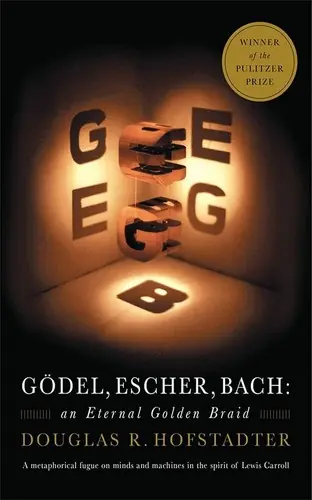
Gödel, Escher, Bach
Douglas R. Hofstadter
Recommended by 505 · mentioned by 1,055505 recommend · 1,055 mention505 recommend · 1,055505 recommend
…as if one could understand the ideas in a non-verbal way. The symbols become optional. Intimidation crawls back before curiosity at this point. An amazing book on the subject is: "Hadamard - The psychology of invention in the mathematical field" /speculation
on “Confession as an AI researcher; seeking advice” ↗The word "visualize" makes this a somewhat leading question (though personally my process is visual/tactile). The best book I know of about this is Jacques Hadamard's The Psychology of Invention in the Mathematical Field. He asked this same question of the important mathematicians of his day - and because he was Jacques Hadamard, they answered. Einstein's response in particular is fascinating. Although math is published…
on “Ask HN: How do you visualize code in your head?” ↗See Psychology of Invention in the Mathematical Field Jacques Hadamard, published around 1900. Once you have immersed yourself in a problem, going about normal daily tasks not related to the problem allows your mind to churn and make connections. Sudden…
on “At the End of a Procrastinated Day” ↗Jacques Hadamard wrote very well on this in his 1945 "An Essay on the Psychology of Invention in the Mathematical Field." He described creative burst happening during recovery phases following intense work. Here is one link: http://archive.org/stream/eassayonthepsych006281mbp#page/n11...
on “Breakthroughs Come From Relaxation ” ↗Track down a copy of An essay on the psychology of invention in the mathematical field by Jacques Hadamard. Hadamard was a mathematician, and he used 'introspection' to explore the springs of his own creativity and those of colleagues he interviewed. The results are entertaining in a quaint…
on “Stanford study finds walking improves creativity” ↗Jacques Hadamard's "The Psychology of Invention in the Mathematical Field" 1945 is a very good essay on the deep preparation, rest, and then inspiration pattern (and possibly how to cultivate it).
on “Why Your Best Thinking Is in the Shower (2014)” ↗The Psychology of Invention in the Mathematical Field by Jacques Hadamard, himself a mathematician is not scientific but a good source of anecdotes and systematic attempts at introspection. I find that 'stepping away' from the details after immersion for…
on “Study suggests drunk people are better at creative problem solving” ↗If you find this sort of thinking interesting, definitely also check out "The Psychology of Invention in the Mathematical Field" by Jacques Hadamard.
on “In ‘Elastic,’ a Physicist Argues That the Mind Needs Time to Play” ↗I've heard it being called Focussed Mode and Diffuse Mode, as described here - https://fs.blog/focused-diffuse-thinking/ Bret Victor links to this book called Psychology of Invention in the Mathematical Field, which talks a lot about this too - http://worrydream.com/refs/Hadamard%20-%20The%20psychology%2...
on “How individual contributors get stuck (2017)” ↗For a introspective view of "aha" I really recommend the enjoyable Hadamard "The Psychology of Invention in the Mathematical Field."
on “Neuroscientists track the neural activity underlying an “aha”” ↗…Physics Galison - Einstein's Clocks, Poincaré's Maps Gamow - One, Two, Three... Infinity Hadamard - Psychology of Invention in the Mathematical Field Hawking - A Brief History of Time Hofstadter - Gödel Escher Bach Heisenberg - Physics and Philosophy: The Revolution…
on “Ask HN: What are your favorite physics sites, documentaries, books?” ↗The mathematician Jacques Hadamard carried out an interesting study on this subject and presented his findings in a small book called, "The Psychology of Invention in the Mathematical Field". Here are a couple of excerpts from it that I found compelling (he's talking about a sort of 'schematic' thinking with something like relationship diagrams, and much of his motivation is the contention…
on “The link between language and cognition is a red herring” ↗…called today the cognitive dynamics of creativity as experienced by highly creative individuals then who better than Albert Einstein to report on his experiences. In mathematician Jacques Hadamard's 'The Psychology of Invention in the Mathematical Field' (Dover (1954),ISBN 0486201074, pp. 142-3) Einstein reports his creative cognitive processes in response to a questionnaire titled 'An inquiry into the working methods of mathematicians' as follows: A)…
on “Magic Paper” ↗For more on this subject, see the 1945 essay by French mathematician Jacques Hadamard, An Essay on the Psychology of Invention in the Mathematical Field. https://archive.org/details/eassayonthepsych006281mbp
on “Decades-Old Graph Problem Yields to Amateur Mathematician” ↗…thought. The psychical entities which seem to serve as elements in thought are certain signs and more or less clear images which can be `voluntarily' reproduced and combined." It's from Hadamard's book "The Psychology of Invention in the Mathematical Field". The full letter is extremely interesting, containing several remarks on Einstein's self-perception of how he thought. Unfortunately, I don't immediately see it online, and I don't have immediate access…
on “Writing is Thinking” ↗