The nature of order
by Christopher Alexander · first published 2001
61% recommend34% neutral5% critical
Why HN recommends it
Four-volume exploration of how living, life-enhancing built spaces and objects emerge, with many images illustrating its properties; suits readers in architecture, design, or software who want the deeper philosophy.
Common criticism: Some find it mystical and long-winded, with a vague, Orientalist flavor
Summarised by Claude from recommending comments
"Here is acclaimed architect Christopher Alexander's four-volume masterwork; the result of 27 years of research and a lifetime of profoundly original thinking. Consider three vital perspectives on our world: a scientific perspective; a perspective based on beauty and grace; a commonsense perspective based on our intuitions about everyday life. Neither scientists, nor mystics, nor architects, nor politicians have so far found a single view of the world in which the three are united. This groundbreaking work allows us to form on picture of the world in which all three perspectives are interlaces
Affiliate links. As an Amazon Associate I earn from qualifying purchases.
Mentions per year
What Hacker News says
Related books
 2008–2026
The Timeless Way of Building
Christopher Alexander
Recommended by 67 · mentioned by 10367 recommend · 103 mention67 recommend · 10367 recommend
 2007–2026
A pattern language
Christopher Alexander, Sara Ishikawa, Murray Silverstein, Max Jacobson
Recommended by 110 · mentioned by 226110 recommend · 226 mention110 recommend · 226110 recommend
 2009–2026
Notes on the synthesis of form
Christopher Alexander
Recommended by 34 · mentioned by 6134 recommend · 61 mention34 recommend · 6134 recommend
 2008–2024
The Oregon experiment
Christopher Alexander, Murray Silverstein, Shlomo Angel, Sara Ishikawa
Recommended by 4 · mentioned by 144 recommend · 14 mention4 recommend · 144 recommend
 2014–2018
Thriving Systems Theory and Metaphor-Driven Modeling
Leslie J. J. Waguespack
Recommended by 1 · mentioned by 21 recommend · 2 mention1 recommend · 21 recommend
 2016–2022
The battle for the life and beauty of the earth
Christopher Alexander
Recommended by 4 · mentioned by 44 recommend · 4 mention4 recommend · 44 recommend
 2008–2026
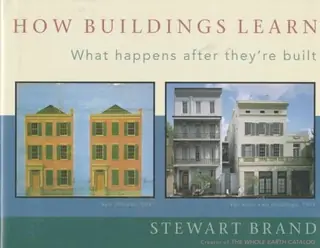
How Buildings Learn
Stewart Brand
Recommended by 37 · mentioned by 5437 recommend · 54 mention37 recommend · 5437 recommend
 2007–2026
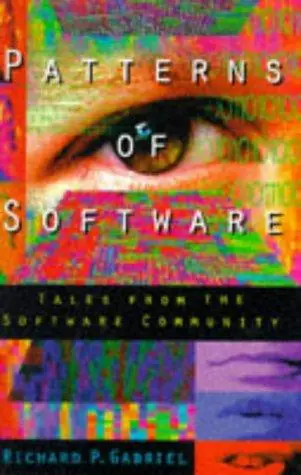
Patterns of software
Richard P. Gabriel
Recommended by 31 · mentioned by 4031 recommend · 40 mention31 recommend · 4031 recommend
Have you heard of the architect Christopher Alexander? His life's work seems to be close to what you are describing. I'd highly recommend the 4 volume series 'The Nature of Order.' I've always felt that there is a whole other math based explanation to art and music, that may even bridge the two, hiding in plain site. Alexander is the only person I've read who has come close to…
on “How the brain perceives rhythm” ↗…"unrivaled in its monotony and depressing blandness" despite being quite nice in many ways. It was just so empty. Christopher Alexander has done a fantastic job of putting forth a solution (Pattern Language; Nature of Order) and his main site is actually called "Living Neighborhoods". https://www.livingneighborhoods.org/ht-0/bln-exp.htm What to do about the rest of it I have no idea.
on “What Armenians should know about life in America (2014)” ↗If this resonates at all with you, go get Alexander's four volume work 'The Nature of Order.' And stick with it. It's a lot of ground to cover. The goal, as always for him, is to be able to construct built environments with a timeless, life enhancing quality, and he spends volume one demonstrating…
on ““A pattern language” explained (2016)” ↗…own right, without connection to any other existing school of knowledge. I haven't read Discourse myself yet, unfortunately: it's in a long queue of works which is currently taken up by Alexander's The Nature of Order, a wonderful but long read. I was led to believe that Descartes argued his new method should be added to existing ones rather than replace them entirely – am I wrong in thinking this way?
on “Train Philosophers with Pearl and Kahneman, not Plato and Kant” ↗All the things by Christopher Alexander(Start with timeless way...explore the pattern language...move on to Nature of order...then others.) Zen and Lila by Pirsig Beginning of Infinity by Deutsch.
on “Ask HN: Mind bending books to read and never be the same as before?” ↗Have you read The Nature of Order by Christopher Alexander? I'd very much like to hear your opinions and comments on the book series. And also see, whether he would appear on your next list of heroes. He is definitely on mine.
on “Some Heroes” ↗And I would add, regarding Alexander, at least, start with his most recent series on The Nature of Order. Then, if you want more, go back and read The Timeless Way of Building, followed by A Pattern Language. But really, his most recent stuff is the most compelling, and the most profound.
on “City Layout Design: A programmer's perspective” ↗Lovely argument that I would like to second. I think you're the first person outside of my former research group that I've seen reference the Nature of Order. That made me very happy. It's too bad the books are so expensive – they deserve to be circulated more widely: http://www.amazon.com/gp/product/0972652914/ref=as_li_ss_tl?...
on “Train Philosophers with Pearl and Kahneman, not Plato and Kant” ↗The Nature of Order by Christopher Alexander (also The Timeless Way of Building) Lila by Pirsig (If you've read ZMM and left Lila unread you've left a lot on the table) The Beginning of Infinity by David Deutch Antifragile…
on “Ask HN: What books fundamentally changed the way you think about the world?” ↗The Nature of Order - Chris Alexander. Full Stop.
on “Ask HN: What is the most mind blowing book you've ever read?” ↗…Pattern Language" and his influence on design patterns/agile. Later in life he studied the organizing principles of nature and well-man-made artifacts and discussed the common patterns in his books "On the nature of order" [1]. The ideas are perhaps more grandiose than this author is discussing, but also very interesting when applied to engineering. [1] http://www.amazon.com/Nature-Order-Phenomenon-Environmental-...
on “Natural Motifs” ↗…that I've read in recent years that I can't read too much of at once – I get three pages in and have to stop, because of how excited I am about his arguments and its implications. I bought the whole The Nature of Order series five years ago and have been ever since trying to find a person who has read it. A have returned to the books periodically, and again and again feel the same excitement that prevents reading too…
on “Train Philosophers with Pearl and Kahneman, not Plato and Kant” ↗Generative languages. See Pattern Language and Nature of Order by Christopher Alexander.
on “How We Hit $912 Million in Sales” ↗His most recent and probably more important work on the Nature of Order: http://www.amazon.com/Nature-Order-Phenomenon-Environmental-...
on “A City Is Not a Tree (1965) [pdf]” ↗People have already mentioned Christopher Alexander's Pattern Language and Timeless Way, but I'll note that he has further distilled those ideas in his The Nature of Order Series: http://amzn.to/2b4XYf5 1. Levels of Scale 2. Strong Centers 3. Thick Boundaries 4. Alternating Repetition 5. Positive Space 6. Local Symmetry 7. Good Shape 8. Deep Interlock and Ambiguity 9.…
on “What Makes a McMansion Bad Architecture?” ↗