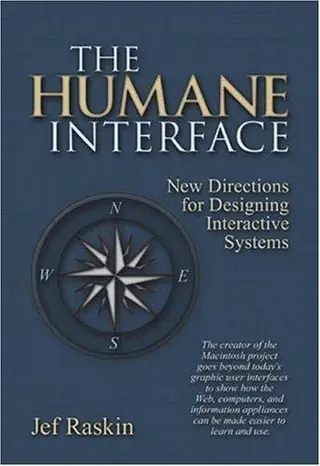
The Humane Interface
by Jef Raskin · first published 2000
51% recommend44% neutral5% critical
Why HN recommends it
Raskin's case for interface design built on human needs and frailties: no modes, no menu mazes, autosave instead of filenames, and why confirmation dialogs get ignored. Suits designers and programmers.
Common criticism: Some find his interface ideas too far out to be usable in practice
Summarised by Claude from recommending comments
This unique guide to interactive system design reflects the experience and vision of Jef Raskin, the creator of the Apple Macintosh. Other books may show how to use today's widgets and interface ideas effectively. Raskin, however, demonstrates that many current interface paradigms are dead ends, and that to make computers significantly easier to use requires new approaches. He explains how to effect desperately needed changes, offering a wealth of innovative and specific interface ideas for software designers, developers, and product managers.
Affiliate links. As an Amazon Associate I earn from qualifying purchases.
Mentions per year
What Hacker News says
Related books
 2009–2026
About Face
Alan Cooper, Robert Reimann, David Cronin, Christopher Noessel
Recommended by 23 · mentioned by 3323 recommend · 33 mention23 recommend · 3323 recommend
 2007–2023
Defensive Design for the Web
Jason Fried
Recommended by 4 · mentioned by 44 recommend · 4 mention4 recommend · 44 recommend
 2007–2026
User Interface Design for Programmers
Joel Spolsky
Recommended by 18 · mentioned by 2318 recommend · 23 mention18 recommend · 2318 recommend
 2023–2026
Information Architecture
Louis Rosenfeld
Recommended by 1 · mentioned by 21 recommend · 2 mention1 recommend · 21 recommend
 2009–2024
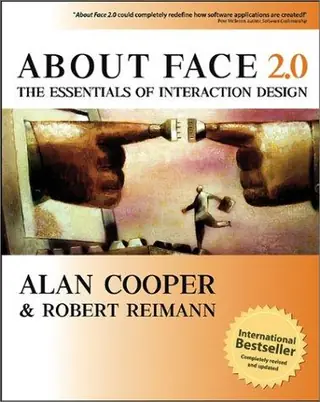
About face 2.0
Cooper, Alan
Recommended by 5 · mentioned by 85 recommend · 8 mention5 recommend · 85 recommend
 2011–2019
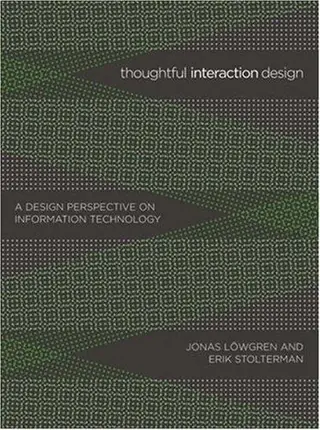
Thoughtful Interaction Design
Jonas Löwgren, Erik Stolterman
Recommended by 2 · mentioned by 32 recommend · 3 mention2 recommend · 32 recommend
 2014–2024
Lean UX
Jeff Gothelf, Josh Seiden
Recommended by 3 · mentioned by 53 recommend · 5 mention3 recommend · 53 recommend
My favorite UX books: The Design of Everyday Things (http://www.amazon.com/Design-Everyday-Things-Donald-Norman/d...) The Humane Interface (http://www.amazon.com/Humane-Interface-Directions-Designing-...) Contextual Design (http://www.amazon.com/Contextual-Design-Customer-Centered-In...)
on “Ask HN: Where to look to learn UX/Design” ↗…interface, and yet we only ever use it with one or two different kinds of interface (typewriter-like, and desk-like). Not even very good interfaces. Please do you us all a favor, I beg of you, read "The Humane Interface" by Jef Raskin, and have an open mind about it. Actually read it. If you've done that, and still disagree that modes are bad, you're going to have to give a really good reason. With evidence.
on “Modes in UI are bad; even worse are timed modes” ↗…natural fit for a consumerist model? "Want to do this task with your machine? Don't bother figuring out how you can do it yourself. There's an App for that!" No Modes vs Buy More Modes? Raskin's book, The Humane Interface, talks extensively about his UI design philosophy. In addition to explaining the above problems with modes, he discusses how to actually design a computer system with no modes (I believe an elaboration…
on “The Canon Cat” ↗…Would be curious to hear what aspects of it you particularly enjoyed. Sadly enough, I find that the best books on designing for interactive media are from the 80s/90s. Examples include Raskin’s “The Humane Interface”, Togazzini’s compendiums, etc.
on “Design Principles” ↗This is not new and is almost entirely covered in two reference resources I use as a designer. 1. Universal Principles of Design https://g.co/kgs/X19MeR 2. The Humane Interface by Jef Raskin https://g.co/kgs/JfdBkB
on “Laws of UX” ↗It is sad nobody mentions book The Humane Interface by Jeff Raskin. Raskin would say, that this is not a question of red or green. It is a question of habit. If user deletes enough items, you will train him to press "Yes" button and not to think about…
on “Should "Yes, delete it" be red, or green?” ↗See also Jef Raskin's book "The Humane Interface". (And by "see also" I mean "stop what you're doing, get a copy, and read it now.")
on “Canon Cat” ↗Humane Interface by J. Raskin had some interesting points about how to make low tech interfaces. You need essentially eliminate "modes" - like the clock/set time/radio mode buttons on your alarm clock. I'm not saying…
on “The benefits of “low tech” user interfaces” ↗I used to think that a metadata based file system was a really bad idea until two things happened. I read Jef Raskin's "The Humane Interface" and I watched people use web apps and 'database' apps like iTunes. In THI, Raskin covers the idea that the best filename for any given file is the file itself. If I save a copy of this comment on my…
on “The “desktop” metaphor for computers is outdated. What can take its place?” ↗Everyone should read Jef Raskin's The Humane Interface. He expresses many of his interface ideas used with the Canon Cat and Archy in the book. I now consider thoughtful interface design a moral decision. http://en.wikipedia.org/wiki/The_Humane_Interface
on “Canon Cat” ↗That zoom effect is great. It reminds me of the ZUI (zooming user interface) described in Jef Raskin's book, The Humane Interface. Oh how I wish someone would build a desktop OS with a ZUI.
on “Cell size and scale” ↗…Okasaki, Purely Functional Data Structures Richard O'Keefe, The Craft of Prolog P. J. Plauger, Programming on Purpose I. (and II and III) P. J. Plauger, The Standard C Library Jef Raskin, The Humane Interface Stuart Russell and Peter Norvig, Artificial Intelligence: A Modern Approach Toby Segaran, Programming Collective Intelligence Toffoli and Margolus, Cellular Automata Machines Niklaus Wirth,…
on “Which programming book you just couldn’t stop reading from start to end?” ↗Agreed. I believe the concept was taken out of Raskin's book "The Humane Interface" (great read, but it's been a while since I took it all in). After using it for a bit I have to say it's a nice experiment, but in no way useful for the day to day. Something about how you interact with…
on “Raskin zoomable desktop manager for Mac OS X” ↗I own two Canon Cats, which I bought after reading Jef Raskin's book The Humane Interface. While technologically they are decades out of date, from a UX perspective, there is a lot to be learned from using one. Some of the concepts, such as a document-oriented system that never requires…
on “Canon Cat Documents Archive” ↗Hi, UX designer here, which I came to via usability and Jef Raskin's The Humane Interface. You don't want to look for modern UX materials. You want to look for older "usability" and "human-computer interface" (HCI) materials. 1970's and 1980's-era. Classical usability and HCI, and the…
on “Ask HN: UX design materials for line of business applications?” ↗