The great illusion
by Norman Angell · first published 1909
35mentions
2recommended by
34HN commenters
2012–2026first – last mentioned
6% recommend91% neutral3% critical
Affiliate links. As an Amazon Associate I earn from qualifying purchases.
Mentions per year
What Hacker News says
Related books
 2010–2019
The War of the World
Niall Ferguson
Recommended by 1 · mentioned by 41 recommend · 4 mention1 recommend · 41 recommend
 2016–2026
How Asia Works
Joe Studwell
Recommended by 36 · mentioned by 5136 recommend · 51 mention36 recommend · 5136 recommend
 2018–2026
Enlightenment now
Steven Pinker, Pablo Hermida Lazcano
Recommended by 51 · mentioned by 9751 recommend · 97 mention51 recommend · 9751 recommend
 2013–2026
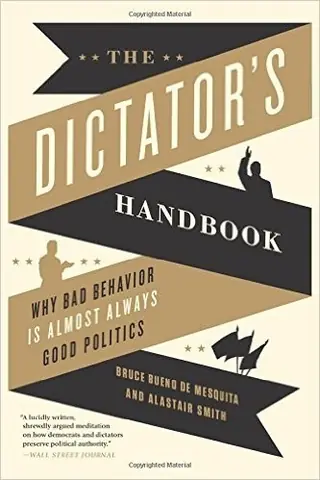
The dictator's handbook
Bruce Bueno de Mesquita, Alastair Smith
Recommended by 63 · mentioned by 9463 recommend · 94 mention63 recommend · 9463 recommend
From my understanding the problem was that Germany was growing very strong and threatening Britain's domination. An interesting book about the topic is The Great Illusion By Norman Angell [1] Saying a bunch of students started WW1 is quite absurd. I did find some material pointing fingers at King Edward though, might want to take a look [2] [1] http://www.gutenberg.org/files/38535/38535-h/38535-h.htm…
on “U.S. military is expanding special forces operations in Africa” ↗Worth noting the book “The Great Illusion” by Norman Angell published in 1909 in the years before WWI. The book is considered probably the best example of Europe’s delusions regarding the nature of peace and war before 1914. One of Angell’s…
on “Niall Ferguson: The Destructive Power of Social Networks” ↗The economist Norman Angell (https://en.wikipedia.org/wiki/Norman_Angell) published a highly influential book, The Great Illusion, making this exact argument. In 1909. It has, let’s say, not aged gracefully.
on “Japan to fund firms to shift production out of China” ↗Worth considering: > In The Great Illusion, Angell's primary thesis was, in the words of historian James Joll, that "the economic cost of war was so great that no one could possibly hope to gain by starting a war the consequences of which would…
on “Why Our Postwar “Long Peace” Is Fragile (2018)” ↗What great illusion? > Norman Angell’s “The Great Illusion,” the Edwardian bestseller published in 1909, argued that war was impossible given the interconnectedness of the world Was capitalism ever saying it prevents war?…
on “Putin and Xi Exposed the Great Illusion of Capitalism” ↗…presumes this traded material comes out of thin air: ie. it forgets that trade can lead to war for control of natural resources, trade routes, and, of course, markets. Here's a funny story: = = = The Great Illusion is a book by Norman Angell, first published in Britain in 1909 and republished in 1910 and subsequently in various enlarged and revised editions under the title The Great Illusion. (The "Great Illusion"…
on “The Fifty is awake again” ↗Peace is nice but I wouldn't count on a large amount of trade to end all wars. https://en.wikipedia.org/wiki/The_Great_Illusion > The Great Illusion is a book by Norman Angell, first published in the United Kingdom in 1909 > Angell argued that war between industrial countries was futile because conquest did not pay. J.D.B. Miller…
on “F-35 Delays Mean US Marines Are Pulling Old F-18s Out of Desert Storage” ↗Norman Angell argued almost the exact same thing as you-- in 1909. Doubled down on this argument in 1933. "The Great Illusion". He was wrong -- both times. :)
on “Stalking her daughter’s killers across Mexico, one by one” ↗It's extremely unclear what you think Angell was arguing for and what you think he was wrong about. "The Great Illusion" argued that economic integration made war unlikely. He was wrong in that he hadn't realized how much people wanted something that went against their interests. But he learned that lesson well: "From…
on “Stalking her daughter’s killers across Mexico, one by one” ↗The economic interdependency argument is fragile. It has been refuted at least once in history. In the 1909 book 'The Great Illusion', British lecturer, journalist, author and Member of Parliament and Nobel Peace Prize recipient Norman Angell argued along the same lines. Coming at the tail end of an unusually long and prosperous European…
on “Will Xi Move on Taiwan?” ↗…trade/commerce argument against the political viability of war has been made and debunked in the past. WWI should have been the nail in that coffin but I guess the idea is too appealing to give up. > In The Great Illusion, Angell's primary thesis was, in the words of historian James Joll, that "the economic cost of war was so great that no one could possibly hope to gain by starting a war the consequences of which would…
on “Space Force launches new intelligence unit: Congress voices concerns over growth” ↗https://en.wikipedia.org/wiki/The_Great_Illusion "In The Great Illusion, Angell's primary thesis was, in the words of historian James Joll, that "the economic cost of war was so great that no one could possibly hope to gain by starting a war the consequences…
on “Adversary Drones Are Spying on the U.S. and The Pentagon Acts Like They’re UFOs” ↗…read multiple very modern books that in detailed researched these diplomatic relationships and not a single modern historian seems to endorse this theory. > An interesting book about the topic is The Great Illusion By Norman Angell [1] He had some good points. His problem was to misunderstand the political economy of the countries. In the autocratic empires the people who have the power to declare and make war…
on “U.S. military is expanding special forces operations in Africa” ↗"Norman Angell, a famous author and Nobel Prize winner in the 1930s, published a brilliant book in 1909. In 'The Great Illusion', Angell argued that war in Europe had become impossible due to the intense level of interdependence between European countries in investment and trade. He postulated that a war would devestate Europe…
on “The Thucydides Trap: Are the U.S. And China Headed for War?” ↗…that integration into the wider economy prevents war - the idea being that countries that trade deeply won't fight each other. There was a guy by the name of Norman Angell, who wrote a book called "The Great Illusion" about that exact thing. The premise, to quote Wikipedia, was that "the economic cost of war was so great that no one could possibly hope to gain by starting a war the consequences of which would be so…
on “China Blocks WhatsApp” ↗