
The Fatal Conceit
by Friedrich A. von Hayek · first published 1988
21% recommend79% neutral
Why HN recommends it
Argues that markets and social rules evolved rather than being designed, and that central planning rests on dangerous overconfidence in human knowledge. A more synthetic follow-up to Hayek for readers of economics.
Summarised by Claude from recommending comments
F.A. Hayek presents a fundamental examination and critique of the central issues of socialism. His analysis begins with David Hume's insight that 'the rules of morality ...are not conclusions of our reason.' 'Was Socialism a mistake?' he asks, and drawing upon research in evolutionary epistemology, moral tradition, and other current ethical thinking, he probes for answers. He argues that socialism, from its origins, has been mistaken on scientific and factual, even on logical grounds - and that its repeated failures were the direct outcome of these scientific errors. Highly readable and contro
Affiliate links. As an Amazon Associate I earn from qualifying purchases.
Mentions per year
What Hacker News says
Related books
 2008–2025
Hidden Order
David D. Friedman
Recommended by 7 · mentioned by 137 recommend · 13 mention7 recommend · 137 recommend
 2007–2026
Economics in One Lesson
Henry Hazlitt
Recommended by 107 · mentioned by 147107 recommend · 147 mention107 recommend · 147107 recommend
 2008–2025
Anarchy, State, and Utopia
Robert Nozick
Recommended by 14 · mentioned by 4214 recommend · 42 mention14 recommend · 4214 recommend
 2009–2026
Human Action
Ludwig von Mises, Bettina Bien Greaves
Recommended by 26 · mentioned by 4026 recommend · 40 mention26 recommend · 4026 recommend
 2008–2026
The Road to Serfdom
Friedrich A. von Hayek
Recommended by 59 · mentioned by 12959 recommend · 129 mention59 recommend · 12959 recommend
 2008–2026
Basic economics
Thomas Sowell
Recommended by 88 · mentioned by 12088 recommend · 120 mention88 recommend · 12088 recommend
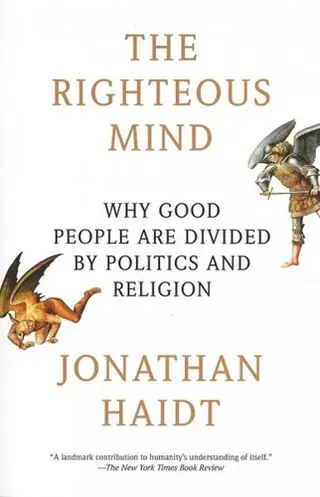 2012–2026
The Righteous Mind
Jonathan Haidt
Recommended by 94 · mentioned by 14494 recommend · 144 mention94 recommend · 14494 recommend
 2007–2026
The Wealth of Nations
Adam Smith
Recommended by 92 · mentioned by 40592 recommend · 405 mention92 recommend · 40592 recommend
…Governing by emotional appeals to the way our values tell us the world should behave is not a recipe for success in a world that behaves as the chips fall. More to the point, read Friedrich Hayek's The Fatal Conceit for a discussion of the hubris of believing that we can engineer a world to our liking, and that this world be at all sustainable.
on “Prisons or Colleges?” ↗…markets lead to better outcomes than when governments try to manage economies. Frederick Hayek labelled the confidence of being able to second guess the market and manage it towards a desirable outcome "the fatal conceit" and there's a great book about it. Hence the way that Ron Paul (also an Austrian) gets stuck into the federal reserve at each opportunity, particularly over stuff like rate rises. The other aspect,…
on “Fed cuts interest rates to 3.5%” ↗…like from a philosophical perspective, I feel they don't address the aspects of human nature that have proven troublesome in socialist economies as well as Free to Choose. Finally another classic, The Fatal Conceit by F. A. Hayek considers the practicality of socialism from an economic position in a more focused way. Like the previously mentioned books, it is an easy read. These books may not reflect cutting edge…
on “Why Are the Highly Educated So Liberal?” ↗…conclude that a much more dictatorial society is necessary to produce a result that may itself not be possible and instead lead to an even worse result than the alternative. [1] I highly recommend The Fatal Conceit by Hayek if you want to challenge assumptions your own worldview likely rests on without even knowing it.
on “Why I Stopped Arguing with People” ↗…"Hidden Order: The Economics of Everyday Life" by David Friedman requires a little more work. Several previous commentors have recommended Hayek's "Road to Freedom", but I think his last book, "The Fatal Conceit" covers more or less the same ground and is easier to read. "Software As Capital" by Howard Baetjer, Jr is interesting, but I wish he had discussed open source in it, since his analysis contradicts most…
on “Ask HN: Getting a grip on economics” ↗If you're lucky, you find a few books over the course of your life that completely change the way you look at the world. For me, The Fatal Conceit was one of those books. Hayek does a great job of showing how society, including its markets, evolve just like nature does. Victors impose their culture on the vanquished, but themselves aren't immune…
on “Spreading Hayek, Spurning Keynes” ↗…relation to the law. Carl Menger noted this in relation to money, markets, division of labor, the law, and the like. I think one of the most profoundly insightful books I've ever read was F.A. Hayek's "The Fatal Conceit" where he ties a lot of these threads together. So while the "birth" and "death" of universes may be a bit too analogous to biological evolution specifically, I think it is entirely plausible that the…
on “Earth's organisms developed via evolution. What if the cosmos did, too?” ↗> Not AI yet but it shows how the economy could be centrally planned using technology. Nonsense. Hayek explained why that can't work: https://en.wikipedia.org/wiki/The_Fatal_Conceit Of course, it can be planned - Lenin and Stalin showed that. Just make an AI that emulates those two geniuses. But the results would be equally great like they were in Soviet Russia or Mao's China.…
on “AI and Communism: Narratives of AI Behind the Iron Curtain” ↗As Hayek noted in The Fatal Conceit, "The curious task of economics is to demonstrate to men how little they really know about what they imagine they can design."
on “Spreading Hayek, Spurning Keynes” ↗…Greenspan & the GSA-induced malinvestment in housing did. The curious task of economics is to demonstrate to men how little they really know about what they imagine they can design. -F.A. Hayek, The Fatal Conceit
on “Quantitative easying explained” ↗…problems. They feel like any problem can be solved with a good enough team and a smart leader (as an aside why does anyone believe Obama to be anything but an average intellect). That is as FA Hayek put it a fatal conceit but it's easy to see why people fall into it. I said the same thing about Mark Cuban's comical jobs program: top down thinking is toxic to your brain.
on “Venture Capitalists With Powerful Blogs May Run Afoul of the SEC” ↗F.A. Hayek wrote in The Fatal Conceit, “the curious task of economics is to demonstrate to men how little they really know about what they imagine they can design.
on “Capitalism Has Gone Off the Rails” ↗…political, economic, etc. But the fact is that the incentives that allow this to work on a tribal scale break down when we try to apply them so broadly. F.A. Hayek argues that this is a big part of the "Fatal Conceit" through which socialists wrongly believe that they can successfully manage an economy (and thus a society).
on “Inclusivity Is a Joke” ↗…Star Trek like economy: no one wants for anything. (2) If smart people like us had our hands on the steering wheel we could regulate the economy into good shape—-Friedrich Hayek described this as “The Fatal Conceit” in his book with that title.
on “$40 road tolls offer insight into commuter psychology” ↗…decentralizing decisions and that a division of authority will actually extend the possibility of overall order. Yet that decentralization actually leads to more information being taken into account (FA Hayek, The Fatal Conceit) I agree that we don't need a new field, but it seems also that the idea of designing progress is a fool's errand.
on “We Need a New Science of Progress” ↗