Récoltes et semailles
by A. Grothendieck · first published 1985
43% recommend57% neutral
Why HN recommends it
Grothendieck's memoir-style reflections on his life, solitude and mathematical vision, valued for striking prose and candid self-examination. Suits readers curious about mathematicians' personal perspectives.
Summarised by Claude from recommending comments
Affiliate links. As an Amazon Associate I earn from qualifying purchases.
Mentions per year
What Hacker News says
Related books
 2016–2026
Statistical Rethinking
Richard McElreath
Recommended by 81 · mentioned by 9281 recommend · 92 mention81 recommend · 9281 recommend
 2009–2026
The art of doing science and engineering
Richard Hamming, Bret Victor
Recommended by 56 · mentioned by 8056 recommend · 80 mention56 recommend · 8056 recommend
 2008–2026
Principles of Mathematical Analysis
Walter Rudin
Recommended by 52 · mentioned by 8852 recommend · 88 mention52 recommend · 8852 recommend
 2008–2026
Probability Theory
E. T. Jaynes
Recommended by 77 · mentioned by 13877 recommend · 138 mention77 recommend · 13877 recommend
 2007–2026
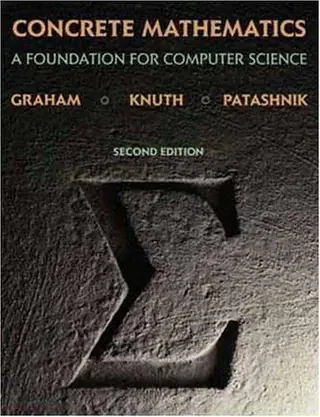
Concrete mathematics
Ronald L. Graham, Donald Knuth, Oren Patashnik
Recommended by 140 · mentioned by 215140 recommend · 215 mention140 recommend · 215140 recommend
 2007–2026
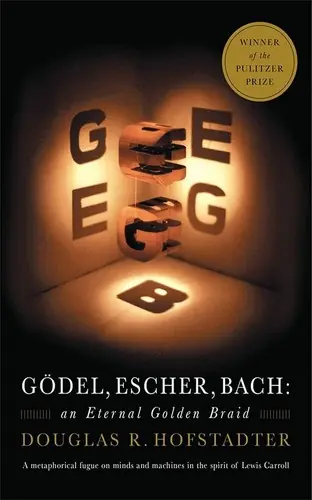
Gödel, Escher, Bach
Douglas R. Hofstadter
Recommended by 505 · mentioned by 1,055505 recommend · 1,055 mention505 recommend · 1,055505 recommend
 2011–2026
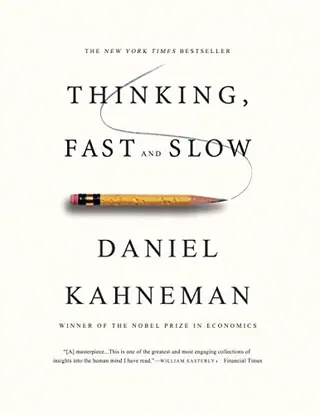
Thinking, fast and slow
Daniel Kahneman
Recommended by 373 · mentioned by 879373 recommend · 879 mention373 recommend · 879373 recommend
Here's one of his staggering quotes [1], worth reading through: "In those critical years I learned how to be alone. [But even] this formulation doesn't really capture my meaning. I didn't, in any literal sense learn to be alone, for the simple reason that this knowledge had never been unlearned during my childhood. It is a basic capacity in all of us from the day of our birth. However these three
on “Alexander Grothendieck has died” ↗Grothendieck's Récoltes et semailles (Harvest and planting) One of the most underrated mathematicians of the 20th c.
on “Ask HN: What is the best autobiography you have read?” ↗Another excerpt of Grothendieck's that has always stuck with me: "Since then I’ve had the chance in the world of mathematics that bid me welcome, to meet quite a number of people, both among my 'elders' and among young people in my general age group who were more brilliant, much more ‘gifted’ than I was. I admired the facility with which they picked up, as if at play, new ideas, juggling them as
on “Two ways to crack a walnut, per Grothendieck” ↗Grothendieck's non mathematical work has always fascinated me, he really has a great style of writing (judging by “recoltes et semailles”). The great thing about reading the works of people that are as close to mental illness as he was is that they seem to be unable to establish any emotional distance to their works. When someone like…
on “Hermit 'scribblings' of French math genius Alexander Grothendieck unveiled” ↗Alexander Grothendieck - Récoltes et Semailles
on “Ask HN: What's your favorite book that nobody you know has heard of?” ↗"Récoltes et semailles" (Harvest and plantings) by Alexander Grothendieck.
on “Ask HN: Math books you recommend just for the way they are written?” ↗from Grothendieck's Récoltes et Semailles: In those critical years I learned how to be alone. [But even] this formulation doesn’t really capture my meaning. I didn’t, in any literal sense, learn to be alone, for the simple reason that this knowledge had never been unlearned during my childhood. It is a basic capacity in all of us from the day of our birth. However these three
on “The power of lonely: What we do better without other people around” ↗This is actually closer to what Grothendieck writes in Recoltes et Semailles: "Yet it is not these gifts, nor the most determined ambition combined with irresistible will-power, that enables one to surmount the "invisible yet formidable boundaries" that encircle our universe.…
on “On Being Smart (2009) [pdf]” ↗Here is the original work "Récoltes et Semailles" from Grothendieck (PDF, French): http://lipn.univ-paris13.fr/~duchamp/Books&more/Grothendieck... Brace yourself, it's about 1000 thousand pages, sometimes very technical. The post I translated is a very short summary.
on “Alexander Grothendieck, the secret genius of mathematics” ↗> [1] Quote translation found in [2] from Alexander Grothendieck, Récoltes et Semailles, 1986, English translation by Roy Lisker, www.grothendieck-circle.org, chapter 2. Did Roy Lisker translate the book in its entirety or just partially? I know you might argue it's a bad question but I have no clue whether it is hard to find a translation because of Grothendieck's wishes or because there is none
on “Alexander Grothendieck has died” ↗For those who can read French, probably as good a place as any to mention Grothendieck's journal Récoltes et semailles recently got published by Gallimard: https://www.gallimard.fr/Catalogue/GALLIMARD/Tel/Recoltes-et...
on “Why are mathematicians so bad at arithmetic? (2017)” ↗Artificial Intelligence: 1787, Immanuel Kant, Kritik der reinen Vernunft (Critique of Pure Reason)—where else to find purer reason than in a machine; unfortunately, Kant has written in Kantian using German words, fortunately, there is a recent, great Kantian to English translation in the works of 2020, Richard Evans, Kant's Cognitive Architecture, PhD Thesis [1] Beingness: 1954, Martin Heidegger,
on “Ask HN: Which books do you consider real gems in your field of work/study?” ↗There is nothing esoteric about topos theory, it is a formally defined concept: https://en.wikipedia.org/wiki/Topos Thought it was important to state this, as Grothendieck also wrote rather esoteric texts, Récoltes et Semailles as well as La Clé des Songes, which haven't been translated or even published.
on “Alexander Grothendieck” ↗…ox faced with an amorphous mountain of things that I had to learn ( so I was assured), things I felt incapable of understanding the essentials or following through to the end. (Alexander Grothendieck, Recoltes et Semailles) Amazing that he managed to keep going after hitting his abstract ceiling in graduate school.
on “If math is more than proof, we need to better celebrate the rest of it” ↗