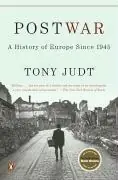
Postwar
A History of Europe Since 1945
by Tony Judt · first published 2005
57% recommend43% neutral
Why HN recommends it
A broad, readable survey of European history since 1945, covering Eastern as well as Western Europe. It serves as a solid starting point for anyone interested in the period.
Summarised by Claude from recommending comments
The first truly European history of contemporary Europe, from Lisbon to Leningrad, based on research in six languages, covering 34 countries across 60 years, using a great deal of material from newly available sources. The book integrates international relations, domestic politics, ideas, social change, economic development, and culture--high and low--into a single grand narrative. Every country has its chance to play the lead, and although the big themes are handled--including the cold war, the love/hate relationship with America, cultural and economic malaise and rebirth, and the myth and re
Affiliate links. As an Amazon Associate I earn from qualifying purchases.
Mentions per year
What Hacker News says
Related books
 2017–2026
The Bobiverse
Dennis E. Taylor
Recommended by 36 · mentioned by 4036 recommend · 40 mention36 recommend · 4036 recommend
Unbearable Lightness of Being
Milan Kundera
Recommended by 24 · mentioned by 5324 recommend · 53 mention24 recommend · 5324 recommend
 2016–2026
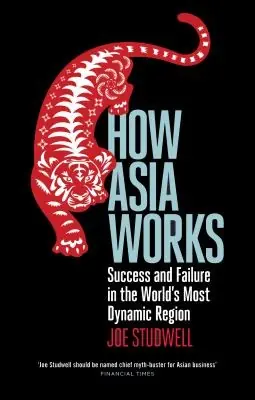
How Asia Works
Joe Studwell
Recommended by 36 · mentioned by 5136 recommend · 51 mention36 recommend · 5136 recommend
 2012–2026
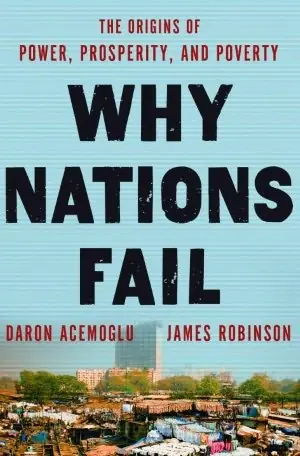
Why Nations Fail
Daron Acemoglu, James A. Robinson
Recommended by 74 · mentioned by 11774 recommend · 117 mention74 recommend · 11774 recommend
Gulag Archipelago
Aleksandr Solzhenitsyn
Recommended by 77 · mentioned by 16977 recommend · 169 mention77 recommend · 16977 recommend
 2014–2026
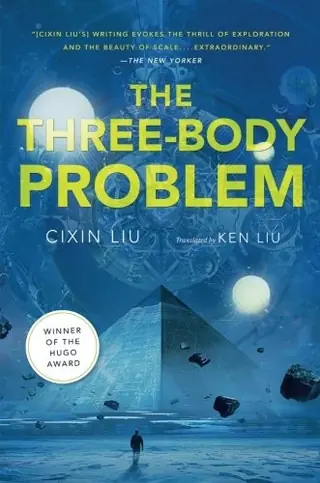
Three-Body Problem
Cixin Liu, Ken Liu
Recommended by 233 · mentioned by 513233 recommend · 513 mention233 recommend · 513233 recommend
 2007–2026
Neuromancer
William Gibson
Recommended by 296 · mentioned by 780296 recommend · 780 mention296 recommend · 780296 recommend
 2007–2026
Brave New World
Aldous Huxley
Recommended by 202 · mentioned by 708202 recommend · 708 mention202 recommend · 708202 recommend
…https://www.nytimes.com/2019/04/17/style/conan-obrien-robert... - “I’m a fan to a disturbing level.”) The Silk Roads: A New History of the World by Peter Frankopan Paris 1919 and The War that Ended Peace - Margaret McMillan Postwar: A History of Europe Since 1945 by Tony Judt SPQR: A History of Ancient Rome by Mary Beard Origins of Political Order: Francis Fukuyama - how politics + the state developed. Interesting contrast of…
on “Ask HN: What are your favourite history books?” ↗…E. Taylor, narrated by Ray Porter. If You like SF and haven't yet tried anything that's been narrated by Porter, please do yourself a favor and check his name out. I'll wait. The list is worth it. 3. Postwar by Tony Judt, narrated by Ralph Cosham. This one convinced me that what I need in an audiobooks is a narrative, but it does not necessarily need to be fiction. I'm a bity of a history nerd and reading…
on “Bookish Diversions: Do Audiobooks Count?” ↗…V-VII" Even though these are genuinely the best books I've read this year and genuinely world-view altering that might be not what you're after. Here are 3 good books I'm happy to recommend instead: - "Postwar: A History of Europe Since 1945" by Tony Judt - "A History of Future Cities" by Daniel Brook - "Pale Blue Dot: A Vision of the Human Future in Space" by Carl Sagan (if you already read Pale Blue Dot…
on “Lessons learned after 300 books in 4 years” ↗…History Channel (this sounds sarcastic but is meant earnestly) which is the main outlet for documentaries on mid 20th century history. However there is extensive literature on the subject. Tony Judt's "Postwar" is a good, recent starting point. There are many many German and French documentaries on occupied Germany, and plenty on the occupation of Japan. Perhaps you can find some in translation.
on “Enemy Aliens: The Forgotten History of World War I Internment Camps” ↗For more of Judt's take on how the Flanders/Wallonia split has played out, here is an out-take from Judt's acclaimed survey Postwar: http://faroutliers.blogspot.com/2007/10/judt-on-belgian-iden... Anyone at all interested in European history would enjoy his essays and this book. Deep and erudite, yet with an approachable narrative…
on “Is there a Belgium? (1999)” ↗…some places, like Poland, the process began even earlier when the war was still ongoing. The idea that they wouldn't have done so if Communist governments reigned in France and Italy is laughable. Read Postwar, by Tony Judt. It's a pretty good roundup of what happened in Europe during the post-war era, including the start of the Cold War.
on “Project SPHINX – When the USSR tried to change the computer (2019)” ↗/s, I assume? (you never know!) Having read a couple of Cold War histories, most recently Tony Judt's excellent Postwar, I learned that what's often missing from American pop-level summaries is the work put in by the people behind the Iron Curtain to bring it down -- for examples, the Polish Catholics and union members,…
on “Mikhail Gorbachev has died” ↗Postwar by Tony Judt. Published in 2005, it covers 1945 Postwar Europe to ~2005. Good coverage of not just the major Western European countries like the UK, Germany, and France, but attention is paid to the Eastern…
on “Ask HN: Best books read in 2022” ↗I'm glad to hear that "Postwar" by Judt has a great audio recording, as I've read that the is book highly recommended by academic historians. This puts it next on my listening list (other books on my list about the 20th Century include…
on “Bookish Diversions: Do Audiobooks Count?” ↗This is one of the sources I am using for my comments: https://www.amazon.com/Postwar-History-Europe-Since-1945/dp/... Yugoslavia (and all the violence that happened during and post it's collapse) is not a good example of what happens in a heterogeneous countries once the dictator was…
on “Who is driving Germany's far-right poll surge?” ↗> (most of Germany's industrial capability had been destroyed or damaged) Tony Judt in Post War (https://www.goodreads.com/book/show/29658.Postwar) actually claims that this is patently false. That Germany actually came out of WW2 with most of its industry intact (it was away from the most bombed cities and majority of fighting actually happened…
on “Why Germany Still Has So Many Middle-Class Manufacturing Jobs” ↗…bother to look up the author, did you? Tony one - of - our - most - dazzling - public - intellectuals Judt? Whose special expertise was modern European history? This is taken from the introduction to POSTWAR, finalist for the 2005 Pulitzer Prize: """ p. 9 We should not idealize this [pre-1914] Europe. What the Polish writer Tadeusz Borowski called 'the incredible, almost comical melting pot of peoples…
on “USA must not hunt down whistleblower Edward Snowden” ↗…secondary references for future works of synthesis as well as preventing the repetition of mistakes! Is anyone doing a decent work of synthesis for the history of computing in general? Something like Judt/Postwar or TARUSKIN/History of Western Music?
on “History of version control - 10 astonishments” ↗Tony Judt said it best: Under Salazar, "Portugal was largely dependent upon the export or re-export of primary commodities, including its own people." (Postwar, pg 511, https://books.google.com/books?id=xE1hBBF37kwC&pg=PA511&lpg=... )
on “A proportional visualization of the world's most popular languages” ↗…conservatives. What I claimed was that the Nazis were popular after having gained power. In fact Nazi ideology even remained popular after the Nazis were defeated. Tony Judt has survey results [1] in his book 'Postwar', e.g. a majority of Germans were of the opinion that Nazism was a good idea but poorly applied. 37% in the US occupied zone said that the extermination of the Jews was warranted. [1] https://en.wikipedia.org/wiki/Denazification#Surveys
on “Notes on Saudi Arabia” ↗