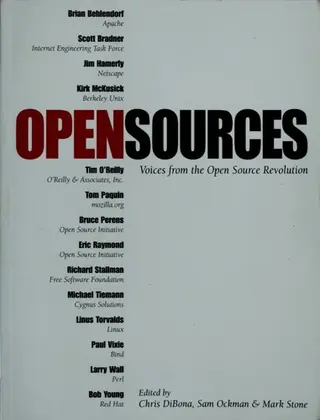
Open sources
by Chris DiBona, Sam Ockman, Mark Stone, Brian Behlendorf, Scott Bradner, Jim Hamerly, Kirk McKusick, Tim O'Reilly, Tom Paquin, Bruce Perens, Eric S. Raymond, Richard M. Stallman, Michael Tiemann, Linus Torvalds, Paul Vixie, Larry Wall, Bob Young · first published 1999
50% recommend50% neutral
Freely available source code, with contributions from thousands of programmers around the world: this is the spirit of the software revolution known as Open Source. Now, in Open Sources, for the first time the leaders of Open Source come together to discuss the new vision of the software industry they have created. The essays in this volume offer insight into how the Open Source movement works, why it succeeds, and where it is going. - Back cover.
Affiliate links. As an Amazon Associate I earn from qualifying purchases.
Mentions per year
What Hacker News says
Related books
 2007–2026
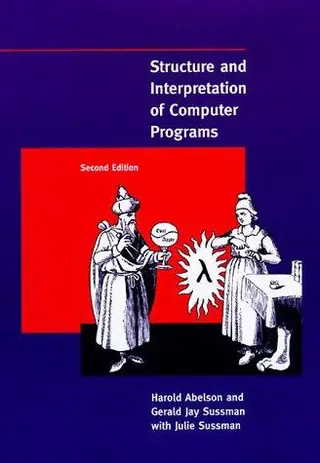
Structure and Interpretation of Computer Programs
Harold Abelson, Gerald Jay Sussman, Julie Sussman
Recommended by 347 · mentioned by 602347 recommend · 602 mention347 recommend · 602347 recommend
 2007–2026
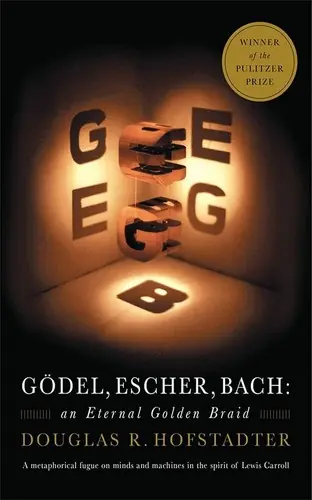
Gödel, Escher, Bach
Douglas R. Hofstadter
Recommended by 505 · mentioned by 1,055505 recommend · 1,055 mention505 recommend · 1,055505 recommend
I seem to remember the famous "Diligence, Patience, and Humility" bit by larry wall as reported in the "Open Sources" book was originally a speech. If so I'd vote for that. Otherwise, at some time I really enjoyed Guy Steele's talks while he was working on Fortress, e.g. How to Think about Parallel Programming: Not! http://www.infoq.com/presentations/Thinking-Parallel-Program...
on “Ask HN: What's the best technical talk you've heard?” ↗…about it. There are other successful free software plays. For me the biggest example is Red Hat. When these kinds of conversations appear, I always point people toward Michael Tiemann's chapter in "Open Sources: Voices From the Open Source Revolution" [0]. Cygnus software went from $6K to being sold to Red Hat for $600M, and Red Hat went on to great success with essentially the same business model. My favourite…
on “Funding Yourself as a Free Software Developer” ↗…of these: - Perspectives on Free and Open Source Software [MIT] - Prisoner's Dilemma [William Poundstone] - Thinking Strategically [Nalebuff] - Co-opetition [Nalebuff] - Cluetrain Manifesto [Searls] - Open Sources 2.0 [O'Reilly] - Innovator's Dilemma [Christensen] - Net Worth [Hagel] - Democratizing Innovation [von Hippel] - Fooled by Randomness [Taleb] Other books I always keep around are "Last Night a DJ Saved…
on “Do you read?” ↗>The Cathedral and the Bazaar by Eric S. Raymond Had reddit :) That reminds me about the book: Open Sources: Voices from the Open Source Revolution: http://www.oreilly.com/openbook/opensources/book/ It is free to read at the above link. I had read many of the chapters some years ago. Pretty interesting stuff.…
on “Ask HN: What's the best computer science book you've read recently?” ↗…They did so, however, on the basis of a very detailed, high-level, senior-executive endorsed study into the competitive advantages of pursing just this course of action (Tim O'Reilly references this in Open Sources, it's sometimes known as the "Earthquake Document", as it literally shook the earth IBM was standing on), specifically targeting its perceived major competition from Sun (since neutralized entirely) and…
on “Microsoft offering Linux virtual machines on Azure” ↗…itself supplanted a whole set of proprietary document formats, both static and hypertext, of which Tim O'Reilly has written and spoken about this in talking about the origins of O'Reilly & Associates. His Open Sources essay covers this tangentially, though I think there are better examples I'm not finding at present: http://oreilly.com/catalog/opensources/book/tim.html In this regard, it's interesting to point out…
on “Top Web Design Mistakes of 1999” ↗…to how I was treating other people). But I knew that when my career was over, I would look back on years of building walls to divide people, and feel I had made the world ugly." -- Richard Stallman (Open Sources, 1999 O'Reilly and Associates) https://github.com/llimllib/personal_code/blob/master/python...
on “RoboVM Is No Longer Open-Source” ↗From the chapter by Michael Tiemann in Open Sources: "At first I tried to make my argument the way that Stallman made his: on the merits. I would explain how freedom to share would lead to greater innovation at lower cost, greater economies of scale through…
on “How We’re Building a Business to Last” ↗Open Sources: Voices from the Open Source Revolution, The Tanenbaum-Torvalds Debate: http://oreilly.com/catalog/opensources/book/appa.html
on “Tanenbaum-Linus Torvalds Debate: Part II” ↗The term "open source" was created by Eric Raymond (ESR)[1] on 8 February 1998 when Mozilla was in the process of making its source code public. This has been described in detail in the book 'Open Sources: Voices from the Open Source Revolution'[3]. [1] https://en.wikipedia.org/wiki/Eric_S._Raymond#Open_source [2] http://www.catb.org/esr/open-source.html [3] http://oreilly.com/catalog/opensources/book/raymond2.html
on “A “Perfect Storm” Moment for Multibillion-Dollar Open Source Companies” ↗