Mathematical games
by Martin Gardner · first published 2005
32% recommend68% neutral
Why HN recommends it
Collected puzzle and recreational math columns introducing Conway's Game of Life, fractals, Penrose tiles, flexagons and polyominoes; often recommended for curious readers and anyone who enjoys playful math.
Summarised by Claude from recommending comments
Searchable source that brings together 30 years of Gardner's "Mathematical Games" column which ran in Scientific American from 1956 to 1986.
Affiliate links. As an Amazon Associate I earn from qualifying purchases.
Mentions per year
What Hacker News says
Related books
 2012–2025
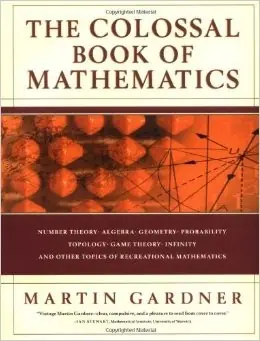
The Colossal Book of Mathematics
Martin Gardner
Recommended by 3 · mentioned by 43 recommend · 4 mention3 recommend · 43 recommend
The annotated Alice
Lewis Carroll, Martin Gardner
Recommended by 8 · mentioned by 148 recommend · 14 mention8 recommend · 148 recommend
Eugene Onegin
Alexander Pushkin
Recommended by 4 · mentioned by 174 recommend · 17 mention4 recommend · 174 recommend
 2007–2026
Metamagical Themas
Douglas R. Hofstadter
Recommended by 45 · mentioned by 8445 recommend · 84 mention45 recommend · 8445 recommend
 2009–2026
Gulliver's Travels
Jonathan Swift
Recommended by 17 · mentioned by 4417 recommend · 44 mention17 recommend · 4417 recommend
 2009–2026
Le Ton beau de Marot
Douglas R. Hofstadter
Recommended by 27 · mentioned by 5227 recommend · 52 mention27 recommend · 5227 recommend
 2007–2026
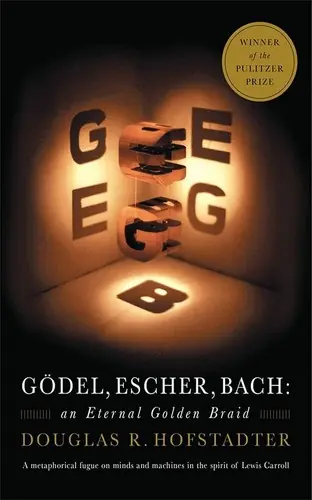
Gödel, Escher, Bach
Douglas R. Hofstadter
Recommended by 505 · mentioned by 1,055505 recommend · 1,055 mention505 recommend · 1,055505 recommend
 2007–2026
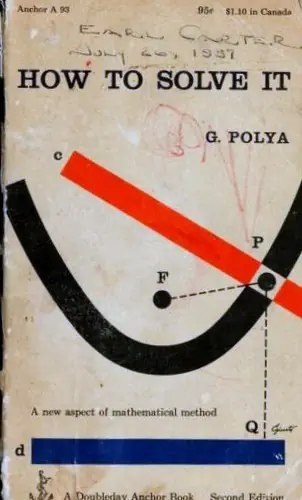
How to solve it
George Pólya
Recommended by 161 · mentioned by 206161 recommend · 206 mention161 recommend · 206161 recommend
> Metamagical Themes It's Metamagica Themas, I think - an anagram of 'Mathematical Games'; the Martin Gardner's column in Scientific American which proceeded it. A lovely book.
on “Why I Don't Love Gödel, Escher, Bach” ↗…glassware. It doesn’t take too much equipment to get started. Sadly, the old Amateur Scientist columns are hard to come by unless you have access to a library with Sci American going back to 1952. (The old Mathematical Games columns by the late Martin Gardner are great too. I first read about public key encryption just a few months after Rivest, Shamir and Adleman wrote the MIT memo on it because it appeared in the August…
on “Caltech glassblower's retirement has scientists sighing (2016)” ↗…know it well, so push through even if it sometimes is not a lot of fun. If you need something fun while going through the high school stuff, take a look at the books that collect Martin Gardner's old "Mathematical Games" columns from Scientific American. [1] https://news.ycombinator.com/item?id=16506771 [2] https://www.ck12.org/student/
on “Ask HN: How to self-learn math?” ↗If you're thinking of getting the annotated version, another classic in the same spirit is The Annotated Alice by Martin Gardner. It exposes a lot of double entendres, mathematical games, and other historical stuff about Alice in Wonderland that shows how much of a playful mathematician Lewis Carroll was.
on “Flatland: A Forgivably Flat Classic” ↗I first read about making one's own cloud chamber as a kid. I used to read old issues of Scientific American for the Mathematical Games columns written by Martin Gardner, which I highly recommend, and the Amature Scientist column written by a series of authors over the years, starting in 1928. The projects were amazing. My favorites…
on “Building a Cloud Chamber (Cosmic Ray Detector)” ↗Mathematical Games, by Martin Gardner. EDIT: Distractions abound so I hit submit before forgetting. Why: Martin Gardner wrote on a variety of mathematical topics in fields such as geometry, graph theory, number theory,…
on “The Parallel Climbers Puzzle” ↗…Gardner's articles themselves: https://en.wikipedia.org/wiki/Martin_Gardner_bibliography#%2... - That's a list of the books (and on that page many other things) collecting Gardner's Scientific American "Mathematical Games" articles. https://www.cambridge.org/us/academic/subjects/mathematics/s... - First 4 of the reprints available here (or a bookseller of your choice).
on “Hexaflexagons [video] (2012)” ↗Martin Gardner wrote a monthly column in Scientific American called Mathematical Games. He introduced me and other readers to: Conway's Game of Life, fractals, Penrose Tiles, flexagons, M. C. Escher, Godel, Escher, Bach, polyoninoes and many other logic problems. There was a learning AI…
on “Ask HN: Which books evoked the love towards your favorite subjects?” ↗Scientific American needs to look in a mirror. There was a time when they gave meaningful direction to young readers. Albert G. Ingalls, "The Back Yard Astronomer." Martin Gardner, "Mathematical Games" C. L. Stong. "The Amateur Scientist" After Stongs death, SciAm displayed a halfhearted attempt to keep a few back pages, but around 2000 they dumped the whole idea of citizen science. Despite the launch…
on “"Tech Billionaires Need to Stop Making Sci-Fi Real"” ↗…"new math" movement. We learned about sets in first grade. Proofs were introduced fairly early. There were problems for which "no answer" was the correct answer. If you could find a collection of the Mathematical Games articles from Scientific American, those were entertaining and required little background knowledge, but conveyed the fun of math. Geometry is a good subject because it doesn't have very many prerequisites…
on “The Mensa Reading List for Grades 9-12” ↗…lecture about the gulf between the sciences and the humanities. The programming language COBOL was developed. Martin Gardner published the Three Prisoners Problem, a probability theory paradox, in his “Mathematical Games” column in Scientific American. Giuseppe Cocconi and Philip Morrison published Searching for Interstellar Communications, a foundational work for the search for extraterrestrial intelligence, in the journal…
on ““You pay to read research you fund. That’s ludicrous”” ↗…graduate-level pure math texts (the subject of that post). I own and love the book, and did a lot of pure math in my math undergrad degree. But SFM is closer to the tradition of Martin Gardner's long-running "Mathematical Games" column in Scientific American than real higher pure math education. I think that's because it hinges on giving you tools to "hack" problems in physics, geometry and calculus that leverage intuition…
on “Street-Fighting Math: Educated Guessing and Opportunistic Problem Solving (2010) [pdf]” ↗Back in the 70's, Martin Gardner published an article in his Mathematical Games column in the SciAm, about visualising rotating hyperspheres and hypercubes. The way I remember it, his imaginary friend Dr. Morpheus (or something) had shown him colour animations of these rotating objects.…
on “A high-dimensional sphere spilling out of a high-dimensional cube” ↗…numbers to be bound in a high-quality encyclopedia-like hardcover binding. I remember devouring these venerable volumes as a kid, looking especially for the Martin Gardner, and later Douglas Hofstadter, mathematical games. But also for all the extremely cool news about space exploration, chemistry research, biology, plans for future nuclear fusion. Now it seems to be nothing of the sort (I don't talk about this stupid…
on “Why the Term Jedi Is Problematic for Justice/Equity/Diversity/Inclusion Programs” ↗Off the subject but on this site: A list of Martin Gardner Puzzle Books: Martin Gardner's Collections of "Mathematical Games" Columns http://www.muppetlabs.com/~breadbox/books/gardner.html
on “3998-byte executable reduced to 45 bytes” ↗