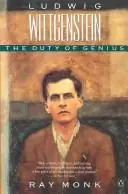
Ludwig Wittgenstein
by Ray Monk · first published 1990
60% recommend40% neutral
Ludwig Wittgenstein is perhaps the greatest philosopher of the twentieth century, and certainly one of the most original in the entire Western tradition. Given the inaccessibility of his work, it is remarkable that he has inspired poems, paintings, films, musical compositions, titles of books -- and even novels. In his splendid biography, Ray Monk has made this very compelling human being come alive in a way that perfectly explains the fascination he has evoked. Wittgenstein's life was one of great moral and spiritual depth. Although his work addresses problems of logic, language, mind, and kn
Affiliate links. As an Amazon Associate I earn from qualifying purchases.
Mentions per year
What Hacker News says
Related books
 2008–2026
Tractatus logico-philosophicus
Ludwig Wittgenstein, Isidoro Reguera Pérez, Ivo Hernández, Spanish
Recommended by 21 · mentioned by 7221 recommend · 72 mention21 recommend · 7221 recommend
 2010–2026
Philosophical investigations
Ludwig Wittgenstein
Recommended by 42 · mentioned by 11442 recommend · 114 mention42 recommend · 11442 recommend
I don't know about 'life-changing' but the best books I ever read were: Tractatus Logico-Philosophicus (Ludwig Wittgenstein) Being and Time (Martin Heidegger) Of Grammatology (Jacques Derrida) Writing and Difference (Jacques Derrida) Martian Timeslip (Philip K. Dick) Ringworld (Larry Niven) The Forever…
on “Ask HN: What were your "life-changing" books?” ↗…http://plato.stanford.edu/search/searcher.py?query=wittgenst... - the articles there are quality stuff. Good luck with your rabbit hole :) edit oh, and I had the pleasure of reading (only bits) from Ray Monk's bio of W. (http://books.google.co.uk/books/about/Ludwig_Wittgenstein.ht...), which is frequently referred to in SEP's article on W. (http://plato.stanford.edu/entries/wittgenstein/) - it might make for a very nice introductory exposition, if you're up for actually reading…
on “If Philosophers Were Programmers” ↗I recommend Ray Monk's biography of philosopher Ludwig Wittgenstein, "Duty of Genius". I think you may like it.
on “A review of Bruce Springsteen’s autobiography “Born to Run”” ↗…the thought first struck him that in language we play games with words. A central idea of his philosophy, the notion of a ‘language-game’, apparently had its genesis in this incident." - Norman Malcom, Ludwig Wittgenstein: A Memoir I can't resist a more entertaining extract from that book: "My wife once gave him some Swiss cheese and rye bread for lunch, which he greatly liked. Thereafter he would more or less insist…
on “Wittgenstein’s theories are the basis of all modern NLP” ↗…logic (and thus we should say language). How do mathematical models relate to the world? Is it the Tractatus, or Philosophical Investigations? I wonder if economics students are ever assigned readings of Ludwig Wittgenstein. The latter part of Ray Monk's biography on him touches on many hilarious debates between him and his students, including Alan Turing, around these questions.
on “How economists rode maths to become our era’s astrologers” ↗