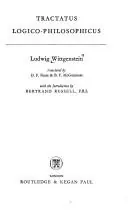
Tractatus logico-philosophicus
by Ludwig Wittgenstein, Isidoro Reguera Pérez, Ivo Hernández, Spanish, Charles Ogden, David Francis Pears, Brian McGuinness, Luis Manuel Valdés Villanueva, Bertrand Russell · first published 1921
29% recommend65% neutral6% critical
Why HN recommends it
Rigorous, terse treatise on how language, thought, and reality relate and where logic hits its limits. Read for its austere, almost poetic, code-like structure; suits programmers and philosophy readers.
Common criticism: Dense and hard to read, a rough starting point for newcomers to Wittgenstein
Summarised by Claude from recommending comments
Wittgenstein's book about the problems of language and his attempt of describing the world and an philosophical accurate and most of all logical language.
Affiliate links. As an Amazon Associate I earn from qualifying purchases.
Mentions per year
What Hacker News says
Related books
 2010–2026
Philosophical investigations
Ludwig Wittgenstein
Recommended by 42 · mentioned by 11442 recommend · 114 mention42 recommend · 11442 recommend
Philosophy of Arithmetic
Edmund Husserl, Dallas Willard
Recommended by 2 · mentioned by 22 recommend · 2 mention2 recommend · 22 recommend
 2018–2020
The dream of enlightenment
Anthony Gottlieb
Recommended by 2 · mentioned by 22 recommend · 2 mention2 recommend · 22 recommend
 2010–2021
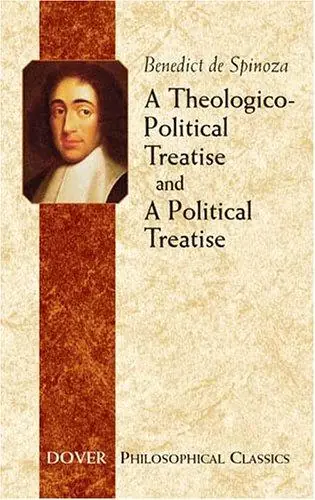
Tractatus theologico-politicus
Benedictus de Spinoza, Seymour Feldman
Recommended by 1 · mentioned by 21 recommend · 2 mention1 recommend · 21 recommend
 2010–2026
The Story of Philosophy
Will Durant, Du Shu Xin Wen She
Recommended by 22 · mentioned by 3822 recommend · 38 mention22 recommend · 3822 recommend
 2010–2021
An enquiry concerning the principles of morals
David Hume
Recommended by 2 · mentioned by 32 recommend · 3 mention2 recommend · 32 recommend
 2018–2020
The Dream of Reason
Anthony Gottlieb
Recommended by 2 · mentioned by 22 recommend · 2 mention2 recommend · 22 recommend
 2010–2017
Mortal questions
Thomas Nagel
Recommended by 3 · mentioned by 43 recommend · 4 mention3 recommend · 43 recommend
…every programmer interested in language design needs to read Wittgenstein. His later work in ethics and epistemology (that the article recommends, Philosophical Investigations) is hit or miss, but his Tractatus Logico-Philosophicus, which deals with the nature of language as it relates to our ability to think and formulate ideas, is undeniable. He essentially builds a framework for breaking reality down into logically composable…
on “Eminent Philosophers Name the Most Important Philosophy Books from 1950-2000” ↗Tractatus Logico-Philosophicus
on “Ask HN: Which non-programming books are a beneficial read for programmers?” ↗1. Ludwig Wittgenstein's "Tractatus Logico Philosophicus" (the extremism of the idea, the solemn (poetic?) tone that nevertheless emerges from the sentences of such a rigorous work) 2. RMS reflections about morals in software programming (I may not wholly…
on “Ask YC: What have you learned that rocked your world?” ↗-Tractatus Logico-Philosophicus and Philosophical Investigations by Ludvig Wittgenstein -The Open Society and its Enemies by Karl Popper -On Liberty John Stuart Mill -Recursive Functions of Symbolic Expressions and their Computation…
on “Ask HN: Best Philosophical Books?” ↗…Extremes: A History of the World, 1914-1991 (Hobsbawm) Bhagavad Gita Upanishads Crimes Against Logic: Exposing the Bogus Arguments of Politicians, Priests, Journalists, and Other Serial Offenders (Whyte) Tractatus Logico-Philosophicus (Wittgenstein) edit: added 2 more & author names
on “Ask HN: Good books?” ↗Read Wittgenstein's Tractatus logico-philosophicus if you want to read a remarkably bug-free "program". It reads like code.
on “A Philosopher Every Programmer Should Know: Susanne K. Langer” ↗Atlas Shrugged by Ayn Rand. Free Will by Sam Harris. Tractatus Logico-Philosophicus by Ludwig Wittgenstein
on “Ask HN: What book that you read in 2015 significantly affected how you think?” ↗…Bach (Douglas Hofstadter) The Republic [imp. "the allegory of the cave"] (Plato) The Genealogy of Morals (Friedrich Nietzsche) The Social Construction of Reality (Peter L. Berger, Thomas Luckmann) Tractatus Logico-Philosophicus (L. Wittgenstein) Dissemination [imp. "The Pharmakon"] (Jacques Derrida) The Quest for Reality (Barry Stroud) Languages of Art (Nelson Goodman) The Structure of Scientific Revolutions (Thomas Kuhn)…
on “Ask HN: Which books do you consider real gems in your field of work/study?” ↗…analysis consists of nothing but syntactical apparatuses, grammars of signs, then a fortiori all thought falls under the constitutive rule of language"), and I love him for it. - Ludwig Wittgenstein's _Tractatus Logico-Philosophicus_and Philosophical Investigations_. I find PI much more convincing than the Tractatus, but it's worth reading because it makes a strongly-argued case for logical realism. The big danger with Wittgenstein…
on “The Mathematician (1947)” ↗Wittgenstein's Tractatus Logico-Philosophicus (http://en.wikipedia.org/wiki/Tractatus_Logico-Philosophicus) and Philosophical Investigations (http://en.wikipedia.org/wiki/Philosophical_Investigations). The former was a keystone of the Logical Positivist…
on “Ask HN: Can anyone recommend some philosophy reading?” ↗I don't know about 'life-changing' but the best books I ever read were: Tractatus Logico-Philosophicus (Ludwig Wittgenstein) Being and Time (Martin Heidegger) Of Grammatology (Jacques Derrida) Writing and Difference (Jacques Derrida) Martian Timeslip (Philip K. Dick) Ringworld…
on “Ask HN: What were your "life-changing" books?” ↗Tractatus Logico Philosophicus by Ludwig Wittgenstein. Considered to be the philosopher's pholosopher!
on “Ask HN: What is the most mind blowing book you've ever read?” ↗For a fun logical proof that proves why you can't use logical proofs for philosophical questions, see the "Tractatus Logico-Philosophicus" by Ludwig Wittgenstein. https://www.gutenberg.org/files/5740/5740-pdf.pdf Introduction by Bertrand Russell Spoiler: logic is inherently limited by language. To quote Russell, "In order to understand…
on “What people get wrong about Bertrand Russell” ↗…cultural structures has always stuck with me. The Allegory of the Cave (Plato; section in The Republic) — classic; some might say the basic idea underpinning all philosophical and scientific inquiry. Tractatus Logico-Philosophicus (Ludwig Wittgenstein) — I'll admit I never quite understood this book from reading it, but it definitely changed how I thought about philosophy, consciousness and spirituality. Charles Sanders Peirce…
on “Ask HN: Mind bending books to read and never be the same as before?” ↗Wittgenstein's Tractatus Logico-Philosophicus is always worth having a look at. Not everyone's cup of tea, but I greatly enjoyed it at around that age. Ed Thorp's autobiography "A man for all markets" is fun, in particular if you're interested…
on “Ask HN: What book should I buy for my 18th birthday?” ↗