Philosophical investigations
by Ludwig Wittgenstein · first published 1953
37% recommend58% neutral5% critical
Why HN recommends it
Late Wittgenstein on how language works through use, context, language games and family resemblance; valued for reframing philosophical questions and for programmers, AI and language-design readers.
Summarised by Claude from recommending comments
Affiliate links. As an Amazon Associate I earn from qualifying purchases.
Mentions per year
What Hacker News says
Related books
 2008–2026
Tractatus logico-philosophicus
Ludwig Wittgenstein, Isidoro Reguera Pérez, Ivo Hernández, Spanish
Recommended by 21 · mentioned by 7221 recommend · 72 mention21 recommend · 7221 recommend
 2014–2026
On certainty =
Ludwig Wittgenstein
Recommended by 5 · mentioned by 75 recommend · 7 mention5 recommend · 75 recommend
 2018–2020
The dream of enlightenment
Anthony Gottlieb
Recommended by 2 · mentioned by 22 recommend · 2 mention2 recommend · 22 recommend
Philosophy of Arithmetic
Edmund Husserl, Dallas Willard
Recommended by 2 · mentioned by 22 recommend · 2 mention2 recommend · 22 recommend
 2010–2021
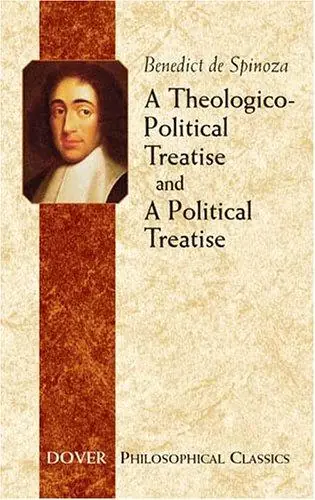
Tractatus theologico-politicus
Benedictus de Spinoza, Seymour Feldman
Recommended by 1 · mentioned by 21 recommend · 2 mention1 recommend · 21 recommend
 2010–2026
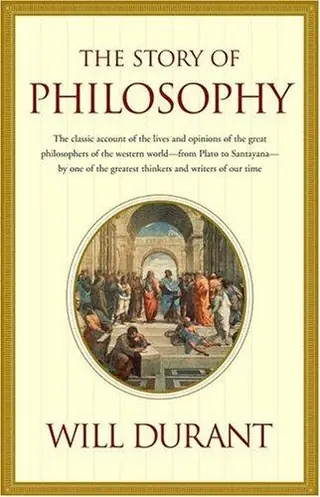
The Story of Philosophy
Will Durant, Du Shu Xin Wen She
Recommended by 22 · mentioned by 3822 recommend · 38 mention22 recommend · 3822 recommend
 2018–2020
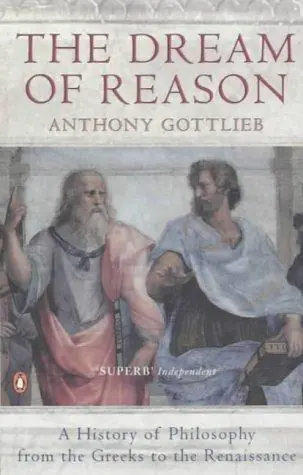
The Dream of Reason
Anthony Gottlieb
Recommended by 2 · mentioned by 22 recommend · 2 mention2 recommend · 22 recommend
 2010–2021
An enquiry concerning the principles of morals
David Hume
Recommended by 2 · mentioned by 32 recommend · 3 mention2 recommend · 32 recommend
…information do you think there is in the word "trump," for instance? Is it the same over time, to bring up just one feature of how this funny thing called context informs human speech? Wittgenstein's Philosophical Investigations is a good place to start if anyone's interested in understanding this issue.
on “Human speech may have a universal transmission rate: 39 bits per second” ↗…implications for natural language processing as well as artificial intelligence. I personally recommend to anyone endeavoring to understand Wittgenstein's transition from Tractatus Logico Philosophicus to Philosophical Investigations. In fact, Google used the family resemblance concept from PI to inform its search algorithm early on to attribute diffent meanings to the same search term. What you take away is a very precise way to…
on “PG's Rarely Asked Questions” ↗-Tractatus Logico-Philosophicus and Philosophical Investigations by Ludvig Wittgenstein -The Open Society and its Enemies by Karl Popper -On Liberty John Stuart Mill -Recursive Functions of Symbolic Expressions and their Computation by Machine by John McCarthy
on “Ask HN: Best Philosophical Books?” ↗…good basic Descartes text) David Hume: An Enquiry concerning Human Understanding and An Enquiry concerning the Principles of Morals (I recommend the Oxford Philosophical Texts editions) Wittgenstein: Philosophical Investigations (terribly, terribly difficult, but very rewarding) A few contemporary things: Gilbert Ryle: The Concept of Mind Willard Van Orman Quine: From a Logical Point of View J. L. Mackie: Ethics: Inventing…
on “Ask HN: Best Philosophical Books?” ↗…the wetness from the air different from the wetness of the water?" and I started putting my hands into water to discern the differences. Our "watcher" took us back inside and handed me Wittgenstein's Philosophical Investigations. I read it cover-to-cover in about 2 hours and I thought it was the most amazing material. The structure of that book is very much like the thinking process of someone on hallucinogens, or rather, a…
on “LSD: The Geek's Wonder Drug” ↗Not OP, but Wittgenstein covers this in his Philosophical Investigations. In the Tractatus, he tried to create an all-encompassing system for language, but in PI he more or less says it's impossible. It's an amazing read in any case, it has totally changed the way I approach…
on “Google’s Neural Machine Translation System” ↗…and not the second, as you do, but not in the sense that they have no connection. The second is, albeit crudely put here, a common starting point for reaching the first. And yes, I think Wittgenstein's Philosophical Investigations is the most profound book that I have ever read. My view of the world was transformed upon reading it, though it took a couple of years to properly digest. I agree that a lot of the tech community is…
on “Is There a Limit to Scientific Understanding?” ↗a passing remark -- by all means read Wittgenstein's 'Philosophical Investigations' because it is readable as the article says. In the metaphysical world it can be hard cut through the work of its great thinkers. A sensible way to approach Wittgenstein is to start with a college level…
on “The relentless honesty of Ludwig Wittgenstein (2017)” ↗Ludwig Wittgenstein - mainly Philosophical Investigations, Blue and Brown Books, and On Certainty. It gradually changed how I view the entire world around me, and dissolved my interest in philosophy, as well as in many other "sciency" things that - I realized…
on “Ask HN: What books changed the way you think about almost everything?” ↗…then Kant, and after that, there is a real break between continental and analytic traditions. So, jumping into Wittgenstein might be a really bad idea for someone without a background, but who knows. The Philosophical Investigations is a fairly approachable book.
on “How Philosophers Think” ↗Wittgenstein had this effect on me too. But not the Tractatus. What calmed me down was the Philosophical Investigations and Kripkes Naming and Necessity.
on “Ludwig Wittgenstein: A Mind on Fire” ↗It would be also good to read Wittgenstein's later thought on this work. He completely reversed course in Philosophical Investigations, and the contrast between early and late Wittgenstein is almost as important as the text itself.
on “Tractatus Logico-Philosophicus” ↗* Operators And Things – a fascinating account of a woman's journey through (and out of) schizophrenia. Also, some very interesting insight into toxic office politics. * Philosophical Investigations – I've wanted to read and understand Wittgenstein's PI for a while now. This year I've made a serious effort and it has been very worthwhile. Best read with a companion text (I used Routledge Guidebook…
on “Ask HN: Books you read in 2023 and recommend for 2024” ↗…syntactical apparatuses, grammars of signs, then a fortiori all thought falls under the constitutive rule of language"), and I love him for it. - Ludwig Wittgenstein's _Tractatus Logico-Philosophicus_and Philosophical Investigations_. I find PI much more convincing than the Tractatus, but it's worth reading because it makes a strongly-argued case for logical realism. The big danger with Wittgenstein is that his epigrammatic style…
on “The Mathematician (1947)” ↗…less vague than a highly context-sensitive conversation with a friend.) For an indication of the depth of complexity of natural language and the philosophical difficulties therein, Ludwig Wittgenstein's Philosophical Investigations is a good place to look - http://en.wikipedia.org/wiki/Philosophical_investigations. I do think there is a deeper issue with objects in that the environment in which they are constructed often fails…
on “Why are objects so unintuitive?” ↗