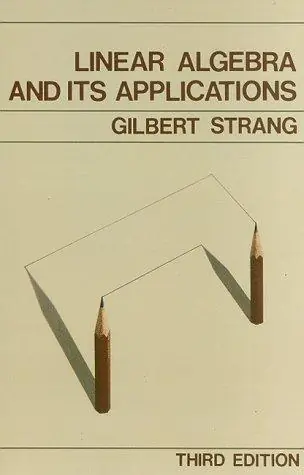
Linear algebra and its applications
by Gilbert Strang · first published 1976
69% recommend31% neutral
This text combines the underlying theory discussions with examples from electrical engineering, computer science, physics, biology, and economics.
Affiliate links. As an Amazon Associate I earn from qualifying purchases.
Mentions per year
What Hacker News says
Related books
 2008–2026
Linear algebra and its applications
David C. Lay, Lay, Davic C. Lay, Steven R. Lay
Recommended by 22 · mentioned by 3022 recommend · 30 mention22 recommend · 3022 recommend
 2011–2022
Linear Algebra for Everyone
Gilbert Strang
Recommended by 3 · mentioned by 33 recommend · 3 mention3 recommend · 33 recommend
 2011–2026
Matrix Analysis and Applied Linear Algebra
C. D. Meyer
Recommended by 6 · mentioned by 76 recommend · 7 mention6 recommend · 76 recommend
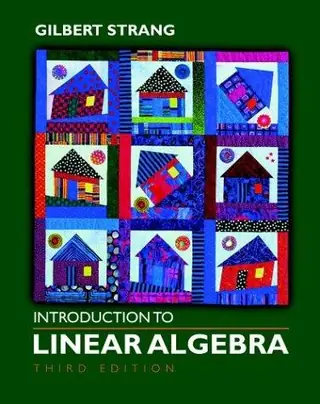 2007–2026
Introduction to linear algebra
Gilbert Strang
Recommended by 37 · mentioned by 5837 recommend · 58 mention37 recommend · 5837 recommend
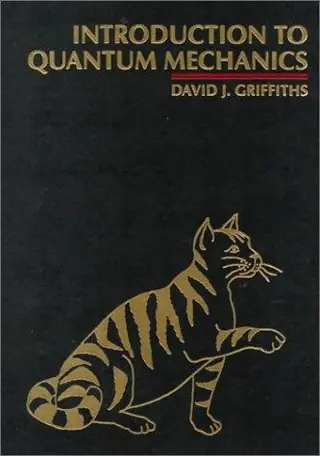 2011–2025
Introduction to Quantum Mechanics (2nd Edition) by David J. Griffiths
David Jeffrey Griffiths, Darrell F. Schroeter
Recommended by 12 · mentioned by 1812 recommend · 18 mention12 recommend · 1812 recommend
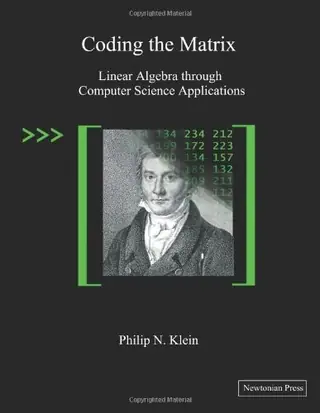 2013–2026
Coding the Matrix
Philip N. Klein
Recommended by 31 · mentioned by 4131 recommend · 41 mention31 recommend · 4131 recommend
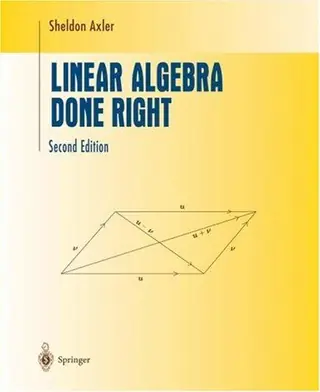 2008–2026
Linear Algebra Done Right
Sheldon Jay Axler
Recommended by 130 · mentioned by 179130 recommend · 179 mention130 recommend · 179130 recommend
 2013–2026
No bullshit guide to linear algebra
Ivan Savov
Recommended by 15 · mentioned by 1915 recommend · 19 mention15 recommend · 1915 recommend
My favorite text on Linear Algebra is Gilbert Strang's Linear Algebra and Its Applications although the current edition is ridiculously expensive: http://www.amazon.com/Linear-Algebra-Applications-Gilbert-St...
on “Jim Hefferon's Linear Algebra: A free textbook with fascinating applications” ↗Strang has another great book, Linear Algebra and its Applications: http://www.amazon.com/Linear-Algebra-Applications-Gilbert-St... Everything I know about linear algebra I learned from this book.
on “Surprises from numerical linear algebra (2010)” ↗Although it’s not a book, a good series on YouTube is 3Blue1Brown Essence of Linear Algebra. That explains it in a very visual way. That, in addition to Linear Algebra and its applications by Gilbert Strang, would be a strong mix. I would also recommend 3000 solved problems in Linear Algebra by Seymour Lipschutz as a strong foundation in linear algebra requires practice.
on “Ask HN: Best beginner friendly linear algebra book?” ↗…enough for a curious mind like mine. I wanted to see how it was taught at the world’s best university. ...and... The course is taught by no other than Gilbert Strang. He’s the world’s leading expert in linear algebra and its applications and has helped the development of Matlab mathematics software.
on “New article series at catonmat: Detailed Summary of MIT's Linear Algebra” ↗…mathematics book. Formal theorem proving in vector spaces is the typical use case of a pure mathematician; this book is for them. If you're looking to do application, use an applied book. Gilbert Strang's "Linear Algebra and its Applications" is quite good.
on “Surprises from numerical linear algebra (2010)” ↗Thank you for your free book. Another great book is Gilbert Strang's book: Introduction to Linear Algebra. Also Boyle: Linear Algebra and its Applications. Perhaps your free book can be used to develop some evolving tool for the student. For example: the student take a test and then the book select the best exercises and topics for that student.
on “Immersive Linear Algebra (2016)” ↗I really like "Linear Algebra and Its Applications" by Gilbert Strang. It is not a textbook, the style is conversational, and he really tries to help you learn. It is one of rare math books that includes reason, context, application, and history without…
on “How a Kalman filter works, in pictures” ↗Calculus: Thomas, Weir & Hass - Thomas' Calculus Linear Algebra (which is what you really need): Gilbert Strang - Linear Algebra and its applications These two are all you need, with which you'll get a solid base. Then you're good to go on your own. These two combined are about 4 semesters worth of work. But if you really focus, I think you can get…
on “Ask HN: Best way to get started with AI?” ↗…foundation in mathematics, programming, and machine learning concepts. Here's a detailed learning plan, broken down into four stages: Stage 1: Building a Strong Foundation Mathematics: Linear Algebra: "Linear Algebra and Its Applications" by Gilbert Strang Calculus: "Calculus: Early Transcendentals" by James Stewart Probability & Statistics: "Probability and Statistics for Engineers and Scientists" by Ronald E. Walpole, Raymond H.…
on “Ask HN: I am a full stack developer, where do I start learning for AI” ↗…like a chapter every week or two, plus do the exercises? Time to trade in a few hours of internet downtime and actually learn something. Edit: here's what seems to be emerging. We'll read Strang's "Linear Algebra and its Applications" (ISBN 0030105676), one chapter every two weeks plus exercises. We'll stay here where the community is, unless proven otherwise. And... that's about it! I like systems with few rules. The one sticking…
on “Proposal: Linear Algebra Study Group” ↗…(http://news.ycombinator.com/item?id=2993321). Most have the book by now, so... let's do this! If you missed that thread and want to join, please do so. There's nothing you have to do other than learn. The book is "Linear Algebra And Its Applications" by Strang, 4th ed., ISBN 0030105676. We'll work through one chapter every two weeks. There are a lot of exercises. Let's discuss ones that are interesting, nontrivial or both. Questions and insights…
on “Study HN: Linear Algebra 1. We're on.” ↗I use Anki a few times a week. When I've used it for math (as I work my way through Gilbert Strang's book "Linear Algebra and its applications"), I add full problems that seemed to be key to the topic, or surprised me in some way. These take longer to review, but I find it's been really helpful. And once it sticks, I don't have to review it…
on “Anki as Learning Superpower: Computer Science Edition” ↗Personally I used David Lay's Linear Algebra and Its Applications as my first linear algebra book. It's more formal than Gilbert Strang's famous text book, but less formal than Linear Algebra Done Right. It's emphasis on geometric intuition really struck home, particularly…
on “Learning Math for Machine Learning” ↗…'Essential Mathematics from Quantum Computing' by Leonard S. Woody III, which is short, easy to understand and covers the basics. If you want to go more in-depth into the mathematics involved, then you have 'Linear Algebra and its Applications', by Gilbert Strang, but this book is exclusively about linear algebra, the mathematics that you use with quantum computing, not about quantum computing itself. There are a couple of popular books about…
on “Why Quantum Engineering Is Emerging as a Distinct Industrial Sector” ↗