Imperial Earth
by Arthur C. Clarke · first published 1975
13% recommend80% neutral7% critical
Duncan Makenzie is the latest generation of the 'first family' of Titan, a colonised moon of Saturn. Originally settled by his grandfather Malcolm Makenzie in the early 23rd century, Titan's economy has flourished based on the harvest and sale of hydrogen mined from the atmosphere, which is used to fuel the fusion engines of interplanetary spacecraft. As the plot opens in 2276, a number of factors are combining to make a diplomatic visit to the 'mother world' of Earth a necessity. Firstly, the forthcoming 500th anniversary of US Independence, which is bringing in colonists from the entire S
Affiliate links. As an Amazon Associate I earn from qualifying purchases.
Mentions per year
What Hacker News says
Related books
 2014–2026
The World Set Free
H. G. Wells, Ellen Marriage
Recommended by 3 · mentioned by 153 recommend · 15 mention3 recommend · 153 recommend
 2007–2026
The Machine Stops
E. M. Forster
Recommended by 78 · mentioned by 14078 recommend · 140 mention78 recommend · 14078 recommend
 2017–2026
Energy and Civilization
Vaclav Smil
Recommended by 23 · mentioned by 3223 recommend · 32 mention23 recommend · 3223 recommend
 2008–2026
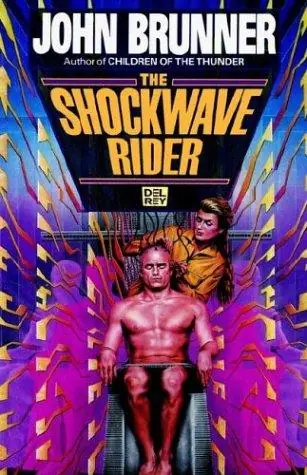
The Shockwave Rider
John Brunner
Recommended by 47 · mentioned by 7547 recommend · 75 mention47 recommend · 7547 recommend
 2008–2026
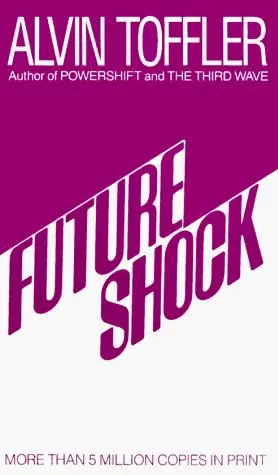
Future shock
Alvin Toffler
Recommended by 19 · mentioned by 6219 recommend · 62 mention19 recommend · 6219 recommend
 2008–2026
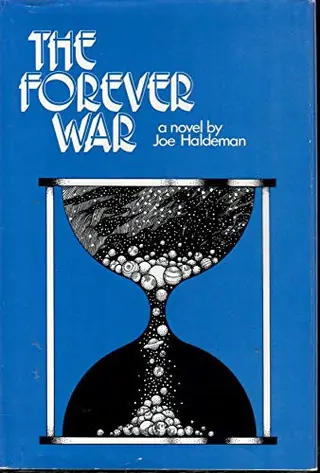
The Forever War
Joe Haldeman
Recommended by 67 · mentioned by 11367 recommend · 113 mention67 recommend · 11367 recommend
As We May Think
Vannevar Bush
Recommended by 23 · mentioned by 8523 recommend · 85 mention23 recommend · 8523 recommend
 2016–2026
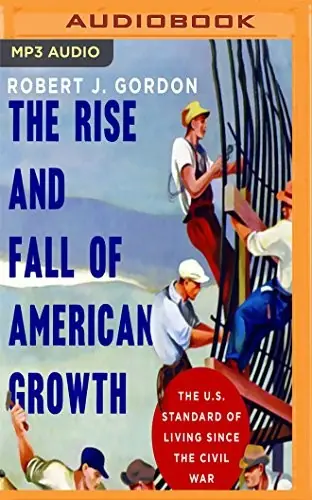
Rise and Fall of American Growth
Robert J. Gordon
Recommended by 24 · mentioned by 3724 recommend · 37 mention24 recommend · 3724 recommend
…informative and inspiring. This just feels like a grumpy rant, and it adds nothing. On the matter of digital surfaces, I found the description of an object which changed surfaces in Arthur C. Clarke's Imperial Earth fascinating. It essentially "worked" by transmitting electric pulses through the skin that simulated the feelings - the actual object didn't change. I wonder if there's research in that area.
on “Touchscreens have no hand” ↗…originally read this, 46 years ago, I had an Apple II+. So I made some adjustments to the code for the Apple in both the machine code and basic and got it working. That article (along with Arthur C. Clarke's Imperial Earth) started my obsession for Pentominoes that exists today. I've taken that code and rewritten and improved it in Fortran, Pascal, C, C++, and Python. I'd copied that article and carried it with me for years…
on “Show HN: A zoomable, searchable archive of BYTE magazine” ↗…contributions to the evolution and perception of modern technology. From communications satellites (the geosynchronous 'Clarke orbit' is named after him) to encrypted smartphones (described vividly in Imperial Earth), to space elevators (The Fountains of Paradise) - he introduced so many ideas that are now regarded as unremarkable. (I remember being attacked and ridiculed in high school when I brought up the preposterous…
on “A Conversation with Arthur C. Clarke (1999)” ↗…games (factory-installed spyware, Lenovo, craptacular ergonomics (Apple keyboards, strips), and BDSM bootloaders (Android) leave me feeling physically ill. I was reminiscing earlier that in his 1976 book Imperial Earth, Arthur C. Clarke more-or-less pressages the smartphone, with his minisec, though with some glaring distinctions. There's a physical keyboard (the 'E' key is mentioned as being worn), devices are durable…
on “The Shady World of Repair Manuals: Copyrighting for Planned Obsolescence (2012)” ↗…to a considerable extent -- generally to thermal, friction, vibrational, stress, or other limits. Landfill mining has been suggested. It was a (minor, though not miner) element in Arthur C. Clarke's Imperial Earth* (1976). And has long been practiced, historically and presently, with a range of consequences. The more general problem here is that recycling is at best less than 100% efficient, and the generational…
on “7k-year-old well is the oldest wooden structure ever discovered” ↗…speculative paper. I haven't read the story extract, but I assume the plan would be to bleed matter into the micro black hole to maintain it. (Arthur C Clarke posited the same concept 40 odd years ago in his Imperial Earth novels.) I assume your point is that a GeV is a minuscule amount of energy, which isn't going to push 130kT around at any speed.
on “First 26 pages of Neal Stephenson's new novel Seveneves” ↗Imperial Earth by Arthur C. Clarke takes place in a generally better future where the solar system has been colonized. I found it incredibly boring, which is maybe your point. Also, Men Like Gods by H.G. Wells is about…
on “List of stories set in a future now past” ↗…neat little studs; each, however, had an unlimited number of functions, according to the mode of operation - for the character visible on each stud changed according to the mode. -- Arthur C. Clarke, Imperial Earth, 1976 http://www.technovelgy.com/ct/content.asp?Bnum=1267 That itself was nearly a decade after the newspad of 2001: A Space Odyssey (1968): http://technovelgy.com/ct/content.asp?Bnum=529 https://www.invidio.us/watch?v=-3949GAIokg…
on “Why has progress stalled? (2014)” ↗In Imperial Earth, Clarke's minisec pretty much describes the ipad.
on “Arthur C. Clarke Predicts the Future in 1964 … And Kind of Nails It” ↗…grasp.... http://en.wikipedia.org/wiki/Modern_Monetary_Theory There's some history to the idea that money should be considered to be backed in energy. I'd first encountered it in Arthur C. Clarke's novel Imperial Earth, in which "Sols" were backed in kilowatt-hours. Kim Stanley Robinson uses the idea in his Re-Green-Blue Mars series, and Buckminster Fuller discussed the concept. The earliest reference of which I'm aware…
on “What is money? (1913)” ↗Clarke also foresaw the ipod in his book "Imperial Earth" (calling it a minisec).
on “Samsung cites Kubrick's "2001" as Prior Art in Patent Case Against Apple” ↗I've been exposed to the idea of an energy-backed currency since reading Arthur Clarke's Imperial Earth as a kid (it's actually got a lot to do with energy economics in general, among other themes). More recently I've been looking at some of the principles of dissipative systems and wondering if one of…
on “Economics Simulation” ↗Quoting from Clarke's "Imperial Earth" (1976) (to show how old this topic is): "And I've run into something that complicates business on Earth to an incredible extent. I knew about it, but hadn't realized its full implications. It's the…
on “America needs to have just two time zones and the world should follow suit” ↗…“We want a President who has to be carried screaming and kicking into the White House — but will then do the best job he possibly can, so that he’ll get time off for good behavior.” ― Arthur C. Clarke, Imperial Earth
on “America's High School Graduates Look Like Other Countries' High School Dropouts” ↗You'll find that concept in Arthur C. Clarke's Imperial Earth, published in 1975, and written a during the years earlier. (It draws strongly on OPEC, the 1973 oil embargo, Nixon, and petrodollars.)
on “Alvin Toffler, Author of ‘Future Shock,’ Dies at 87” ↗